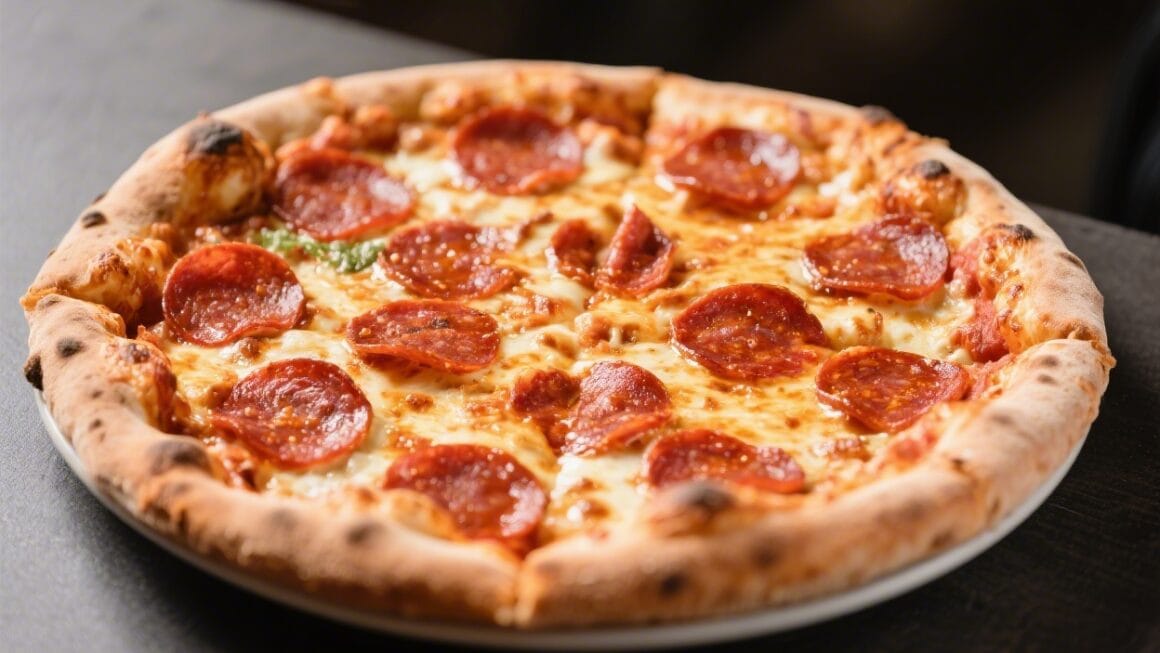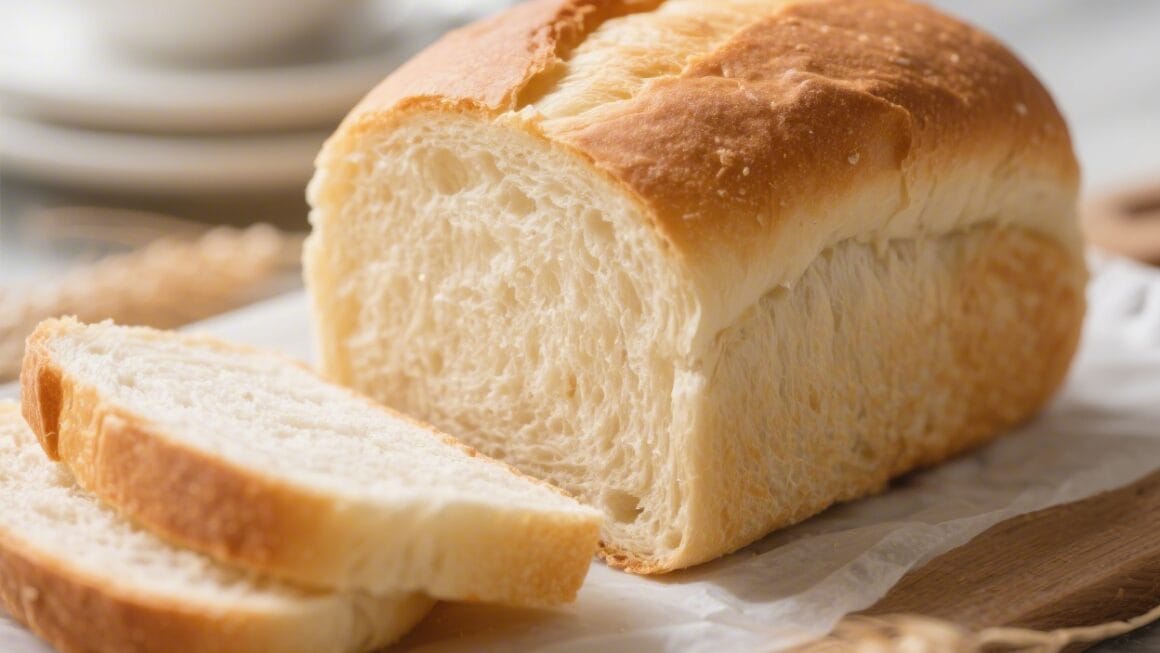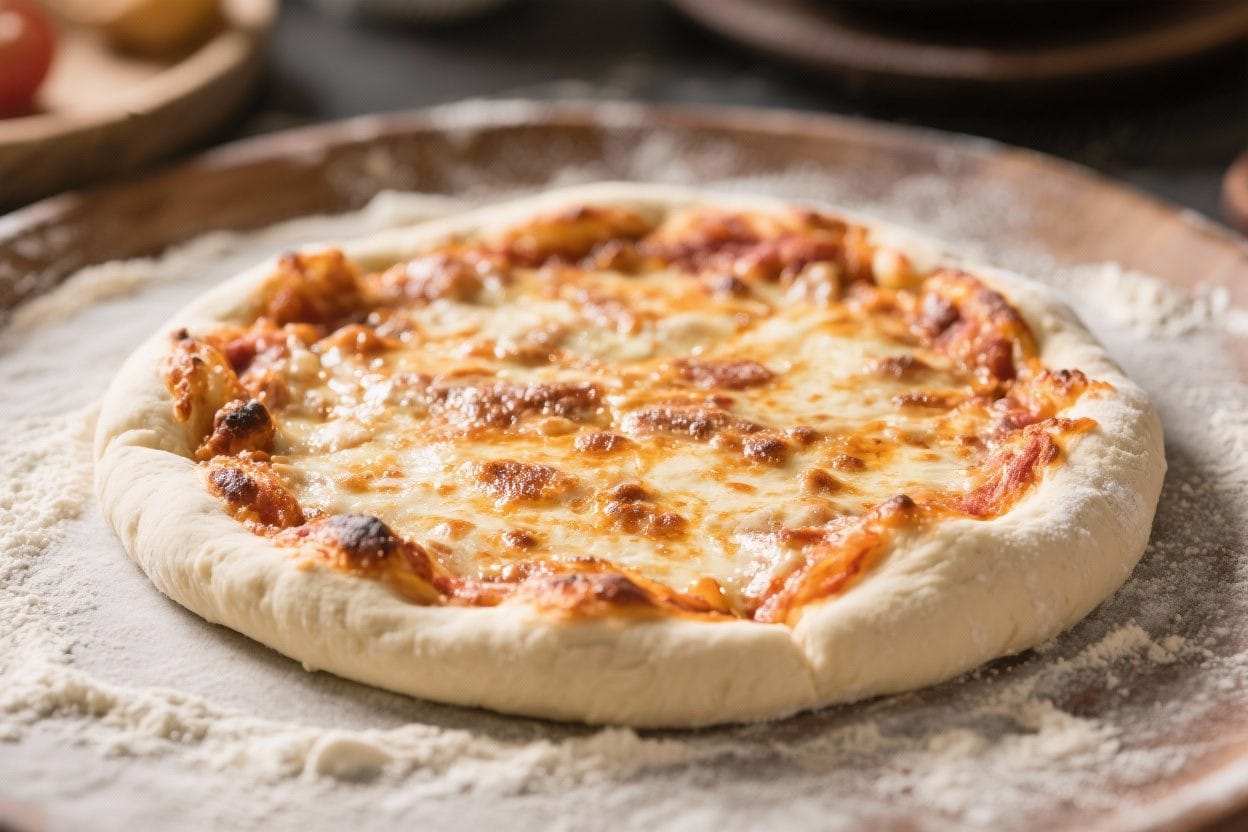
If you’re after the kind of pizza that’s crisp on the outside and tender and chewy inside, this dough is your new go-to. It uses a few simple ingredients, a bit of patience, and an easy process you can repeat every week. No fancy equipment required—just a bowl, your hands, and time.
Once you try it, you’ll see how much better homemade pizza can be. The best part? You can make it ahead and bake whenever you’re ready.
What Makes This Special
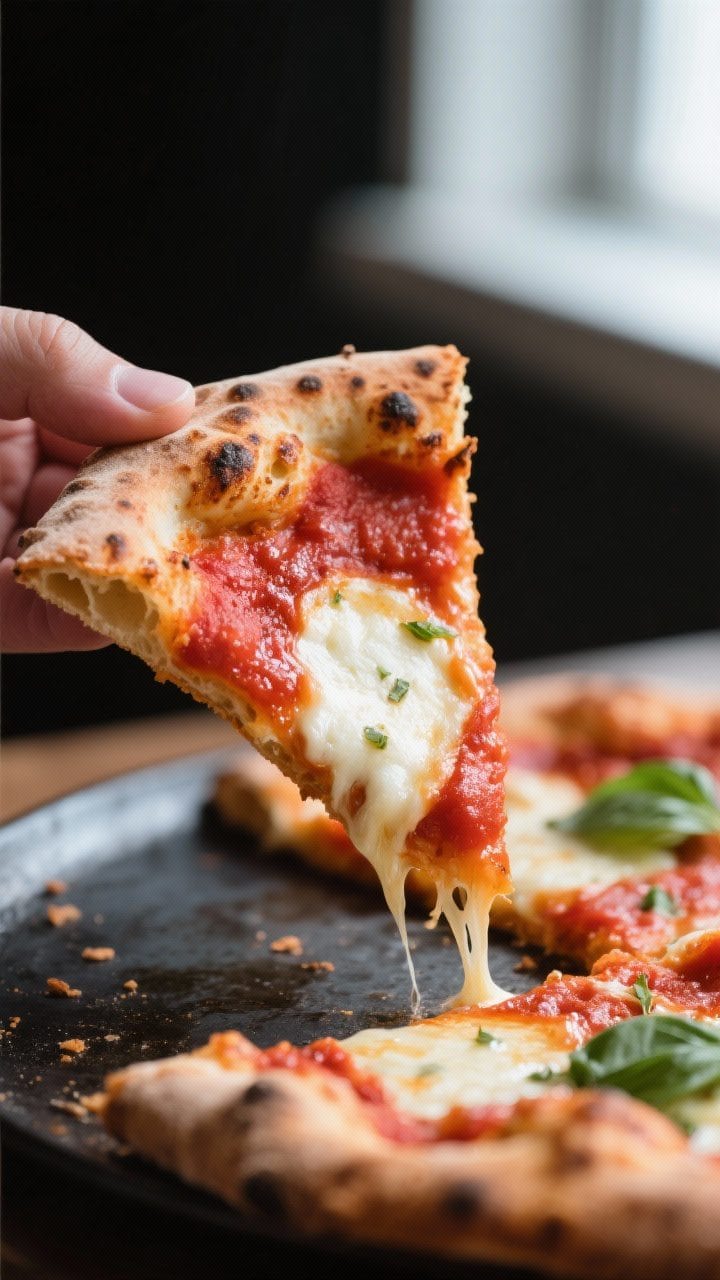
This dough balances crisp edges with a chewy center thanks to a few key details.
A slightly higher hydration keeps the crumb tender, while a touch of sugar and olive oil encourage browning and flavor. A slow, cold fermentation builds complexity and makes the dough easier to stretch. You’ll get that pizzeria feel at home—even if you’re baking in a regular oven.
- High hydration (around 65%) for a soft, airy crumb.
- Cold fermentation for deeper flavor and better texture.
- Bread flour or high-protein flour to develop strong gluten and chew.
- Olive oil and a pinch of sugar to support browning and a crisp bottom.
Ingredients
- 500 g bread flour (or strong all-purpose flour; about 4 cups, spooned and leveled)
- 325 g water, lukewarm (about 1 1/3 cups; roughly 65% hydration)
- 10 g fine sea salt (about 1 3/4 tsp)
- 3 g instant yeast (about 1 tsp) or 4 g active dry yeast
- 10 g olive oil (about 2 tsp)
- 5 g sugar (about 1 tsp)
- Extra flour or fine semolina for dusting
Instructions

- Bloom (if using active dry yeast). In a small bowl, mix the lukewarm water with sugar and active dry yeast.Let it sit for 5–10 minutes until foamy. If using instant yeast, skip this step and add it directly to the flour.
- Combine dry ingredients. In a large bowl, whisk together the flour, salt, and instant yeast (if using). Keep the salt and yeast on opposite sides of the bowl before mixing to protect yeast activity.
- Add wet ingredients. Pour in the water (yeast mixture if bloomed) and olive oil.Stir with a spoon or your hand until a shaggy dough forms. It will look rough—this is fine.
- Rest and hydrate. Cover the bowl and let the dough rest for 15 minutes. This short autolyse helps the flour hydrate and makes kneading easier.
- Knead until smooth. Knead by hand on a lightly oiled surface for 6–8 minutes, or do 3 rounds of stretch-and-fold in the bowl every 5 minutes.The dough should feel elastic and slightly tacky but not sticky.
- First rise (bulk fermentation). Shape into a ball, place in a lightly oiled bowl, cover, and let rise at room temperature until puffed, about 60–90 minutes, depending on your kitchen temperature.
- Cold ferment. Divide into 2 large balls for 12–14-inch pizzas (or 3 smaller for 10-inch). Lightly oil each dough ball, place in separate containers, cover, and refrigerate for 24–72 hours. Longer cold fermentation equals more flavor and easier stretching.
- Warm up before baking. Remove the dough from the fridge 60–90 minutes before baking.Keep covered so it doesn’t dry out. The dough should relax and come to room temperature.
- Preheat your oven. Place a pizza stone or steel on the top rack and preheat to the highest setting your oven allows (500–550°F / 260–290°C) for at least 45 minutes. High heat equals crisp crust.
- Shape the dough. Dust your counter and hands lightly with flour.Gently press the dough from the center outward, leaving a 1-inch rim. Lift and stretch over your knuckles, letting gravity help. Avoid rolling pins—they press out the air.
- Top lightly. Transfer to a floured peel or upside-down baking sheet.Add sauce, cheese, and toppings sparingly. Too much moisture will soften the crust.
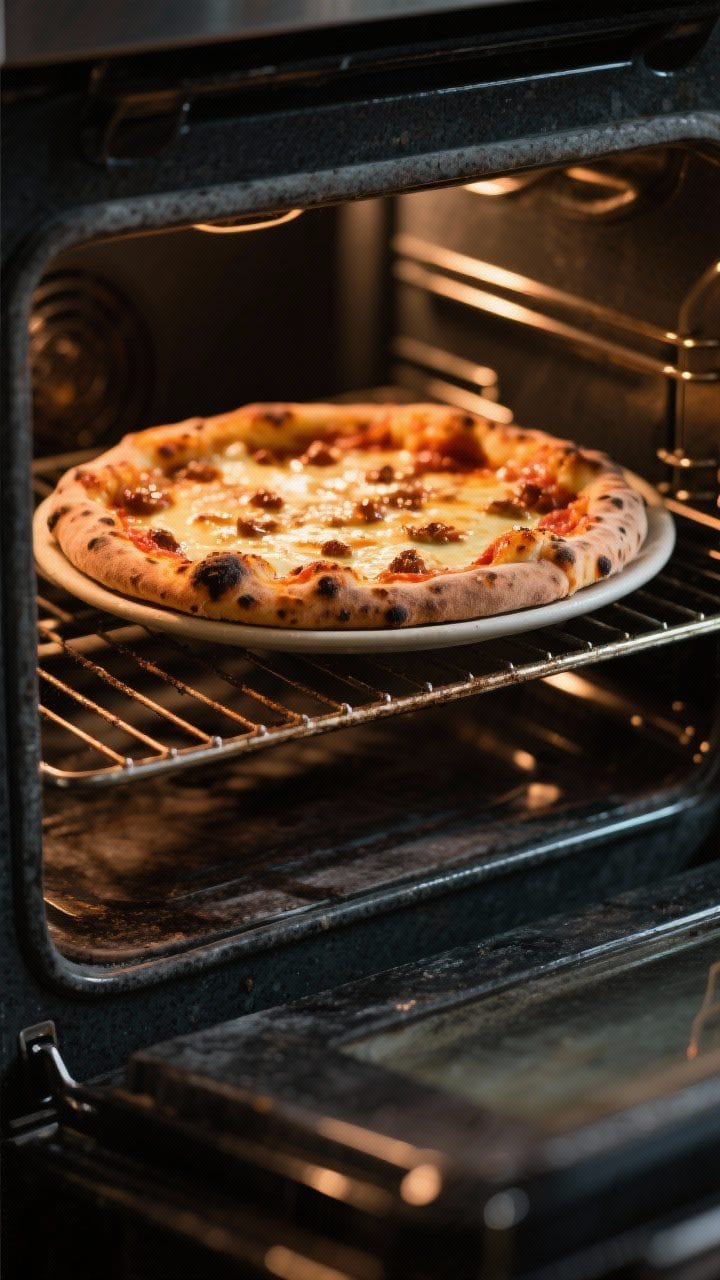
- Bake hot and fast. Slide onto the stone/steel and bake for 6–8 minutes, or until the crust is deep golden with some charred spots. For extra color, switch to broil for the last 30–60 seconds, watching closely.
- Rest and slice. Let the pizza cool 2–3 minutes on a wire rack to keep the bottom crisp, then slice and serve.
Storage Instructions
- Short-term: Keep dough balls in the fridge up to 72 hours.Lightly oil the dough and cover well to prevent drying.
- Freezing: Freeze dough balls after the bulk rise. Wrap each in oiled plastic, then place in a freezer bag. Freeze up to 3 months.
- Thawing: Thaw in the fridge overnight, then bring to room temperature for 60–90 minutes before shaping.
- Leftover baked pizza: Store slices in an airtight container in the fridge for up to 3 days.Reheat on a skillet or in a 425°F (220°C) oven for 5–7 minutes to restore crispness.
Health Benefits
- Control over ingredients: You choose the flour, oil, salt, and toppings, avoiding additives and excess sodium found in some store-bought doughs.
- Better digestibility: Cold fermentation breaks down some starches and gluten bonds, which many people find gentler on the stomach.
- Balanced macros: Pair this crust with quality protein and vegetables for a more complete meal. Think fresh mozzarella, grilled chicken, and arugula.
- Healthy fats: A small amount of olive oil adds flavor and heart-friendly monounsaturated fats.
Common Mistakes to Avoid
- Using too much flour while shaping: Extra flour can toughen the crust. Light dusting only—just enough to prevent sticking.
- Skipping the rest time: Cold dough resists stretching and tears easily.Always let it warm up and relax.
- Overloading with toppings: Heavy sauce or watery vegetables lead to a soggy pie. Keep it minimal and well-drained.
- Low oven temperature: A hot surface is key to crispness. Preheat your stone or steel thoroughly.
- Over-kneading with lots of flour: This tightens the dough and dries it out.Aim for smooth and elastic, not stiff.
Recipe Variations
- Neapolitan-Style Lean Dough: Skip the oil and sugar. Use 00 flour and 62–65% hydration. Bake at the highest heat you can manage for a tender, leopard-spotted crust.
- Whole Wheat Blend: Replace 20–30% of the flour with whole wheat.Add 10–15 g more water to compensate and extend fermentation to boost flavor.
- Garlic and Herb Crust: Mix 1–2 tsp minced garlic and 2 tsp dried Italian herbs into the dough. Brush the rim with olive oil before baking.
- Sourdough Pizza: Replace yeast with 100 g active, bubbly sourdough starter and reduce water by about 50 g. Expect longer fermentation and a tangy, complex taste.
- Gluten-Free Option: Use a high-quality gluten-free bread flour blend and follow package hydration guidance.Par-bake the crust for 5–7 minutes before topping to ensure crispness.
FAQ
Can I make this dough the same day?
Yes. Let it rise at room temperature until doubled (about 1 1/2–2 hours), then divide, rest 30 minutes, and bake. It won’t have the same depth of flavor as a cold ferment, but it will still be tasty and workable.
What if I don’t have a pizza stone or steel?
Use an upside-down baking sheet preheated in the oven.
It won’t get quite as hot as a stone or steel, but it will help crisp the bottom. Preheat it for at least 30 minutes.
How do I prevent sticking when launching the pizza?
Dust your peel with a mix of flour and fine semolina. Work quickly after topping, and shimmy the peel now and then to make sure the pizza still slides.
If it sticks, lift the edge and blow a bit of air or dust more semolina under the stuck spot.
Why is my crust pale?
Your oven or baking surface may not be hot enough, or the dough may lack sugar or oil to aid browning. Make sure the stone or steel is thoroughly preheated, and consider a brief broil at the end.
Can I par-bake the crust?
Yes. Bake the shaped, untopped dough for 3–4 minutes, just until set and lightly puffed.
Cool, then add toppings and finish baking. This helps with heavy or high-moisture toppings.
What hydration should I use if I’m new to pizza dough?
Start around 60–62% (300–310 g water for 500 g flour). It’s easier to handle.
As you get comfortable, move up to 65% for a lighter, airier crumb.
How do I get bigger crust bubbles?
Handle the dough gently, avoid degassing the rim, and bake on a very hot surface. Longer cold fermentation also encourages open crumb and those dramatic blisters.
Final Thoughts
Great pizza starts with great dough, and this method keeps things simple without cutting corners. With a little planning and a very hot oven, you’ll get that crisp snap under a chewy bite every time.
Make a few dough balls on the weekend, stash them in the fridge, and you’re always just minutes away from pizza night. Once you taste the difference, you’ll never look back.
Printable Recipe Card
Want just the essential recipe details without scrolling through the article? Get our printable recipe card with just the ingredients and instructions.