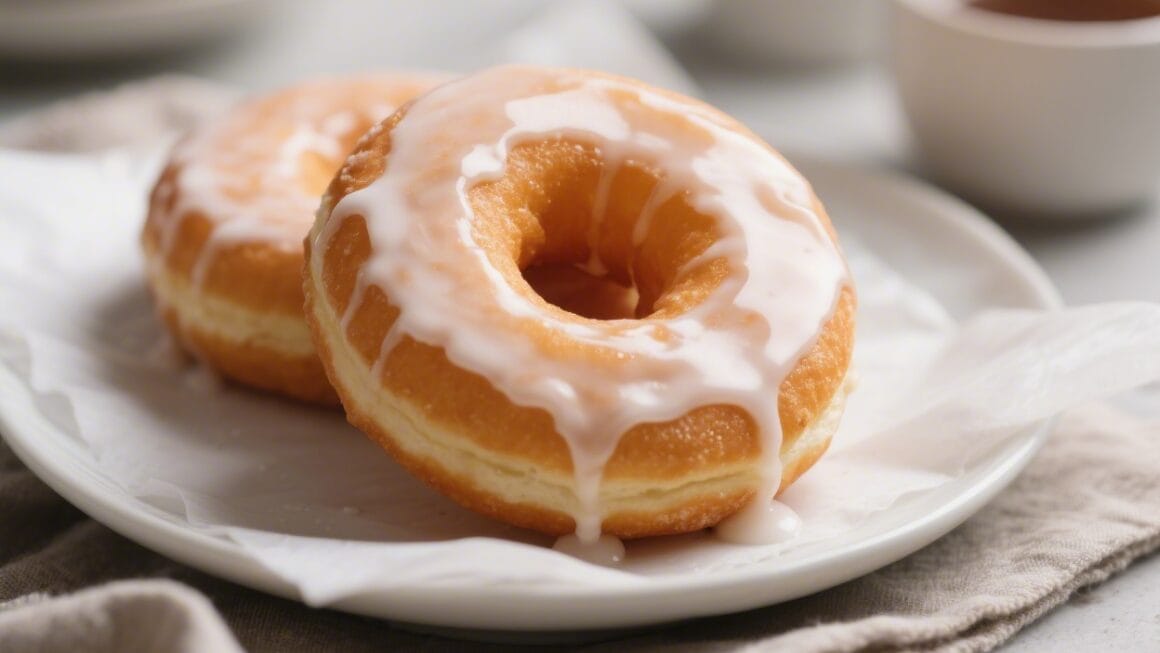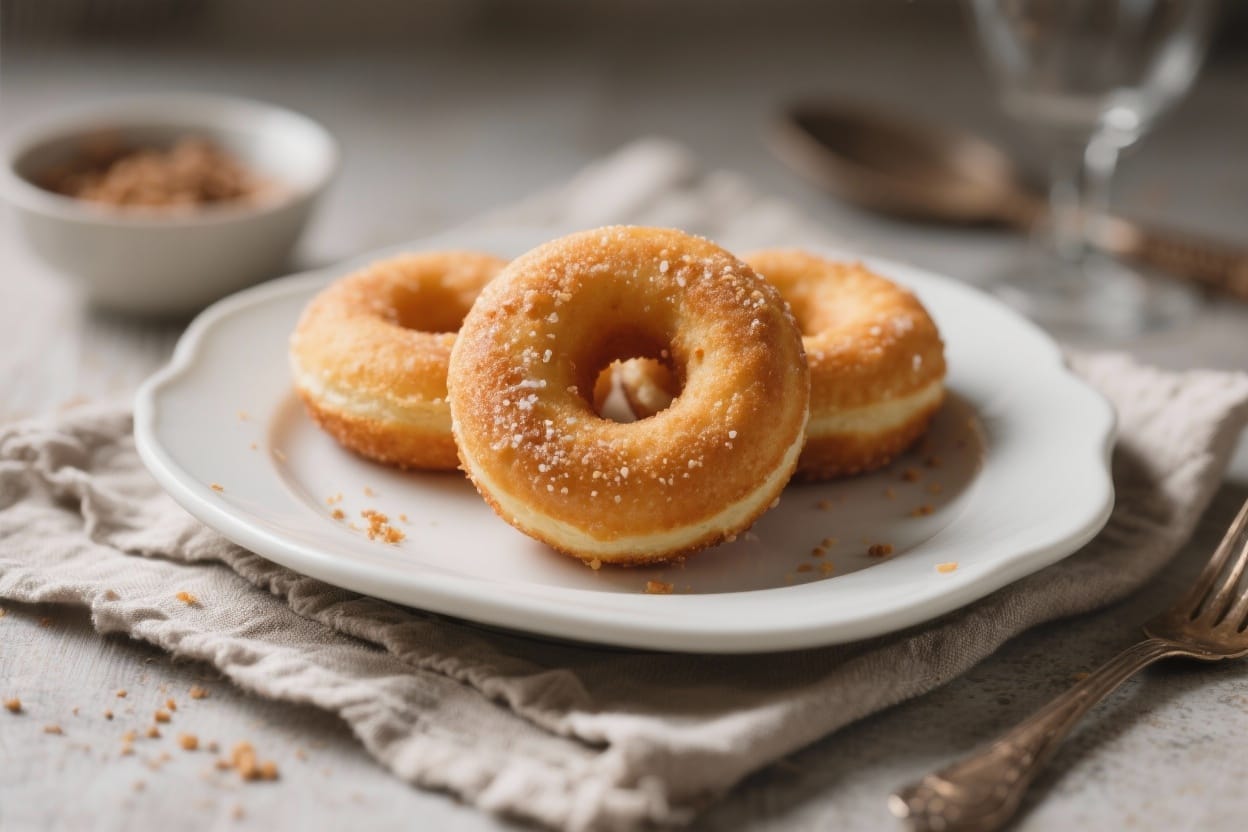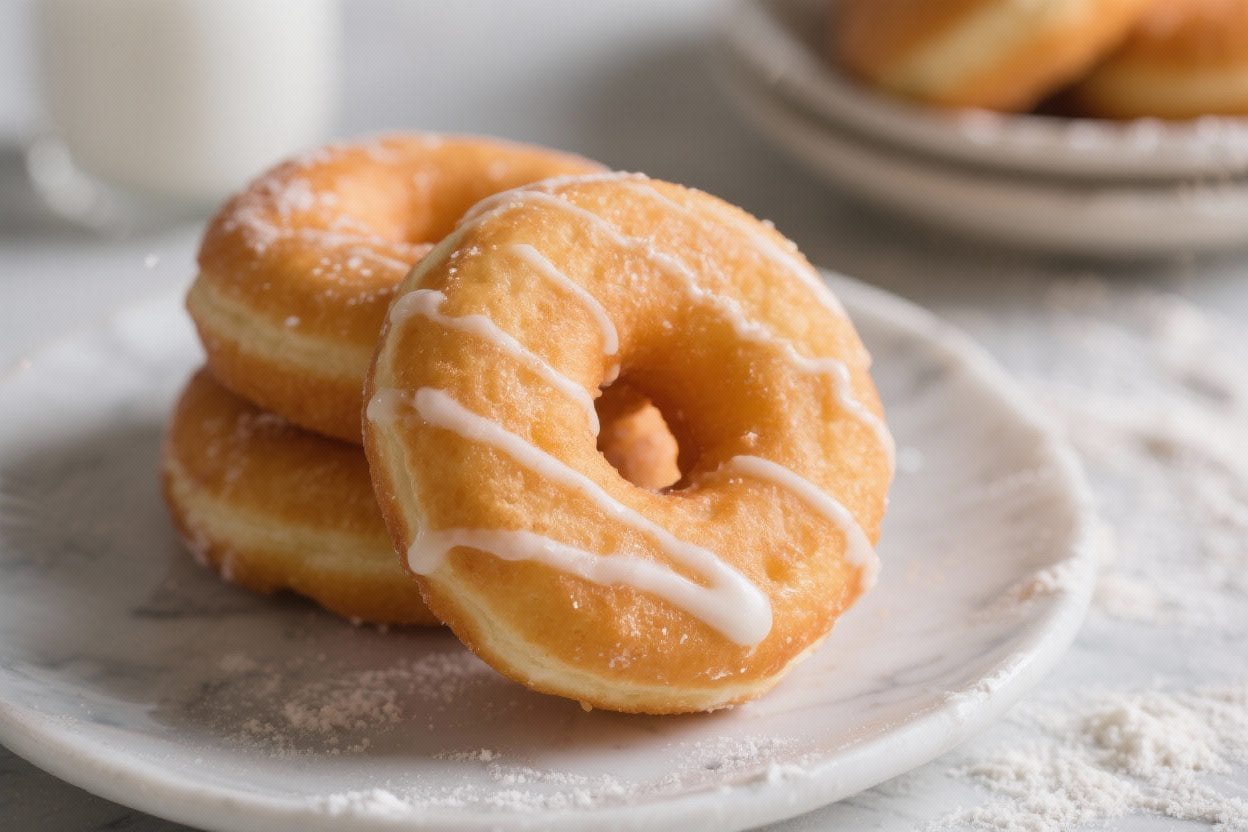
Making donuts at home feels like a small victory. Warm, soft dough, a hint of vanilla in the air, and that satisfying first bite—it’s the kind of comfort that a bakery box can’t replicate. These soft donuts are simple to master and perfect for weekends, birthdays, or just because.
You don’t need fancy equipment or a culinary degree. With a little patience, you’ll get tender, airy donuts every time.
What Makes This Special
This recipe focuses on creating a pillowy, melt-in-your-mouth texture. The secret is a well-hydrated dough, gentle kneading, and a slow, warm rise.
A touch of butter and egg yolk adds richness without making the dough heavy. You can fry them for the classic finish or bake them for a lighter take. Either way, you’ll get soft, flavorful donuts that stay fresh longer than most store-bought versions.
Ingredients
- 2 3/4 cups (330 g) all-purpose flour, plus more for dusting
- 1/3 cup (65 g) granulated sugar
- 2 1/4 tsp (1 packet) active dry yeast
- 1/2 tsp fine salt
- 3/4 cup (180 ml) warm milk (about 105–110°F / 40–43°C)
- 2 tbsp warm water
- 1 large egg
- 1 egg yolk
- 4 tbsp (55 g) unsalted butter, softened
- 1 tsp vanilla extract
- Neutral oil for frying (canola, vegetable, or peanut oil)
- For coating: 1/2 cup granulated sugar or powdered sugar
- Optional glaze: 1 cup powdered sugar, 2–3 tbsp milk, 1/2 tsp vanilla
Step-by-Step Instructions
- Bloom the yeast: In a small bowl, mix warm water and a pinch of sugar with the yeast.Let it sit for 5–10 minutes until foamy. If it doesn’t foam, the yeast is likely inactive—start over with fresh yeast.
- Combine the wet ingredients: In a large bowl, whisk warm milk, sugar, egg, egg yolk, vanilla, and the bloomed yeast.
- Add dry ingredients: Add 2 1/2 cups of flour and the salt. Stir with a wooden spoon or dough hook until a shaggy dough forms.
- Knead and add butter: Knead by hand on a lightly floured surface or in a mixer on medium-low for 6–8 minutes.Add the softened butter in small pieces, kneading until fully absorbed. If the dough is very sticky, add the remaining 1/4 cup flour a tablespoon at a time. The dough should be soft and slightly tacky, not stiff.
- First rise: Shape the dough into a ball and place it in a lightly oiled bowl.Cover and let it rise in a warm spot until doubled, about 1–1.5 hours.
- Shape the donuts: Turn the dough onto a floured surface and roll to about 1/2 inch (1.25 cm) thick. Cut out rounds with a 3-inch cutter, then cut out the centers with a 1-inch cutter. Gather scraps, rest them for 5 minutes, then re-roll.Place cut donuts and holes on parchment-lined trays.
- Second rise: Cover the donuts lightly with a towel and let them rise until puffy, 30–45 minutes. They should look airy and slightly jiggly when nudged.
- Heat the oil: In a heavy pot, heat 2 inches of oil to 350°F (175°C). Keep a thermometer handy to maintain temperature.
- Fry: Fry 2–3 donuts at a time, about 1–1.5 minutes per side, until golden.Donut holes take less time, around 45–60 seconds total. Use a slotted spoon to transfer to a wire rack set over a tray.
- Coat or glaze: While warm, toss in granulated sugar or let cool slightly and dip in the vanilla glaze. For the glaze, whisk powdered sugar, milk, and vanilla until smooth.
- Rest and enjoy: Let glazed donuts set for a few minutes.Serve fresh for the best texture.
Keeping It Fresh
- Same day is best: Donuts are at their peak within hours of frying.
- Short-term storage: Keep in an airtight container at room temperature for up to 2 days. Avoid the fridge—it dries them out.
- Freeze unglazed: Freeze plain donuts in a single layer, then bag for up to 2 months. Thaw at room temperature and refresh in a 300°F (150°C) oven for 5–7 minutes before glazing.
- Re-crisp donut holes: A quick 2–3 minutes in a warm oven helps bring back softness without drying.
Benefits of This Recipe
- Soft and fluffy texture: The dough is enriched but light, giving you that cloud-like bite.
- Flexible method: Works with frying or baking, and adapts well to glazes and fillings.
- Beginner-friendly: Clear steps and ingredients you likely have on hand.
- Make-ahead options: The dough can rest in the fridge overnight for a slow rise and easier morning frying.
- Customizable: Sugar-coated, glazed, filled, or plain—your call.
Common Mistakes to Avoid
- Overheating the liquid: Milk that’s too hot kills yeast.Aim for warm, not hot.
- Adding too much flour: A slightly sticky dough bakes softer. Resist the urge to keep dusting.
- Skipping the second rise: This is key for light, airy donuts.
- Wrong oil temperature: Too cool and the donuts absorb oil; too hot and they burn outside but stay raw inside. Keep it near 350°F (175°C).
- Overcrowding the pot: It drops the oil temperature and leads to greasy results.Fry in small batches.
Recipe Variations
- Baked donuts: Cut and place on a parchment-lined sheet. Brush with melted butter and bake at 375°F (190°C) for 8–10 minutes, until lightly golden. Brush again with butter and toss in cinnamon sugar.
- Filled donuts: Skip the hole.After frying and cooling slightly, pipe in jam, custard, or chocolate cream through a small side hole.
- Cinnamon sugar: Mix 1/2 cup sugar with 1–2 tsp cinnamon. Toss warm donuts until coated.
- Chocolate glaze: Whisk 1 cup powdered sugar, 2 tbsp cocoa powder, a pinch of salt, 2–3 tbsp milk, and 1/2 tsp vanilla.
- Maple or coffee glaze: Swap the milk with strong coffee or add 1–2 tsp maple syrup to the glaze.
- Lemon twist: Add 1 tsp lemon zest to the dough and a squeeze of lemon juice to the glaze.
FAQ
Can I use instant yeast instead of active dry yeast?
Yes. Use the same amount and skip the blooming step.
Mix it directly with the flour, then proceed as written. The rise times will be similar.
How do I know the dough has enough flour?
It should feel soft and slightly tacky, but it shouldn’t cling to your hands in strings. If it does, sprinkle in a tablespoon of flour at a time until it’s manageable.
What if I don’t have a donut cutter?
Use a 3-inch glass or round cutter and a small bottle cap for the center.
You can also make round, hole-free donuts and fill them after frying.
Can I make the dough the night before?
Absolutely. Let it rise for 30–45 minutes at room temperature, then refrigerate covered overnight. The next day, bring it to room temp, roll, cut, and continue with the second rise.
Why are my donuts greasy?
The oil was likely too cool or the pot was overcrowded.
Keep the temperature near 350°F (175°C) and fry in small batches to maintain heat.
Can I bake instead of fry?
Yes. Baked donuts are lighter and less crisp but still tender. Follow the baked variation above and finish with butter and cinnamon sugar or glaze.
What oil is best for frying donuts?
Use a neutral, high-smoke-point oil like canola, vegetable, or peanut oil.
They keep the flavor clean and handle heat well.
How thick should I roll the dough?
About 1/2 inch (1.25 cm). Thinner dough makes flatter donuts that fry too quickly; thicker dough can lead to undercooked centers.
How do I keep the glaze shiny?
Glaze warm (not hot) donuts and let them set at room temperature. A slightly thicker glaze gives a smoother, shinier finish.
Can I use bread flour?
You can, but expect a chewier donut.
All-purpose flour gives a softer crumb that suits this style best.
Wrapping Up
Soft donuts made from scratch are a small project with a big reward. With a gentle dough, warm oil, and a simple glaze, you’ll end up with bakery-level results at home. Keep your steps steady, your oil hot, and your expectations high.
Once you taste that first warm bite, you’ll know it was worth it.
Printable Recipe Card
Want just the essential recipe details without scrolling through the article? Get our printable recipe card with just the ingredients and instructions.