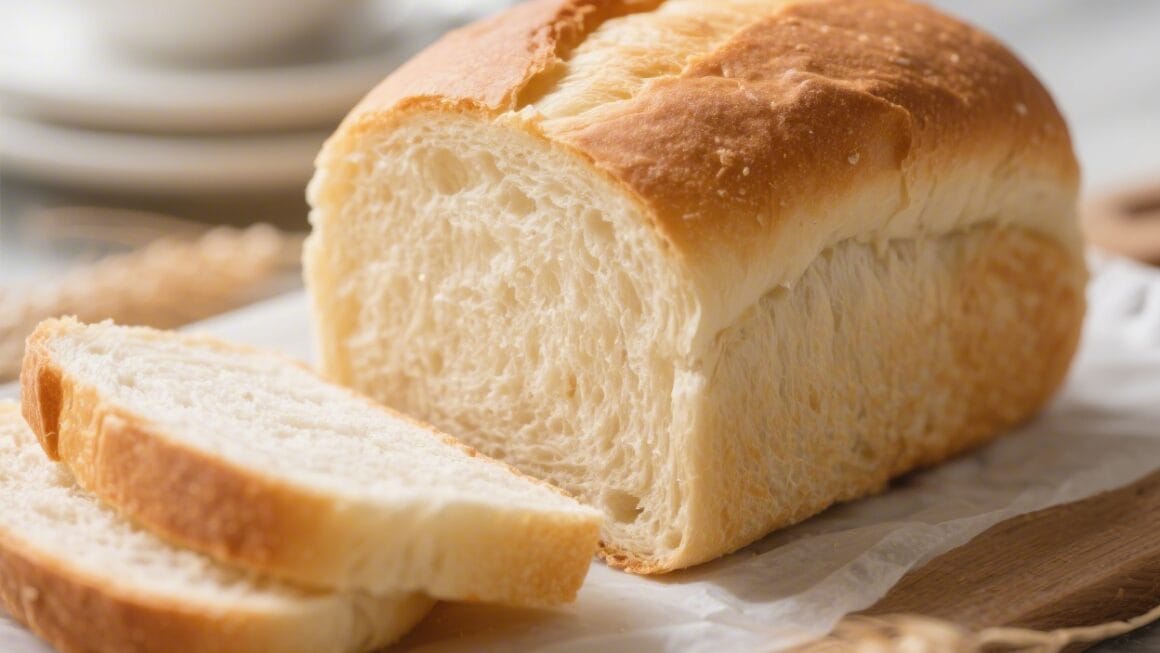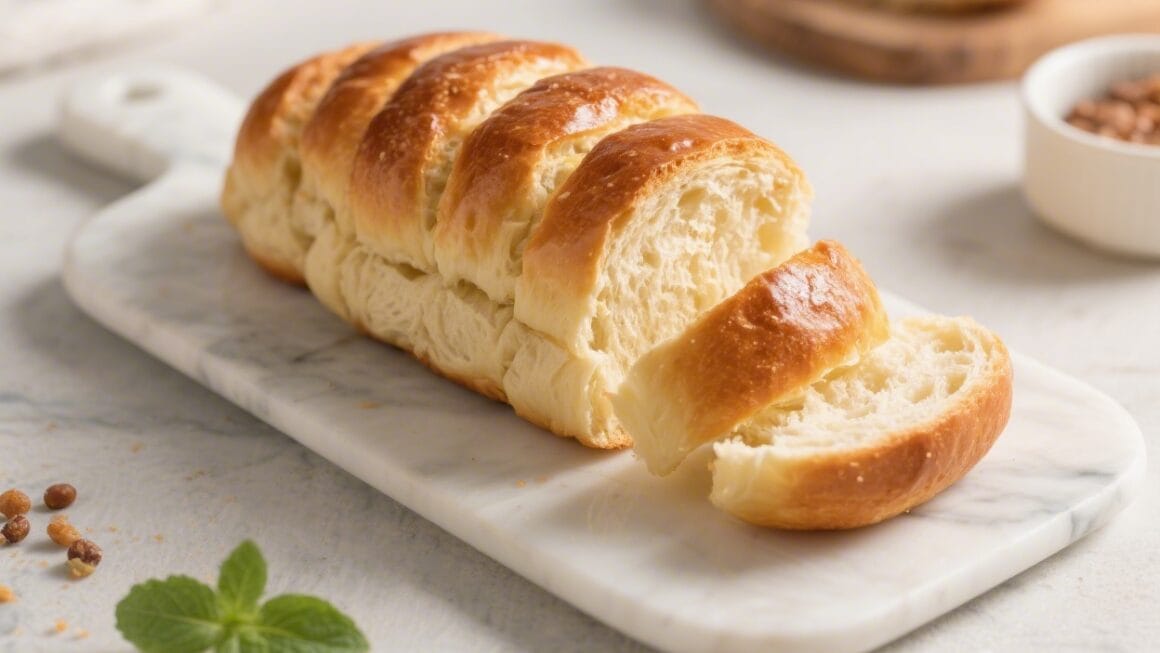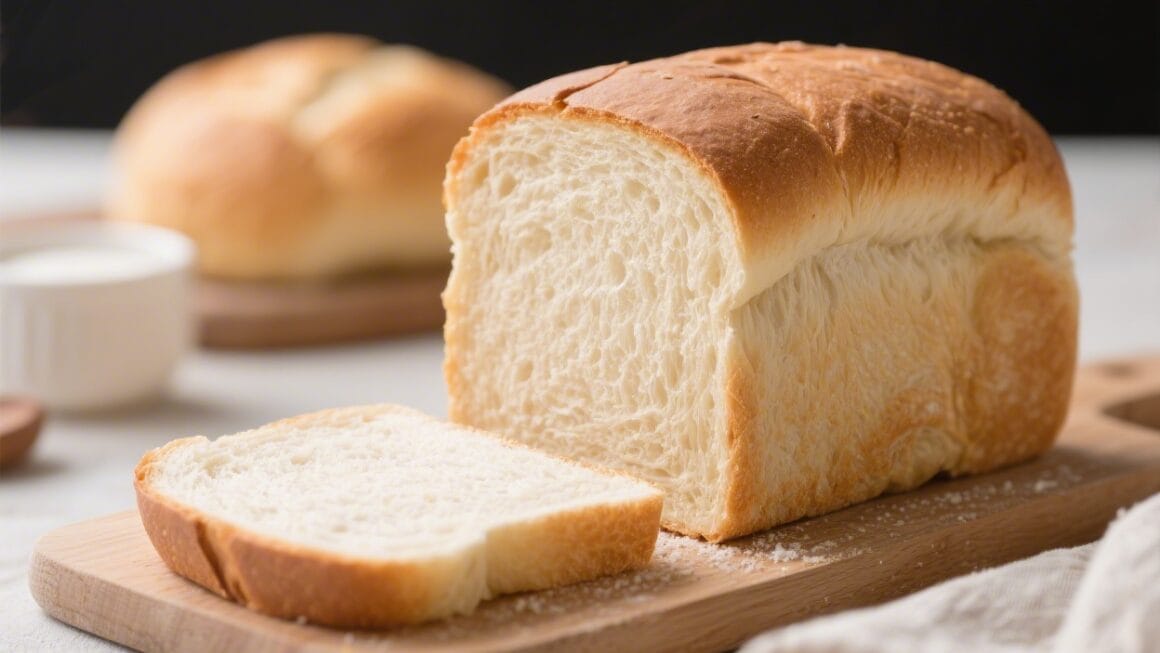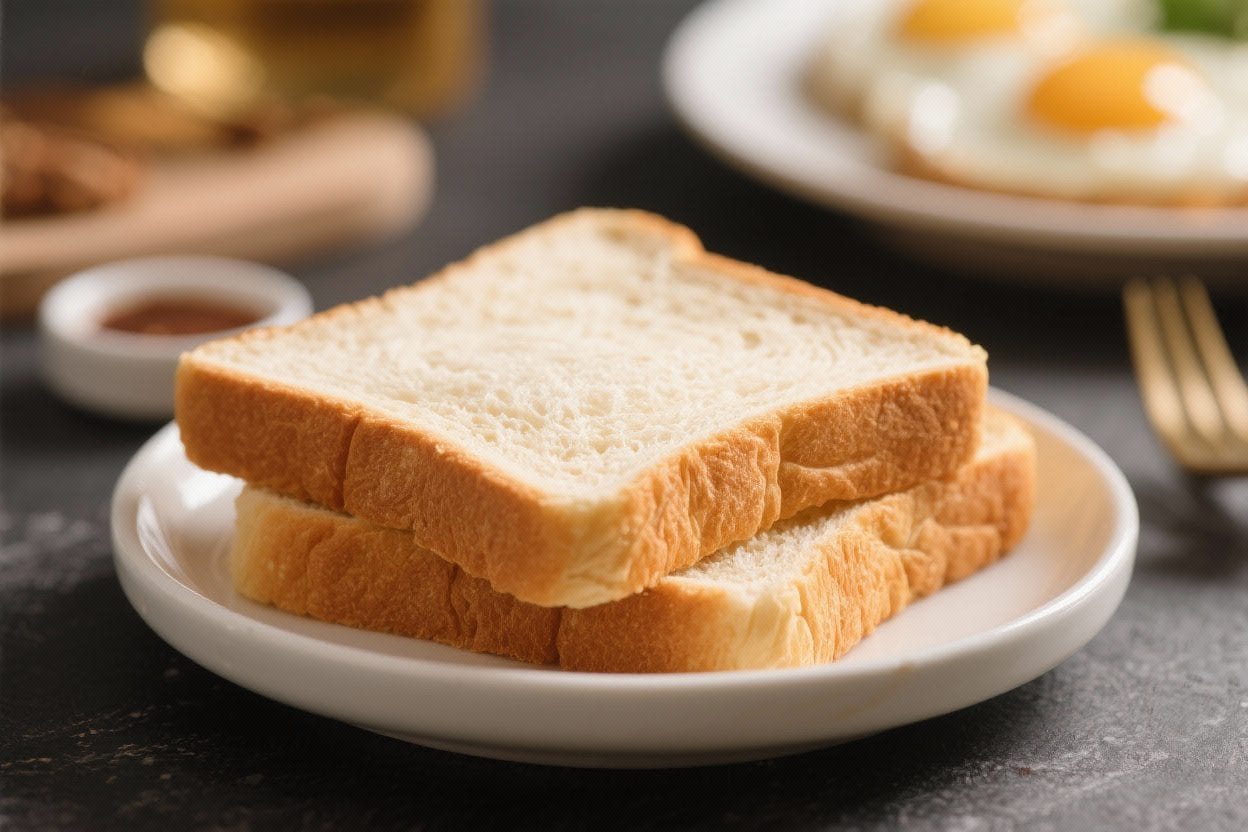
This is the kind of bread that makes mornings better. It’s soft, slightly sweet, and toasts up beautifully with a crisp edge and a tender middle. You don’t need fancy equipment or expert skills—just a bowl, some patience, and a warm spot for the dough to rise.
If you’ve been wanting a reliable everyday loaf that works for toast, sandwiches, and French toast, this is it. Make one loaf for now and freeze a second for later—you’ll be glad you did.
What Makes This Special
- Super soft crumb: A touch of milk and butter gives the bread its pillowy texture.
- Perfect for toasting: It browns evenly and keeps its shape, making it great for toast or breakfast sandwiches.
- Beginner-friendly: Straightforward steps and forgiving dough.
- Stays fresh longer: Milk, sugar, and fat help keep it tender for a few days.
- Customizable: Add seeds, swap sweeteners, or make it whole-wheat with easy tweaks.
Ingredients
- 3 1/4 cups (390 g) bread flour (or all-purpose, plus 1–2 tbsp extra if needed)
- 1 cup (240 ml) warm milk, about 105–110°F (40–43°C)
- 1/3 cup (80 ml) warm water
- 2 tbsp (25 g) granulated sugar (or honey)
- 2 tsp (7 g) instant yeast (or 2 1/4 tsp active dry yeast)
- 1 1/2 tsp (9 g) fine sea salt
- 3 tbsp (42 g) unsalted butter, softened
- Optional: 1 egg, beaten, for egg wash
- Optional topping: sesame seeds, poppy seeds, or rolled oats
Step-by-Step Instructions
- Activate the yeast (if using active dry): In a small bowl, mix warm water with sugar and sprinkle yeast over. Let it sit 5–10 minutes until foamy.If using instant yeast, skip this and add it with the flour.
- Combine the liquids: In a large bowl, add warm milk and the yeast mixture (or milk, water, sugar, and instant yeast). Stir to combine.
- Add dry ingredients: Add flour and salt. Mix with a spoon until a shaggy dough forms.Add the softened butter and work it in with your hands or a dough hook.
- Knead to smooth: Knead 8–10 minutes by hand on a lightly floured surface, or 6–8 minutes in a mixer on medium-low, until the dough is smooth, elastic, and slightly tacky. If it’s very sticky, add flour 1 tablespoon at a time.
- First rise: Shape the dough into a ball and place it in a lightly oiled bowl, turning once to coat. Cover and let rise in a warm spot until doubled, about 60–90 minutes.
- Shape the loaf: Gently deflate the dough.For a classic sandwich loaf, pat into a rectangle about 8×12 inches (20×30 cm). Roll up tightly from the short side, pinch the seam, and tuck the ends under.
- Pan and second rise: Place in a greased 9×5-inch (23×13 cm) loaf pan, seam side down. Cover and let rise until the dough crowns about 1 inch above the rim, 40–60 minutes.
- Preheat the oven: Heat to 350°F (175°C).If using egg wash, beat 1 egg with a tablespoon of water and brush lightly over the loaf. Add seeds or oats if desired.
- Bake: Bake 30–35 minutes until deep golden and the internal temperature reaches about 195–200°F (90–93°C). If the top is browning too fast, tent with foil for the last 10 minutes.
- Cool: Remove from the pan and cool on a rack at least 45 minutes before slicing.This sets the crumb and keeps it soft.
Keeping It Fresh
- Room temperature: Store in a bread box or wrapped in a clean towel for up to 3 days. Avoid the fridge—it dries bread out.
- Freezing: Slice the loaf, wrap tightly in plastic or a freezer bag, and freeze for up to 2 months. Toast slices straight from the freezer.
- Reviving: If the crust softens, re-crisp slices in the toaster or warm the whole loaf in a 325°F (165°C) oven for 8–10 minutes.
Health Benefits
- Simple ingredients: No additives, conditioners, or preservatives—just flour, yeast, milk, and butter.
- Better control: You choose the sugar and salt levels, and can swap in part whole wheat or spelt for more fiber.
- Protein and calcium: Milk adds a bit of protein and calcium, and improves browning for a satisfying crust.
- Balanced breakfast base: Pair a slice with eggs, nut butter, or yogurt for a filling morning meal.
Pitfalls to Watch Out For
- Milk too hot: If the milk is above 120°F (49°C), it can kill the yeast.Aim for warm, not hot.
- Under-kneading: The dough should stretch without tearing. If it rips easily, knead a bit longer.
- Over-proofing: If the dough rises too high and collapses, the loaf can bake flat. Bake when it’s 1 inch above the pan.
- Cutting too soon: Slicing hot bread compresses the crumb.Let it cool to set the structure.
- Too much flour: A stiff, dry dough makes a dense loaf. Keep it slightly tacky for a soft crumb.
Recipe Variations
- Honey Oat Loaf: Replace sugar with honey and roll the top in oats after egg wash.
- Half Whole Wheat: Use 50% whole wheat flour and 50% bread flour. Add 1–2 tablespoons extra water if needed.
- Milk-Free: Use warm water and 2 tablespoons oil instead of milk and butter.Texture will be slightly less rich but still soft.
- Japanese-Style Softness: Make a tangzhong: cook 3 tbsp flour with 1/2 cup milk until thick, cool, then add to the dough for ultra-pillowy slices.
- Seeded Sandwich Bread: Knead in 1/3 cup mixed seeds (pumpkin, sunflower, sesame) after the first rise.
- Garlic Herb Breakfast Toast: Add 1 tsp garlic powder and 2 tsp dried herbs to the flour for savory toast.
FAQ
Can I use all-purpose flour instead of bread flour?
Yes. All-purpose works well here. The loaf may be slightly less chewy, but it will still be soft and great for toast.
If the dough feels sticky, add 1–2 tablespoons extra flour during kneading.
What if I only have active dry yeast?
Use 2 1/4 teaspoons and proof it in warm water with sugar first. Once foamy, proceed as directed. Rise times can be a touch longer than with instant yeast.
How do I know when the dough has been kneaded enough?
It should feel smooth and elastic.
When you stretch a small piece, it should form a thin “windowpane” without tearing quickly. If it tears, knead another 1–2 minutes and test again.
Why did my bread sink after baking?
It likely over-proofed or the oven wasn’t fully preheated. Next time, bake once the dough is about 1 inch over the pan rim and make sure the oven is at temperature before the loaf goes in.
Can I make this without dairy?
Yes.
Replace milk with warm water or a neutral non-dairy milk, and use oil instead of butter. The flavor will be slightly different but still tender and toast-friendly.
How thick should I slice for toast?
For even browning, slice about 1/2 inch (1.25 cm) thick. For French toast, go a little thicker—around 3/4 inch (2 cm).
Can I double the recipe?
Absolutely.
Mix and knead as usual, then divide the dough into two pans. Baking time is the same; rotate pans halfway for even color.
Wrapping Up
A soft, dependable breakfast loaf is a small kitchen victory with big payoff. This one gives you tender slices that toast like a dream, hold up to butter and jam, and make an excellent sandwich.
Once you’ve made it once or twice, it becomes a simple weekend habit. Keep a loaf on the counter, stash one in the freezer, and you’ll always be set for a better breakfast.
Printable Recipe Card
Want just the essential recipe details without scrolling through the article? Get our printable recipe card with just the ingredients and instructions.