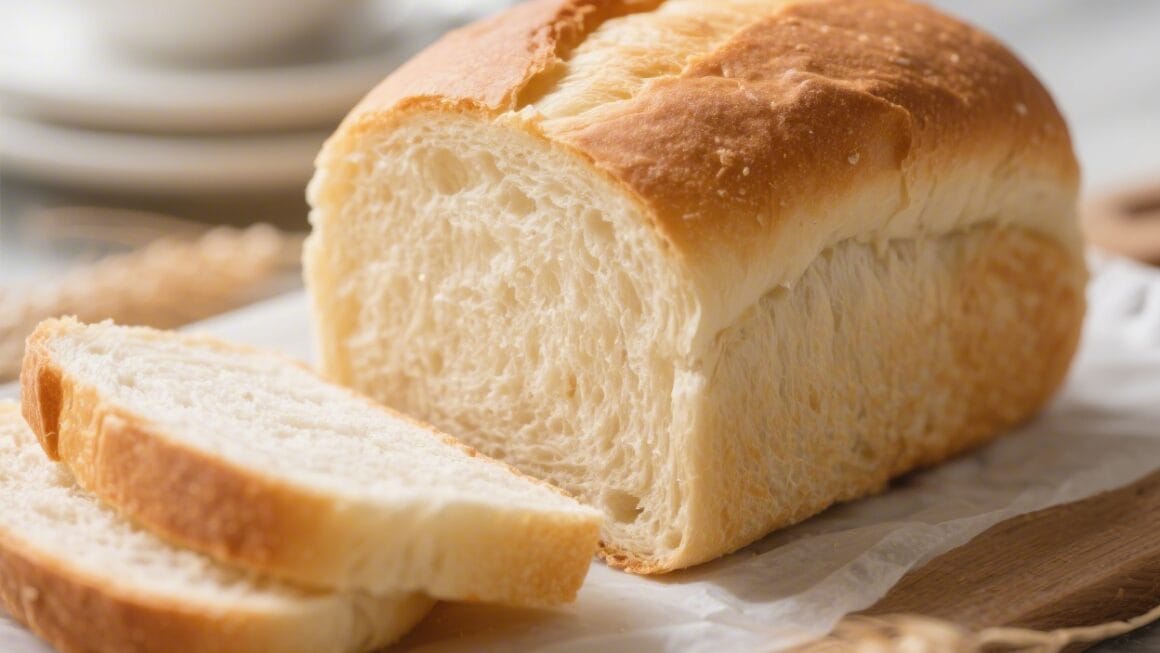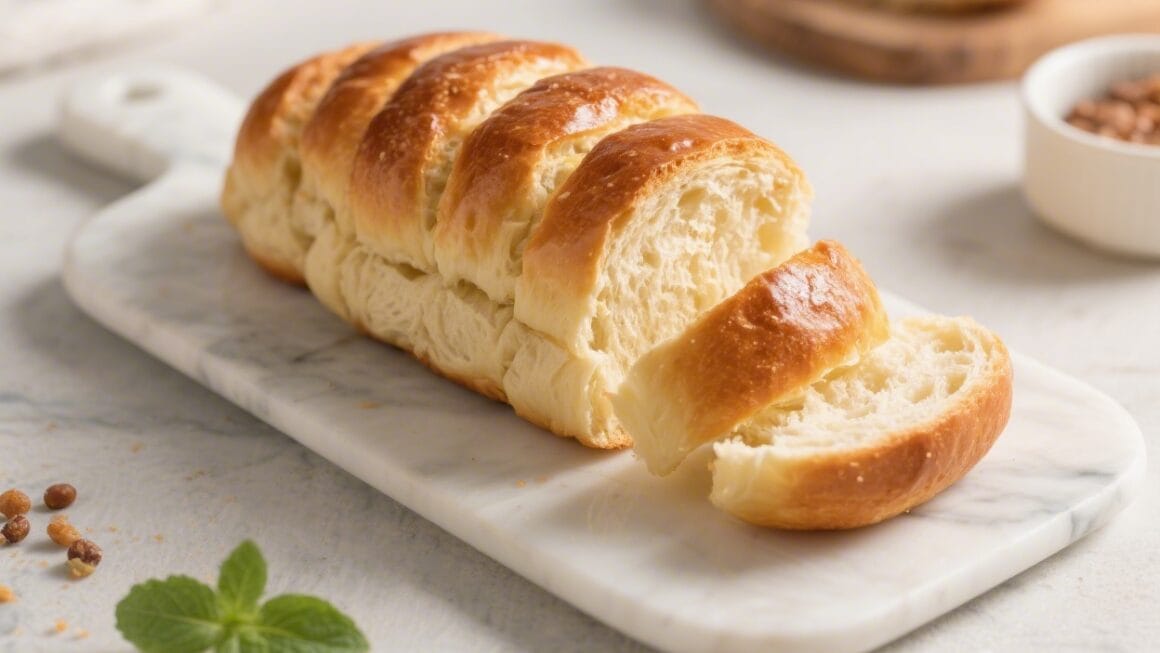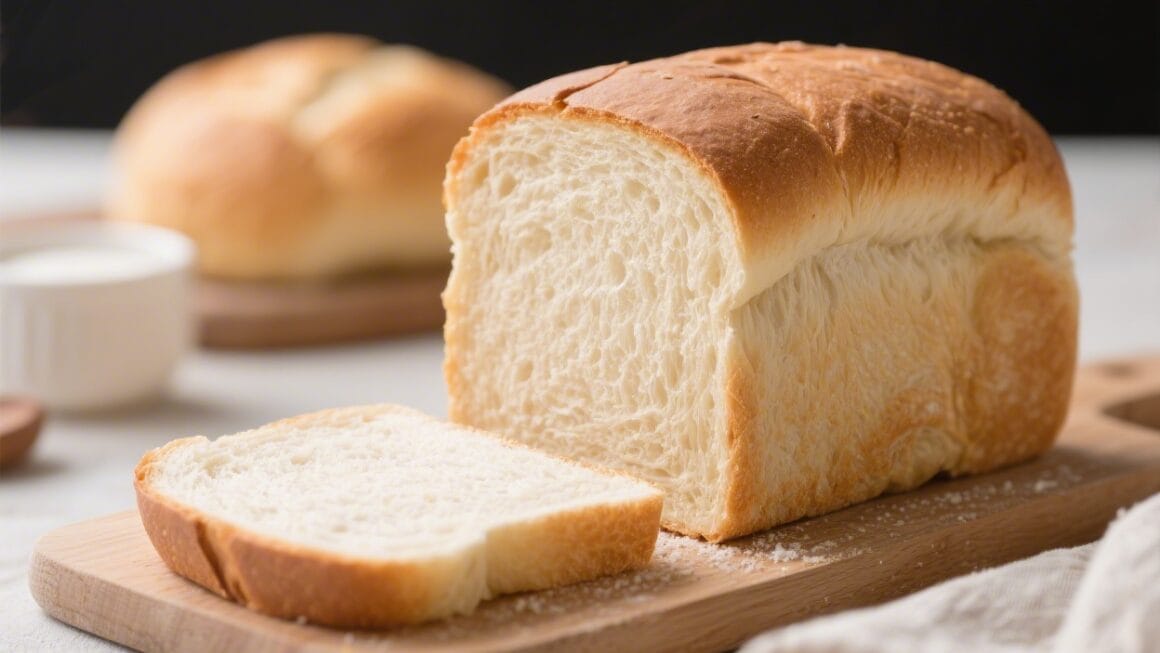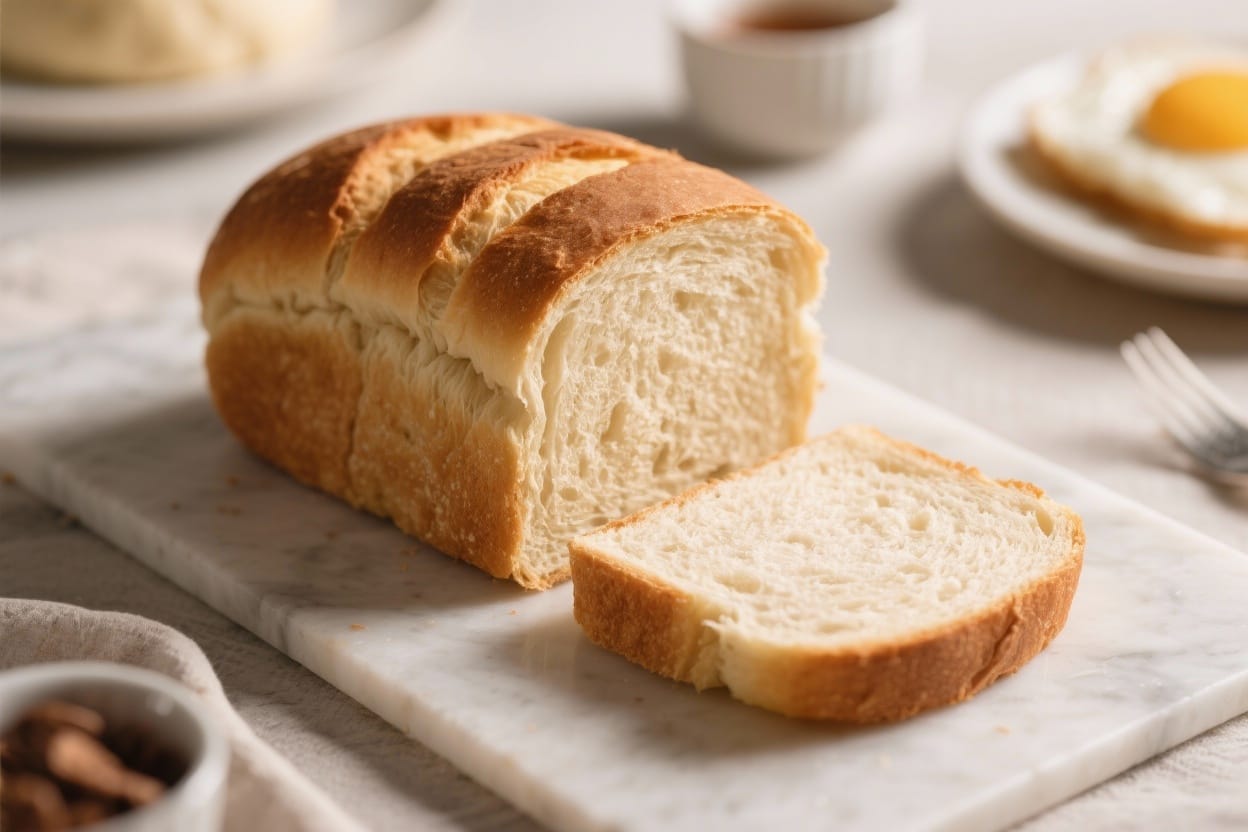
This is the kind of bread you make on a quiet morning and enjoy all week. The dough is straightforward, the ingredients are basic, and the texture is soft with just enough chew. You don’t need special equipment or bakery skills—just a bowl, your hands, and a little patience.
Toast it with butter, turn it into breakfast sandwiches, or tear off a warm piece as you pour your first cup of coffee. It’s simple, reliable, and always comforting.
What Makes This Special
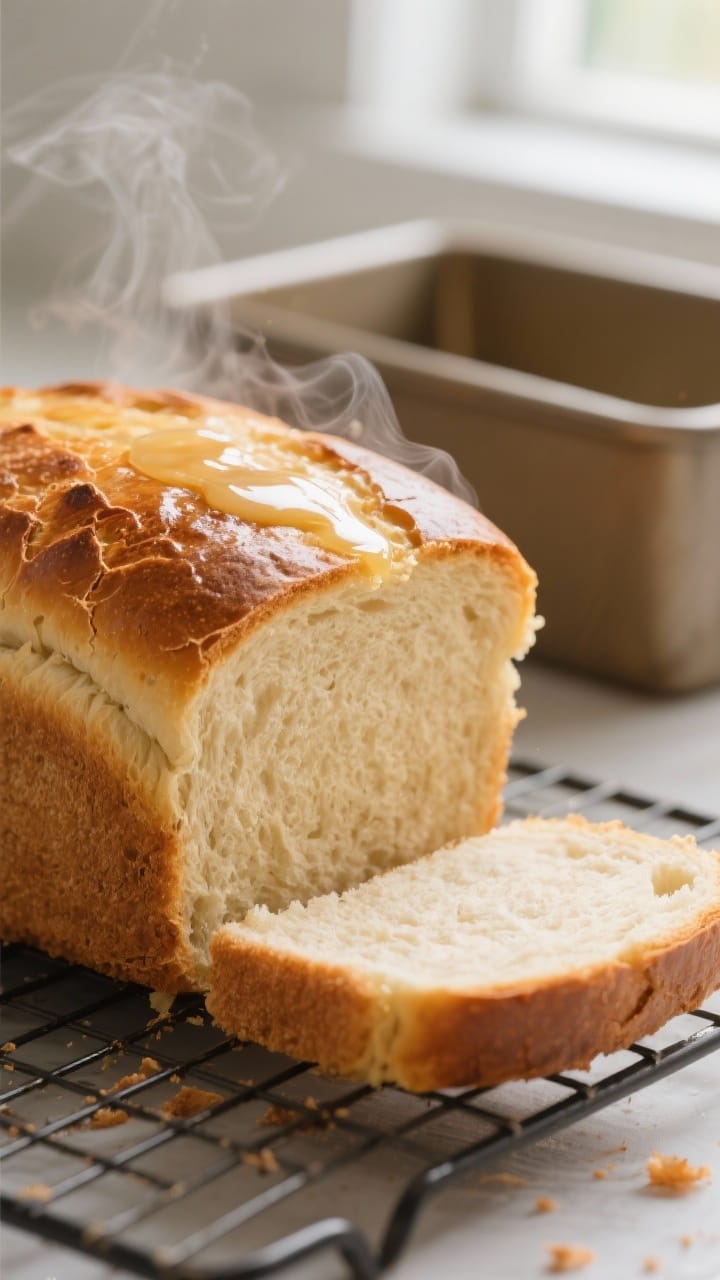
This bread is built from a single, forgiving dough that comes together quickly and rises beautifully. It’s soft enough for toast yet sturdy enough for spreads and eggs.
The flavor is mild and slightly sweet, which makes it versatile for both savory and sweet toppings. Best of all, it uses pantry staples and a method that’s easy to learn and repeat. Once you’ve made it once, you’ll feel confident making it anytime.
Ingredients
- 3 cups (360 g) all-purpose flour (or use half bread flour for extra chew)
- 2 teaspoons instant yeast (or active dry yeast)
- 1 tablespoon sugar (honey works too)
- 1 teaspoon fine salt
- 1 cup (240 ml) warm milk (or water; about 100–110°F/38–43°C)
- 2 tablespoons unsalted butter, softened (or neutral oil)
- 1 egg (optional, for a richer crumb)
- 1 tablespoon butter for brushing the top (optional)
Instructions
- Proof the yeast (if using active dry). In a small bowl, mix warm milk with sugar and sprinkle in the yeast.Let it sit for 5–10 minutes until foamy. If using instant yeast, skip this step and mix it directly with the flour.
- Combine dry ingredients. In a large bowl, whisk flour and salt. If using instant yeast, add it now and stir to distribute evenly.
- Add wet ingredients. Pour in the milk (foamy mixture if proofed), softened butter, and egg if using.Stir with a wooden spoon or spatula until a shaggy dough forms. If it’s very dry, add a tablespoon of milk at a time.
- Knead the dough. Turn the dough onto a lightly floured surface. Knead for 8–10 minutes until smooth and elastic.The dough should be soft and slightly tacky but not sticky. Add small sprinkles of flour only as needed.
- First rise. Shape the dough into a ball and place it in a lightly oiled bowl. Cover with a clean towel or plastic wrap and let it rise in a warm spot until doubled, about 60–90 minutes.
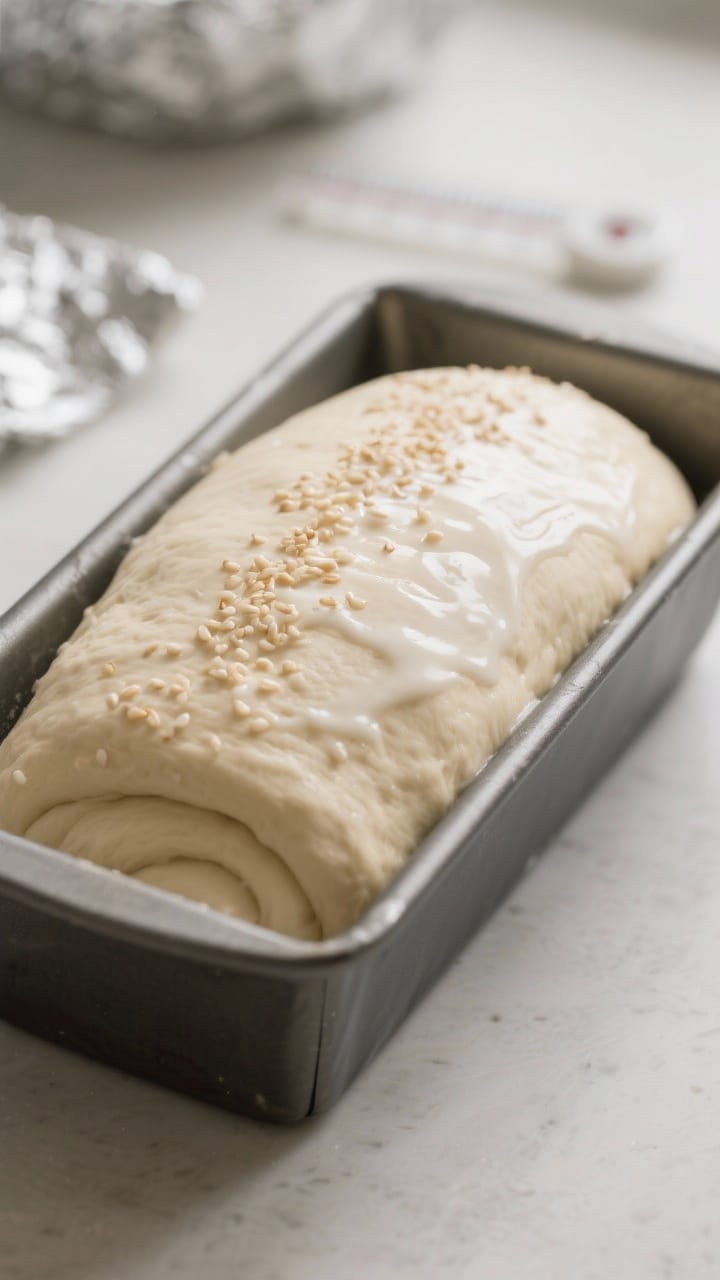
- Shape the loaf. Gently deflate the dough and pat it into a rectangle.Roll it up tightly from the short side, pinch the seam, and tuck the ends under. Place it seam-side down in a greased 8.5×4.5-inch or 9×5-inch loaf pan.
- Second rise. Cover and let the dough rise until it’s about 1 inch above the rim of the pan, 30–60 minutes depending on room temperature. The dough should spring back slowly when lightly pressed.
- Preheat and bake. Preheat the oven to 350°F (175°C).Bake for 28–35 minutes, until the top is golden and the internal temperature reaches about 190–195°F (88–90°C). If the top browns too fast, tent with foil for the last 10 minutes.
- Finish and cool. Brush the hot loaf with butter for a soft, shiny crust. Let it cool in the pan for 10 minutes, then transfer to a rack.Cool at least 45 minutes before slicing to keep the crumb from squashing.
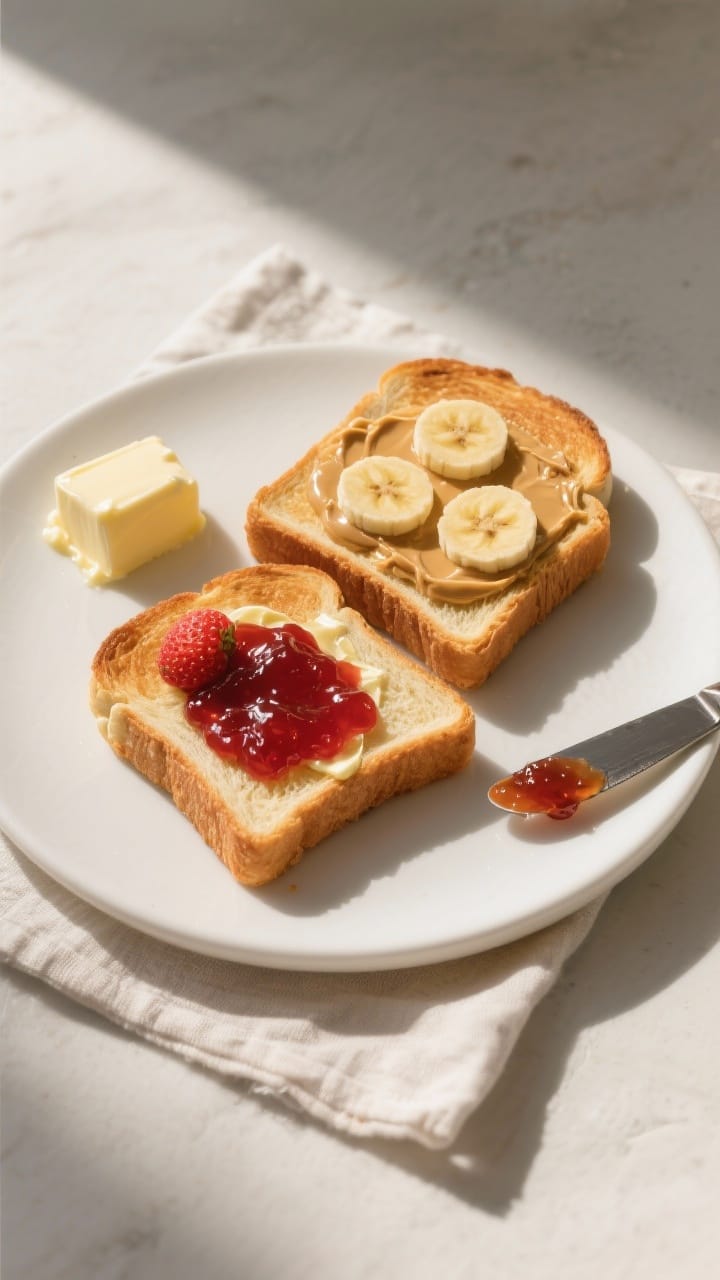
- Serve. Slice and toast, slather with butter and jam, or layer with eggs and cheese for a breakfast sandwich. It’s also great with peanut butter and banana.
How to Store
- Room temperature: Keep the loaf in a bread bag or wrapped in a clean towel for up to 3 days. Avoid the fridge; it dries bread out faster.
- Freezer: Slice the loaf, place parchment between slices, and freeze in a zip-top bag for up to 2 months.Toast straight from frozen.
- Refresh: If the bread feels a bit dry, warm slices in the toaster or wrap the loaf in foil and heat at 300°F (150°C) for 8–10 minutes.
Why This is Good for You
This bread gives you steady energy for the morning. The flour provides carbs for fuel, while the milk, egg, and butter add a bit of protein and fat for satisfaction. It’s simpler than many store-bought loaves and free of unnecessary additives.
You control the sugar and salt, so you can make it as light or hearty as you like. Pair it with eggs, yogurt, fruit, or nut butter for a balanced breakfast.
Common Mistakes to Avoid
- Water too hot: Very hot liquids can kill yeast. Aim for warm, not hot—about 100–110°F (38–43°C).
- Too much flour: Adding lots of flour during kneading makes a dry loaf.The dough should be soft and a little tacky.
- Under-kneading: Without enough kneading, the bread won’t rise well. Knead until the dough is smooth and elastic.
- Over-proofing: Letting it rise too long can cause collapse. Stop when it’s doubled and springs back slowly when poked.
- Slicing too soon: Cutting hot bread compresses the crumb.Let it cool so the structure sets.
Recipe Variations
- Whole Wheat Blend: Swap 1 cup of the all-purpose flour for whole wheat. Add 1–2 tablespoons extra milk if needed.
- Honey Oat: Replace sugar with 2 tablespoons honey and fold in 1/2 cup rolled oats during mixing.
- Cinnamon Swirl: After the first rise, roll the dough into a rectangle. Sprinkle with a mixture of 2 tablespoons sugar and 1 teaspoon cinnamon, then roll up and bake as directed.
- Seeded Top: Brush the shaped loaf with a little milk and sprinkle sesame or poppy seeds before the second rise.
- Dairy-Free: Use warm water or plant milk and swap butter for neutral oil.
- Mini Breakfast Buns: Divide the dough into 8–10 pieces after the first rise.Shape into balls, place on a baking sheet, rise until puffy, and bake 15–18 minutes.
FAQ
Can I make this without a stand mixer?
Yes. This dough is very manageable by hand. Use a bowl and a wooden spoon, then knead on the counter until smooth and elastic.
What if I only have active dry yeast?
No problem.
Proof it in warm milk with the sugar until foamy, then proceed. The timing may vary slightly, but the result will be the same.
How do I know the dough is kneaded enough?
It should feel springy and smooth. When you stretch a small piece, it should thin out without tearing quickly.
If it tears right away, knead a couple more minutes.
My kitchen is cold. How can I help the dough rise?
Place the covered bowl in an oven with the light on, or set it near a warm appliance. You can also warm your bowl with hot water, dry it, then add the dough.
Can I add mix-ins like raisins or cheese?
Yes.
Fold in 1/2 to 3/4 cup of add-ins after the first rise. Pat the dough out, sprinkle evenly, and roll it up before shaping.
How do I get a softer crust?
Brush the loaf with melted butter right after baking and cover loosely with a clean towel while it cools. The steam softens the crust.
Can I make the dough the night before?
Yes.
After kneading, cover and refrigerate overnight. The next morning, let it come to room temperature, shape, rise, and bake. The flavor will be slightly deeper.
What if the top browns too quickly?
Tent the loaf with foil for the final 10–15 minutes.
This protects the crust while the inside finishes baking.
Final Thoughts
Simple Dough Breakfast Bread is a small effort with a big payoff. It’s easy to mix, forgiving to handle, and perfect for everyday breakfasts. Once you’ve made it, tweak it to fit your routine and taste—sweeter, heartier, or studded with your favorite add-ins.
Keep a loaf on the counter, and mornings feel calmer and a little more special.
Printable Recipe Card
Want just the essential recipe details without scrolling through the article? Get our printable recipe card with just the ingredients and instructions.