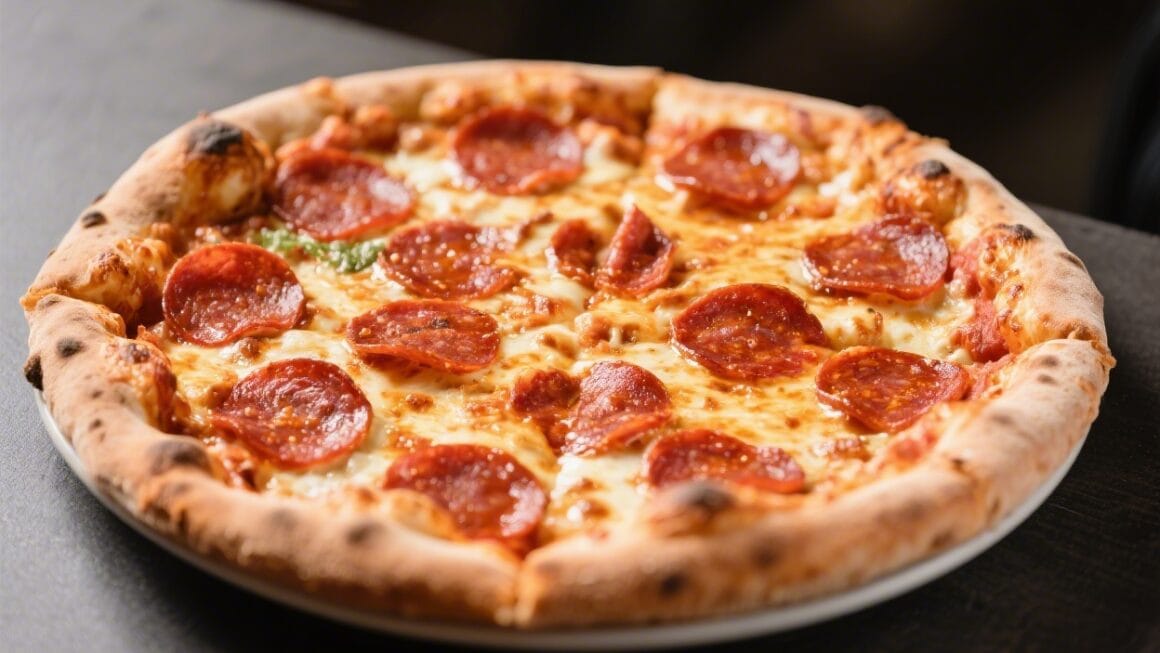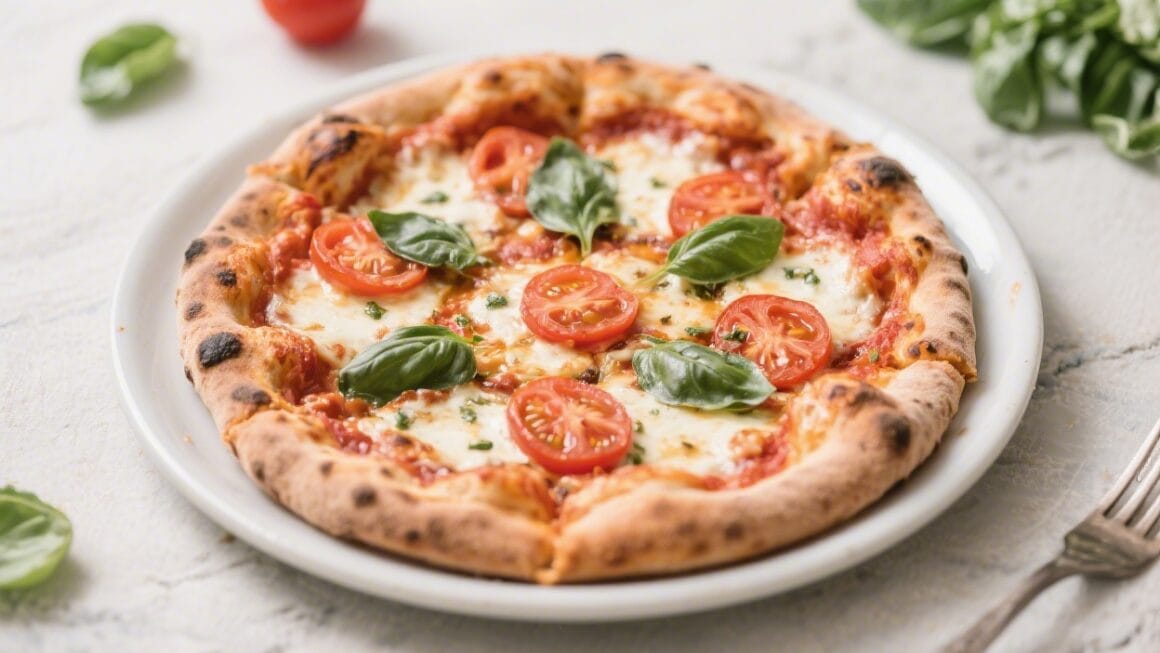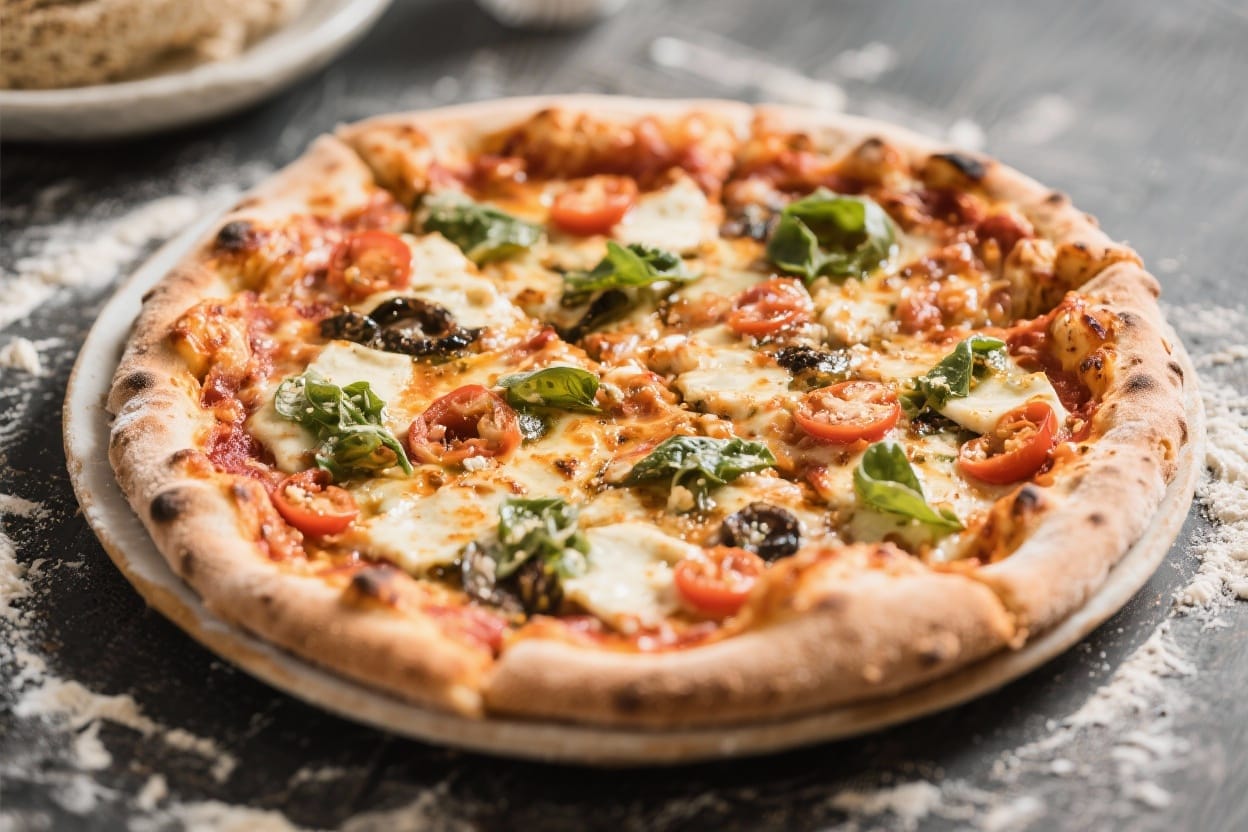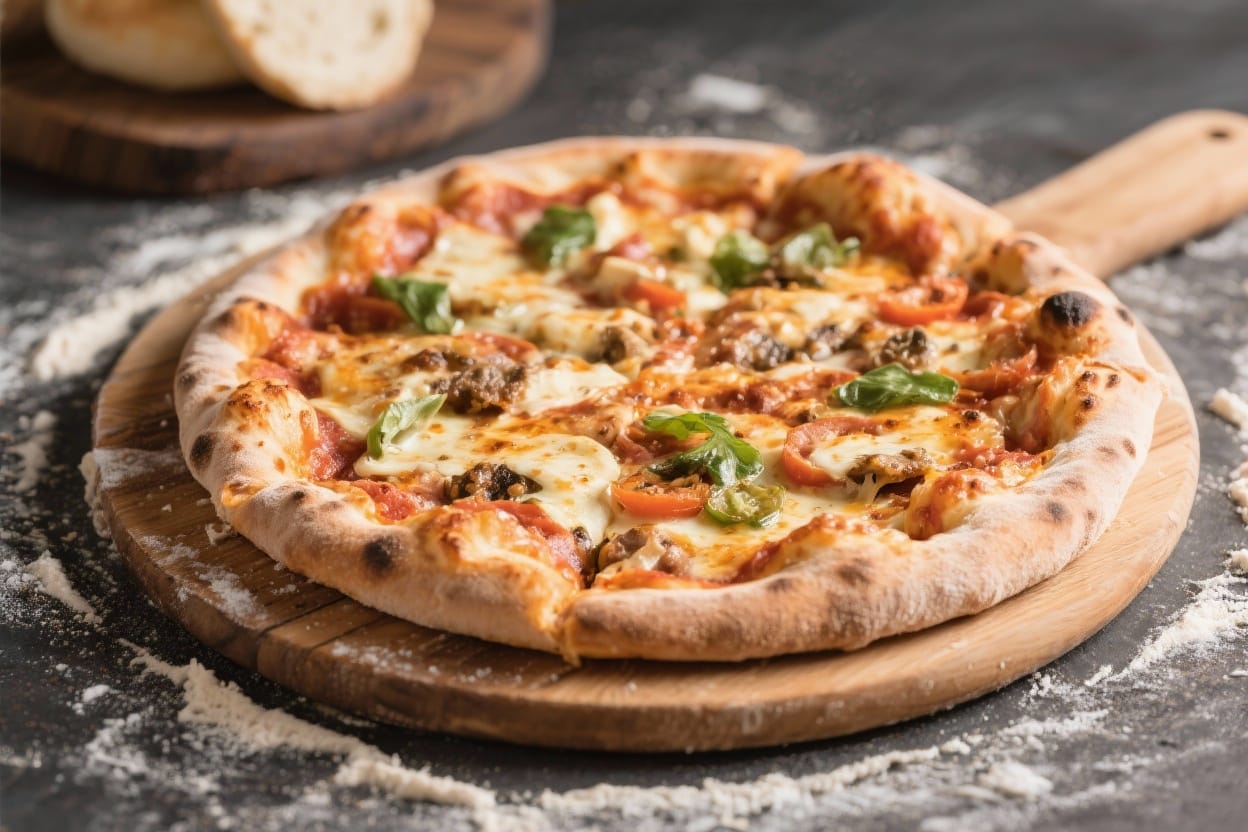
This is the recipe you pull out when pizza cravings hit and patience runs low. No proofing, no waiting, no yeast—just a crisp, tender crust ready in about 30 minutes. It’s ideal for weeknights, movie nights, or whenever you want pizza without planning ahead.
The dough comes together in one bowl, can handle a range of toppings, and bakes up beautifully in a hot oven. You’ll get fresh, homemade flavor with minimal fuss.
Why This Recipe Works
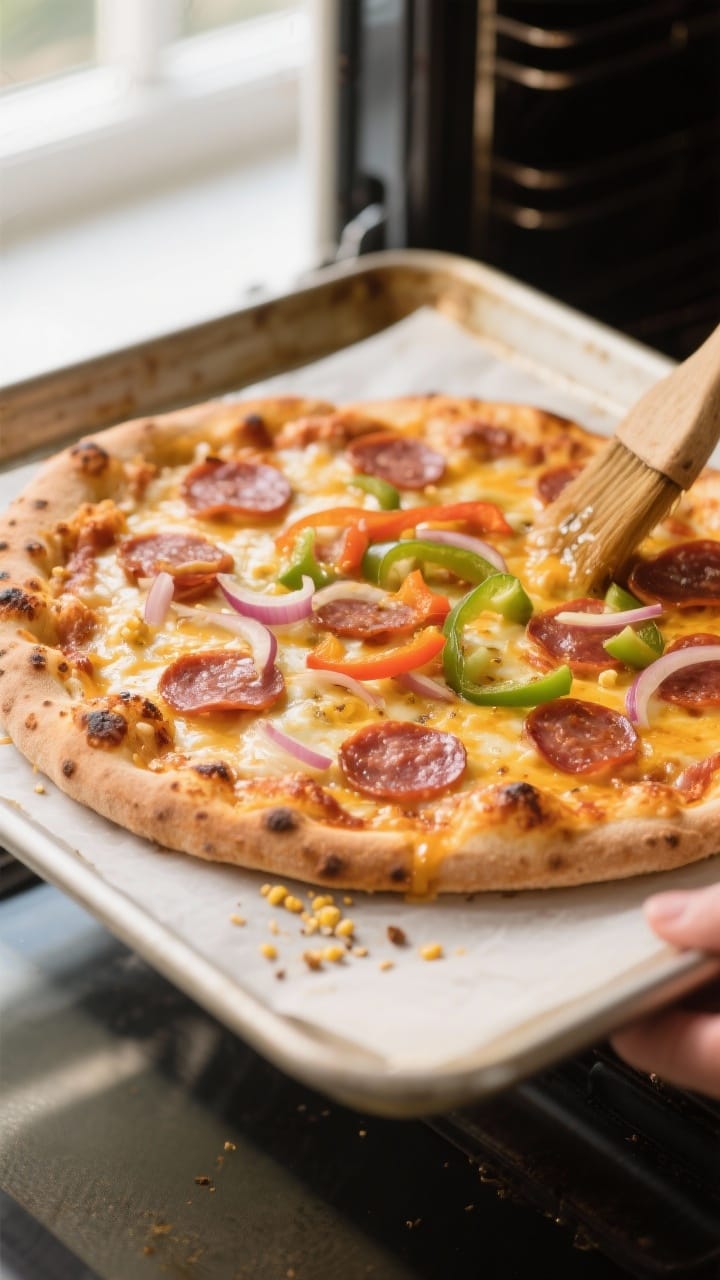
- No yeast means no rise time: Baking powder does the lifting, so you mix, roll, and bake right away.
- Yogurt or milk adds tenderness: A little dairy helps the crust stay soft inside while crisping at the edges.
- High heat gives a pizzeria vibe: A hot oven and preheated pan or stone create a browned, crisp base fast.
- Flexible and forgiving: The dough is easy to handle, doesn’t require special equipment, and works with almost any toppings.
Ingredients
- 1 3/4 cups (220g) all-purpose flour, plus extra for dusting
- 2 teaspoons baking powder
- 1/2 teaspoon fine sea salt
- 1 teaspoon sugar (optional, helps browning)
- 2 tablespoons olive oil, plus more for brushing
- 3/4 cup (180ml) plain yogurt or milk (start with 2/3 cup and add as needed)
- 2–3 tablespoons water (only if needed to bring dough together)
- 1/2 cup pizza sauce (store-bought or homemade)
- 1 1/2 cups shredded mozzarella
- Desired toppings: pepperoni, sliced bell peppers, onions, mushrooms, olives, fresh basil, etc.
- Cornmeal or extra flour for dusting the baking surface (optional)
Instructions
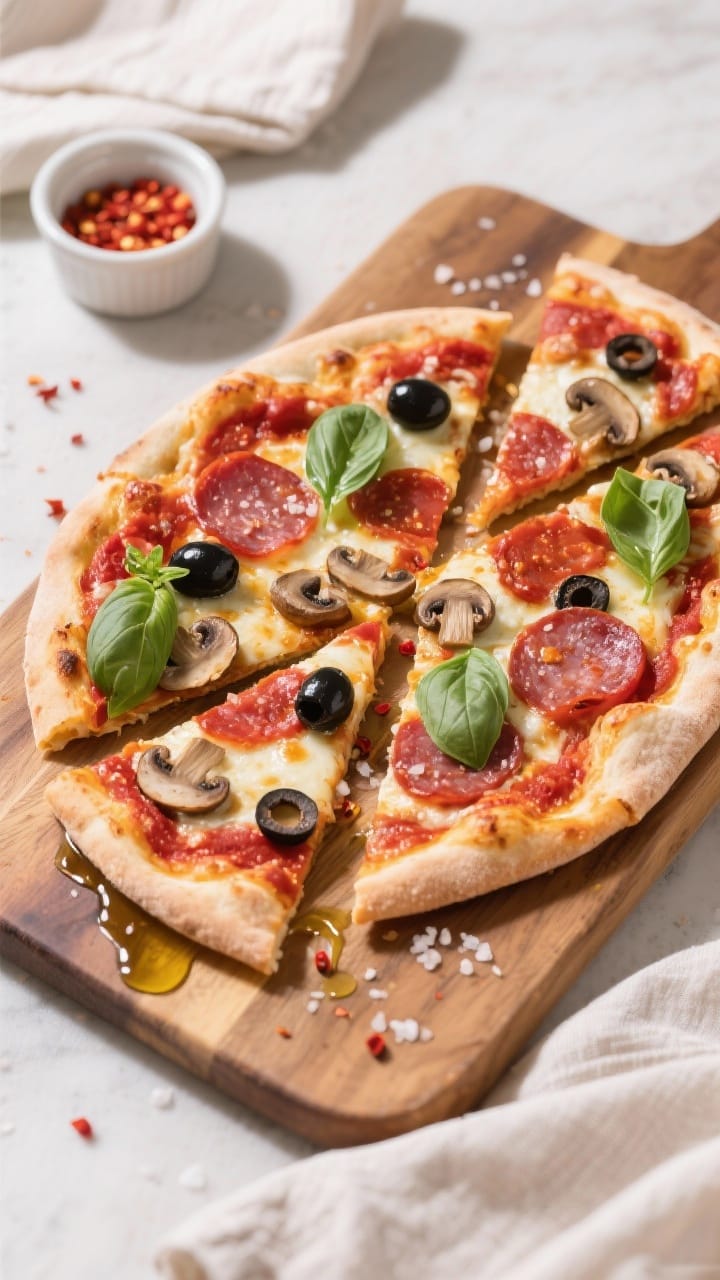
- Heat the oven: Place a baking sheet upside down or a pizza stone on the middle rack. Preheat to 475°F (245°C) for at least 15 minutes.A hot surface helps crisp the crust.
- Mix dry ingredients: In a large bowl, whisk flour, baking powder, salt, and sugar.
- Add wet ingredients: Stir in olive oil and yogurt (or milk). Mix with a spoon until shaggy. If it’s very dry, add water 1 teaspoon at a time until the dough holds together.
- Knead briefly: Turn onto a lightly floured surface.Knead for 30–60 seconds just until smooth. Don’t overwork. The dough should be soft and slightly tacky, not sticky.
- Shape the crust: Divide into 1 large or 2 small pizzas.Roll out to about 1/4 inch thick for a classic thin crust. Dust your surface and rolling pin to prevent sticking.
- Prep the base: If using a peel, dust it with cornmeal. Otherwise, use parchment.Transfer the dough round to the parchment. Lightly brush the top with olive oil to prevent sogginess under the sauce.
- Add toppings: Spread a thin layer of sauce, leaving a small border. Sprinkle cheese, then add toppings.Keep it light—overloading can make the crust steam instead of crisp.
- Bake: Slide the parchment with the pizza onto the preheated pan or stone. Bake 10–14 minutes, until the cheese is bubbly and the crust is golden with browned spots.
- Finish and serve: Let rest 2 minutes. Add fresh basil or a drizzle of olive oil if you like.Slice and serve hot.
Storage Instructions
- Leftovers: Cool completely, then refrigerate slices in an airtight container for up to 3 days.
- Reheat: For best texture, reheat on a skillet over medium heat with a lid for 3–5 minutes, or in a 400°F (205°C) oven for 6–8 minutes. Avoid the microwave if you want crispness.
- Make-ahead dough: Since it’s no-yeast, it’s best used right away. If needed, wrap tightly and chill up to 24 hours.Bring to room temperature before rolling; you may need a dusting of flour.
- Freezing: Par-bake the plain crust 5 minutes, cool, then wrap and freeze up to 2 months. Top and bake from frozen at 475°F (245°C) for 10–12 minutes.
Health Benefits
- Portion and control: Homemade pizza lets you manage portion sizes, toppings, and sodium. You choose the quality of sauce and cheese.
- Balanced add-ons: Load veggies like peppers, mushrooms, onions, and spinach for fiber, antioxidants, and volume without heavy calories.
- Better fats: Olive oil contributes heart-healthy monounsaturated fats.Opt for part-skim mozzarella to reduce saturated fat.
- Whole-grain option: Swap up to half the all-purpose flour with white whole wheat for extra fiber while keeping the crust tender.
Pitfalls to Watch Out For
- Overworking the dough: Too much kneading can make the crust tough. Mix until just smooth.
- Too much liquid: Add yogurt or milk gradually. A sticky dough won’t crisp well and is hard to roll.
- Overloading toppings: Heavy toppings trap moisture and prevent browning.Keep them thinly sliced and moderate.
- Cool oven or pan: If your surface isn’t hot, the crust can bake pale and soft. Preheat thoroughly.
- Thick sauce layer: A heavy sauce layer leads to soggy centers. Use a thin, even coating.
Alternatives
- Gluten-free: Use a 1:1 gluten-free flour blend with xanthan gum.Add a touch more liquid if needed and par-bake 3–4 minutes before topping.
- Dairy-free: Swap yogurt/milk with unsweetened almond or oat milk, and use dairy-free mozzarella. Add a teaspoon of lemon juice for tenderness.
- Herb crust: Mix 1 teaspoon dried oregano or Italian seasoning into the dough for extra flavor.
- Pan pizza style: Press the dough into an oiled cast-iron skillet, top, and bake 12–15 minutes. Expect a thicker, softer crust with crisp edges.
- White pizza: Skip tomato sauce.Brush with olive oil and garlic, add ricotta dollops, mozzarella, and spinach or artichokes.
- Protein boost: Add cooked chicken, turkey pepperoni, or chickpeas for more staying power without overpowering the crust.
FAQ
Can I use self-rising flour?
Yes. Replace the all-purpose flour, baking powder, and salt with 1 3/4 cups self-rising flour. Taste your sauce and cheese before adding extra salt.
What if I don’t have yogurt?
Use milk, but start with a little less and add gradually.
You can also mix milk with a teaspoon of lemon juice to mimic yogurt’s tenderness.
How do I get a crisp bottom without a stone?
Preheat an upside-down baking sheet and bake the pizza on parchment directly on that hot surface. A little cornmeal helps, too.
Can I make this gluten-free?
Yes, with a quality 1:1 gluten-free blend. The dough may be more delicate, so roll between two sheets of parchment and par-bake before topping.
Why is my crust pale?
Likely the oven or pan wasn’t hot enough, or the dough was too wet.
Preheat longer, use the middle rack, and brush the edge with a touch of oil for better browning.
Can I double the recipe?
Absolutely. Mix in a larger bowl, divide into portions, and work with one at a time. Keep unused dough covered to prevent drying.
Do I need to poke holes in the dough?
If your toppings are minimal, it’s optional.
For heavier toppings, lightly dock the center with a fork to prevent bubbles.
Final Thoughts
A great pizza doesn’t have to take all afternoon. With a hot oven, a simple baking powder dough, and a light hand on toppings, you’ll get a crust that’s crisp, tender, and ready fast. Keep these ingredients on hand, and you’re never more than a half hour away from a fresh, homemade pie.
Once you try it, you might make weeknight pizza a new tradition.
Printable Recipe Card
Want just the essential recipe details without scrolling through the article? Get our printable recipe card with just the ingredients and instructions.