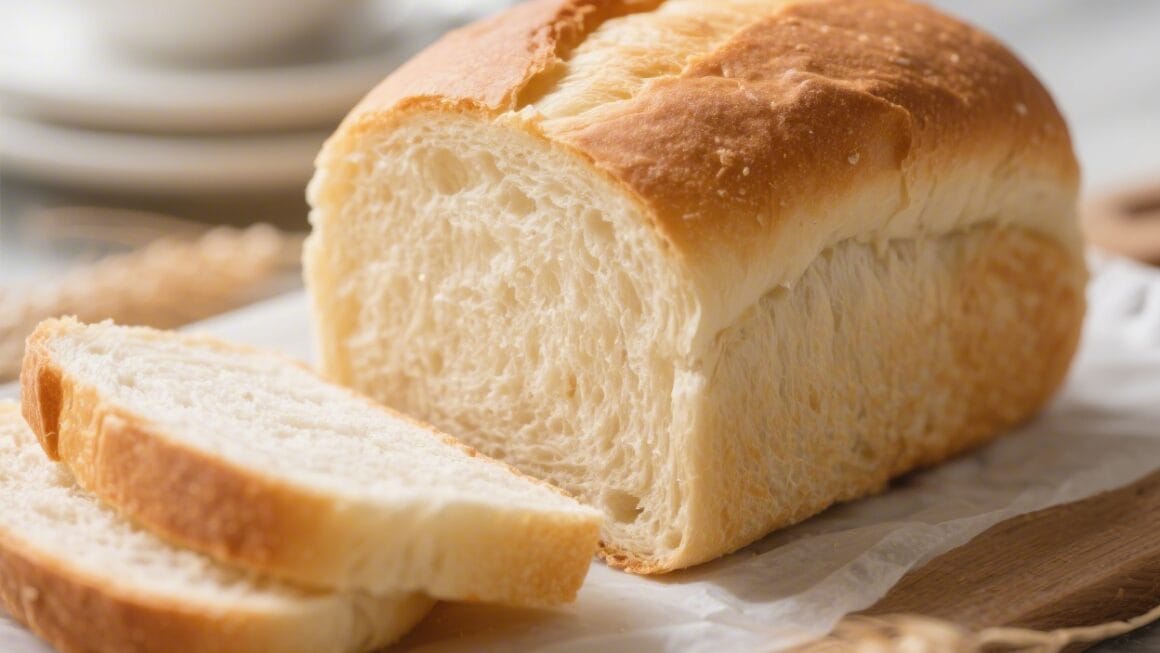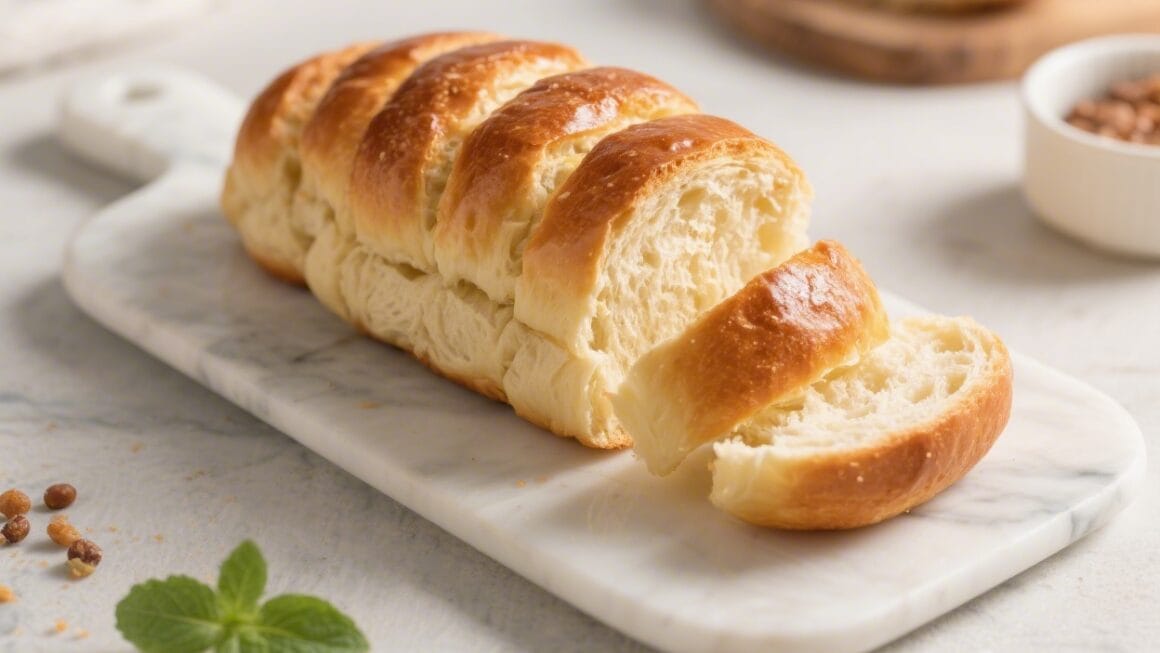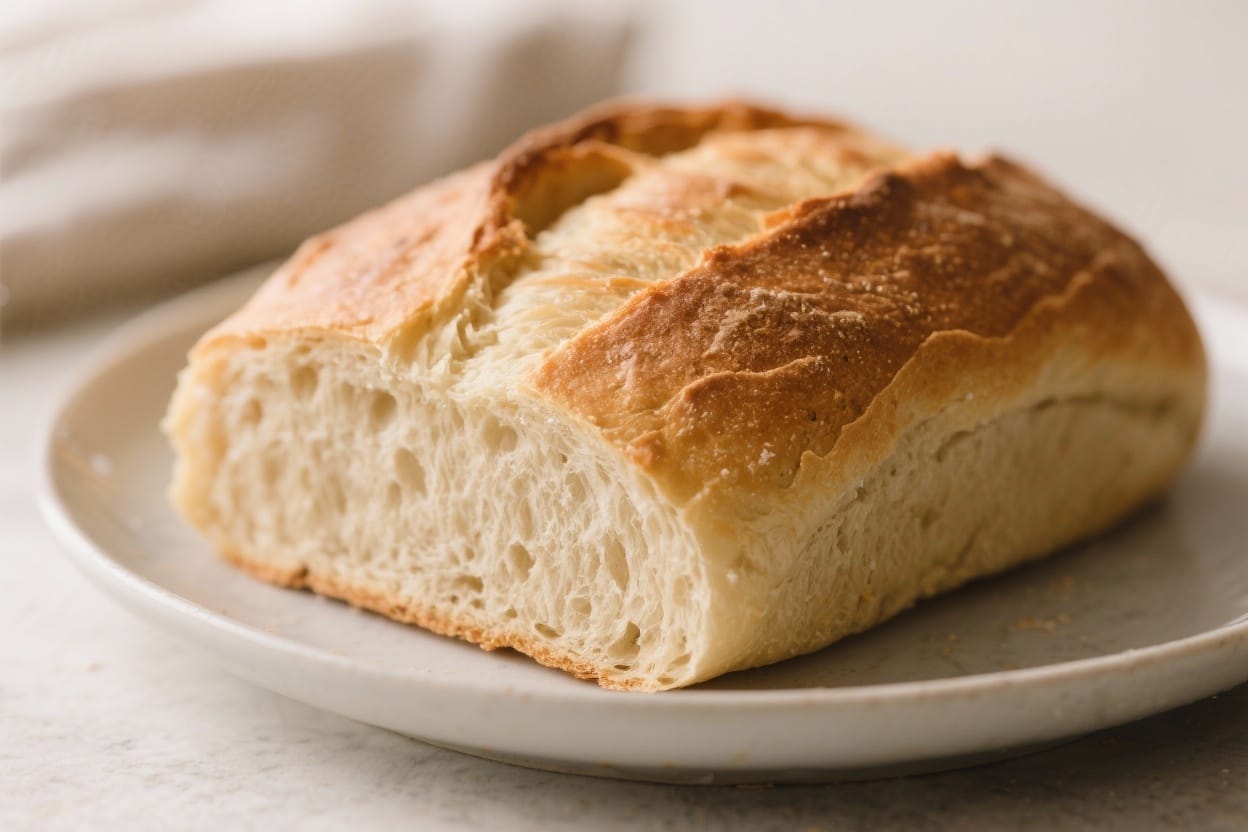
Warm, fresh bread shouldn’t be complicated. This one-bowl homemade bread gives you a golden crust and soft, tender crumb with almost no fuss. If you can measure, stir, and wait a little, you can make a loaf you’ll be proud to slice.
It’s the kind of recipe you’ll come back to on busy weeknights or lazy weekends. No fancy tools, no complicated steps—just honest, homemade bread.
What Makes This Recipe So Good
- One bowl, minimal mess: Everything comes together in a single mixing bowl, so cleanup is quick.
- Beginner-friendly: Uses basic ingredients and straightforward steps. No special techniques required.
- Soft inside, crisp outside: You’ll get that classic bakery feel with minimal effort.
- Flexible timing: The dough is forgiving, so a few extra minutes won’t ruin it.
- Customizable: Add herbs, seeds, or a touch of honey to make it your own.
Ingredients
- 3 1/4 to 3 1/2 cups (390–420 g) all-purpose flour or bread flour
- 1 packet (2 1/4 teaspoons) active dry yeast or instant yeast
- 1 1/4 cups (300 ml) warm water (about 105–110°F; warm to the touch, not hot)
- 2 tablespoons sugar or honey
- 1 1/2 teaspoons fine salt
- 2 tablespoons olive oil or melted butter, plus a little for greasing
- Optional: 1 egg for egg wash, oats or seeds for topping
Instructions
- Proof the yeast (if using active dry): In a large bowl, mix warm water and sugar.Sprinkle the yeast over the top. Let it sit 5–10 minutes until foamy. If using instant yeast, skip proofing and add it with the flour in the next step.
- Mix the dough: Add 3 cups of flour, salt, and oil to the bowl.Stir with a wooden spoon until a shaggy dough forms. If it’s very sticky, add the remaining flour a little at a time until the dough pulls away from the sides of the bowl but still feels slightly tacky.
- Knead in the bowl: Dust your hands with a bit of flour and knead the dough right in the bowl for 3–5 minutes. Fold the dough over itself, press, turn, and repeat.The dough should become smoother and spring back when poked.
- First rise: Lightly oil the bowl, place the dough back in, and turn it once to coat. Cover with a damp towel or plastic wrap. Let it rise in a warm spot until doubled in size, about 60–90 minutes.
- Shape the loaf: Punch down the dough gently to release air.Turn it onto a lightly floured surface, pat into a rectangle, then roll it up tightly into a log. Pinch the seam closed and tuck the ends under.
- Second rise: Grease a loaf pan (8.5 x 4.5 or 9 x 5 inches). Place the dough seam-side down in the pan.Cover and let rise again until the dough domes about 1 inch above the rim, 30–45 minutes.
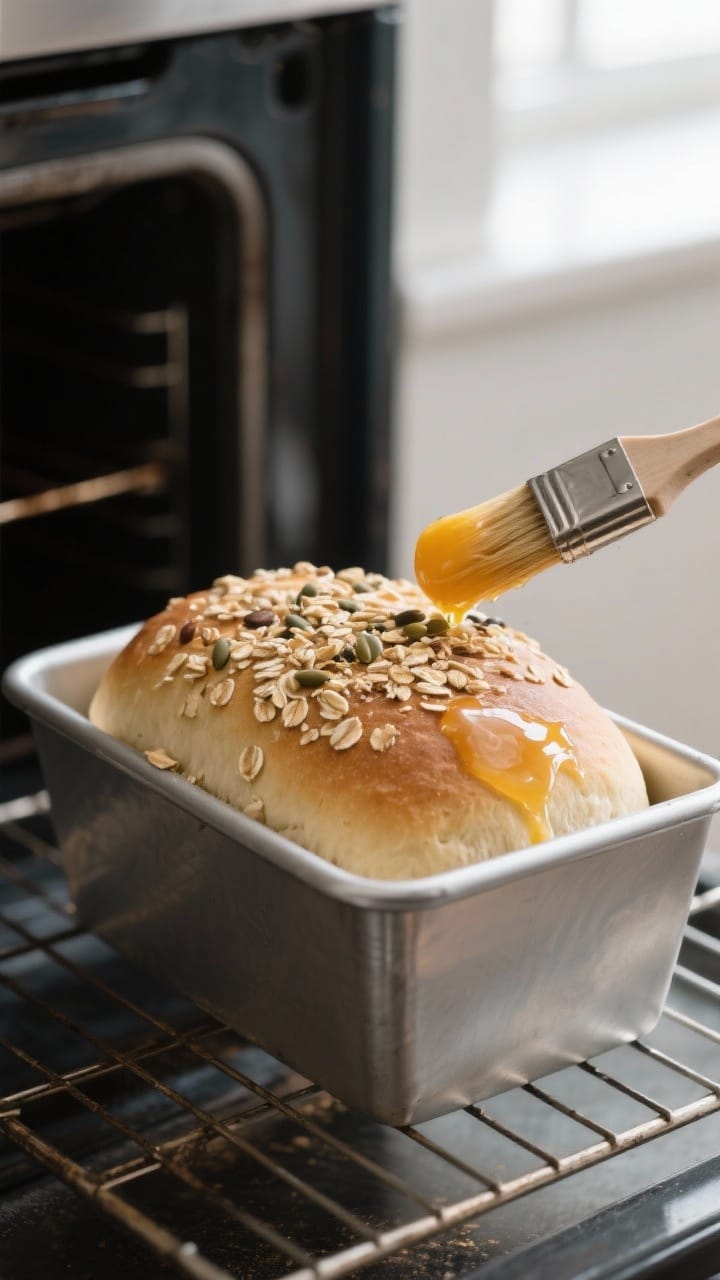
- Preheat the oven: Heat to 375°F (190°C). If using an egg wash, whisk 1 egg with a splash of water and brush it over the top. Sprinkle oats or seeds if you’d like.
- Bake: Bake for 28–35 minutes, until the top is deep golden and the loaf sounds hollow when tapped.The internal temperature should reach about 195–200°F.
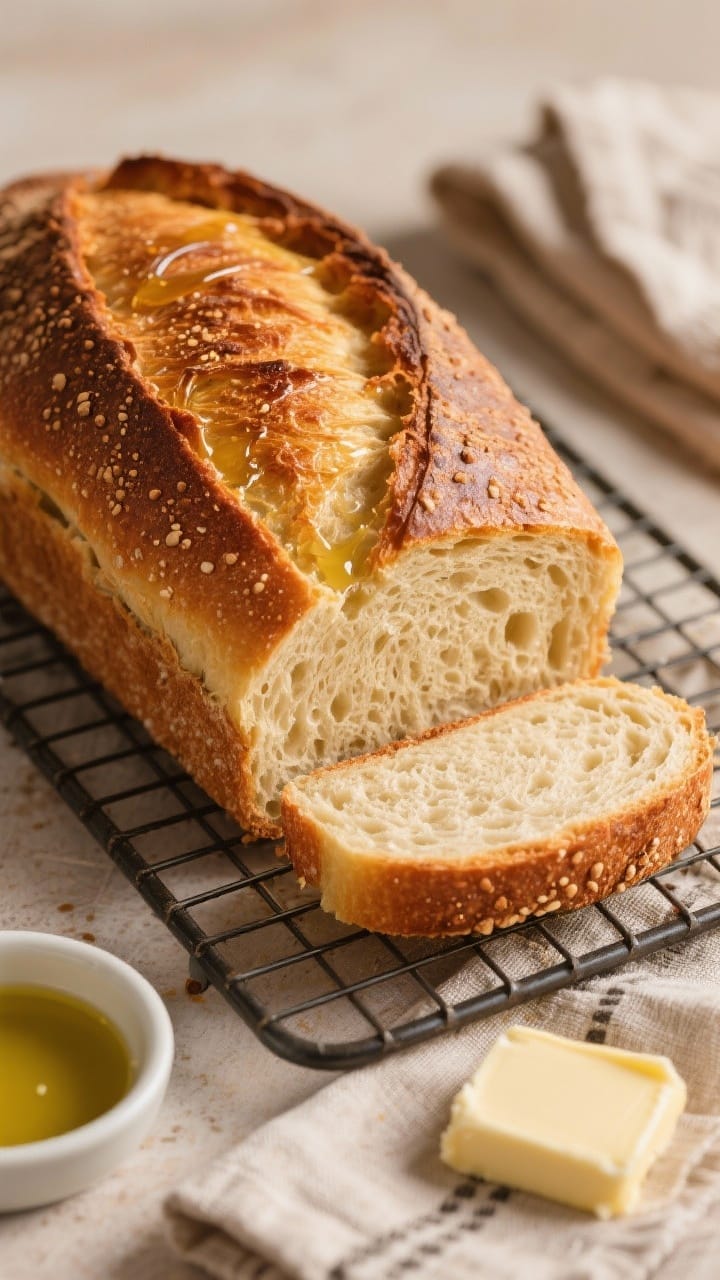
- Cool: Let the bread rest in the pan for 10 minutes, then transfer to a wire rack. Cool at least 30 minutes before slicing to keep the crumb tender.
How to Store
- Room temperature: Wrap the cooled loaf in a clean kitchen towel or store in a bread box for up to 3 days. Avoid airtight plastic if you want to preserve the crust.
- Freeze: Slice the bread, wrap tightly in plastic, then foil, and freeze up to 3 months.Pull out slices as needed and toast straight from frozen.
- Revive the crust: If the crust softens, pop the loaf in a 350°F oven for 5–8 minutes to refresh.
Benefits of This Recipe
- Budget-friendly: Flour, yeast, and water create a full loaf for a fraction of store prices.
- Cleaner ingredient list: No additives or preservatives—just simple pantry staples.
- Therapeutic and rewarding: A few minutes of kneading is calming, and the results feel special.
- Versatile base: Works for toast, sandwiches, or as a side for soups and salads.
- Scales well: Double the recipe for two loaves with the same method.
Common Mistakes to Avoid
- Using water that’s too hot: Hot water can kill the yeast. Aim for warm, not hot—about 105–110°F.
- Too much flour: A slightly sticky dough is normal. Adding too much flour can make the bread dense and dry.
- Skipping the second rise: That final proof helps create a lighter crumb and a better rise in the oven.
- Cutting too soon: Slicing while hot compresses the crumb and makes it gummy.Let it rest first.
- Underbaking: Pale crust often means a doughy center. Bake until deeply golden or use a thermometer.
Variations You Can Try
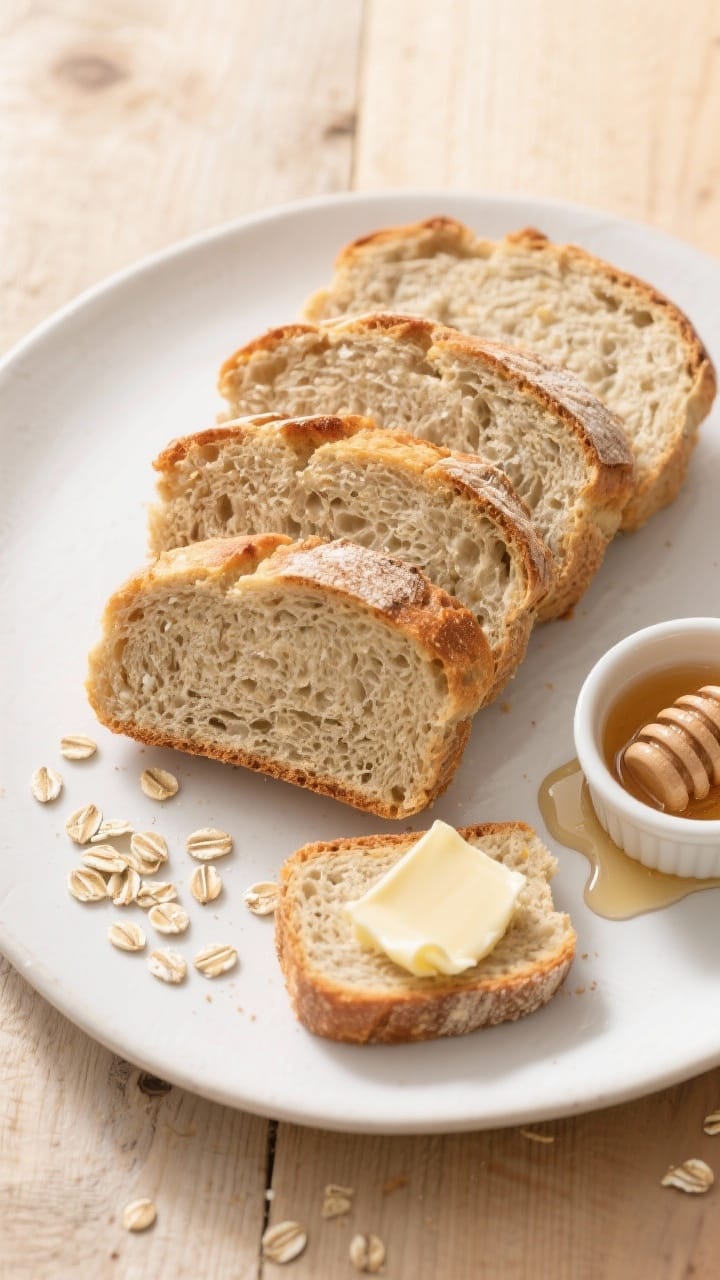
- Honey-Oat: Replace sugar with honey and roll the top in oats before baking.
- Garlic-Herb: Add 1 teaspoon garlic powder and 2 teaspoons mixed dried herbs to the flour.
- Seeded Loaf: Fold in 2–4 tablespoons mixed seeds (sunflower, sesame, flax) and sprinkle more on top.
- Half Whole Wheat: Swap 1 to 1 1/2 cups of the flour for whole wheat. Add an extra tablespoon of water if needed.
- Cinnamon Swirl: Roll the shaped dough with a mixture of cinnamon and sugar before the second rise.
- Dairy-Rich: Replace half the water with warm milk and use melted butter for a softer, richer crumb.
FAQ
Can I use instant yeast instead of active dry?
Yes.
Use the same amount. Skip the proofing step and mix instant yeast directly with the flour and salt. Keep the water warm and follow the rest of the instructions as written.
How do I know the dough has risen enough?
Look for a doubling in size during the first rise.
For the second rise, the dough should dome above the pan. Press a fingertip gently into the dough; if the indent springs back slowly and not completely, it’s ready to bake.
What if my dough is too sticky?
Sticky dough is normal at first. Add flour 1 tablespoon at a time until it’s manageable but still soft.
A slightly tacky feel usually produces a lighter loaf.
Can I make this without a loaf pan?
Yes. Shape the dough into a round and place it on a parchment-lined baking sheet. Bake at the same temperature.
It will spread a bit, but you’ll get a lovely country-style loaf.
How can I speed up the rise?
Place the covered bowl in a warm, draft-free spot. A turned-off oven with the light on or near a warm appliance works well. Avoid heat that’s too hot, which can overproof the dough.
Why is my bread dense?
Common causes include too much flour, water that’s too hot or too cold, or underproofing.
Measure carefully, keep the water warm, and allow both rises to reach their targets.
Can I make the dough ahead?
Yes. After the first rise, refrigerate the dough (covered) for up to 24 hours. Let it come back to room temperature, shape, rise again, and bake.
How do I keep the crust soft?
Brush the top with melted butter right after baking and let it cool under a clean towel.
Storing the loaf wrapped loosely also helps soften the crust.
In Conclusion
One-bowl homemade bread is the kind of recipe that turns a simple meal into something memorable. It doesn’t demand special gear or hours of attention, just a bit of patience and a warm spot on your counter. With a crisp crust, tender crumb, and a cozy aroma that fills the kitchen, this loaf earns a place in your weekly routine.
Keep the basics, make it your own, and enjoy every slice.
Printable Recipe Card
Want just the essential recipe details without scrolling through the article? Get our printable recipe card with just the ingredients and instructions.