Milk bread is the kind of loaf that makes you pause after the first bite—soft, slightly sweet, and feather-light. It’s perfect for toast, sandwiches, or just tearing into while it’s still warm. This version uses a simple tangzhong method to lock in moisture and keep the crumb tender for days.
You don’t need special skills or equipment, just patience and a few pantry staples. Once you try it, you’ll understand why this style of bread is a favorite in so many kitchens.
Why This Recipe Works
- Tangzhong for moisture: A quick cooked paste of flour and milk helps the dough retain water, making the bread ultra soft and slow to stale.
- Enriched dough: Milk, butter, and egg enrich the dough for a delicate crumb and subtle sweetness.
- High hydration, easy handling: The dough is soft but manageable, especially after a short rest that allows gluten to relax.
- Layered shaping: Rolling the dough into coils creates that signature stretchy, cottony pull-apart texture.
- Stable rise: The sugar and milk support a steady yeast rise without making the loaf overly sweet.
Ingredients
- Tangzhong:
- 3 tbsp bread flour (25 g)
- 1/2 cup whole milk (120 ml)
- Dough:
- 2 3/4 cups bread flour (330 g)
- 3 tbsp sugar (38 g)
- 1 1/4 tsp fine salt
- 2 tsp instant or rapid-rise yeast (6 g)
- 1/2 cup warm whole milk, 100–110°F (120 ml)
- 1 large egg, room temperature
- 4 tbsp unsalted butter, softened (56 g)
- For the pan and finish:
- Softened butter for greasing
- 1 tbsp milk for brushing (optional)
Instructions
- Make the tangzhong: In a small saucepan, whisk the flour and milk until smooth. Cook over medium-low heat, stirring constantly, until thick like pudding and the whisk leaves lines, about 1–2 minutes.Scrape into a bowl, cover, and let cool to lukewarm.
- Mix the dry ingredients: In the bowl of a stand mixer (or a large mixing bowl), combine bread flour, sugar, salt, and yeast. Keep the salt and yeast on opposite sides before mixing to protect the yeast.
- Add wet ingredients: Add the cooled tangzhong, warm milk, and egg. Mix with a dough hook (or a sturdy spatula) until a shaggy dough forms.
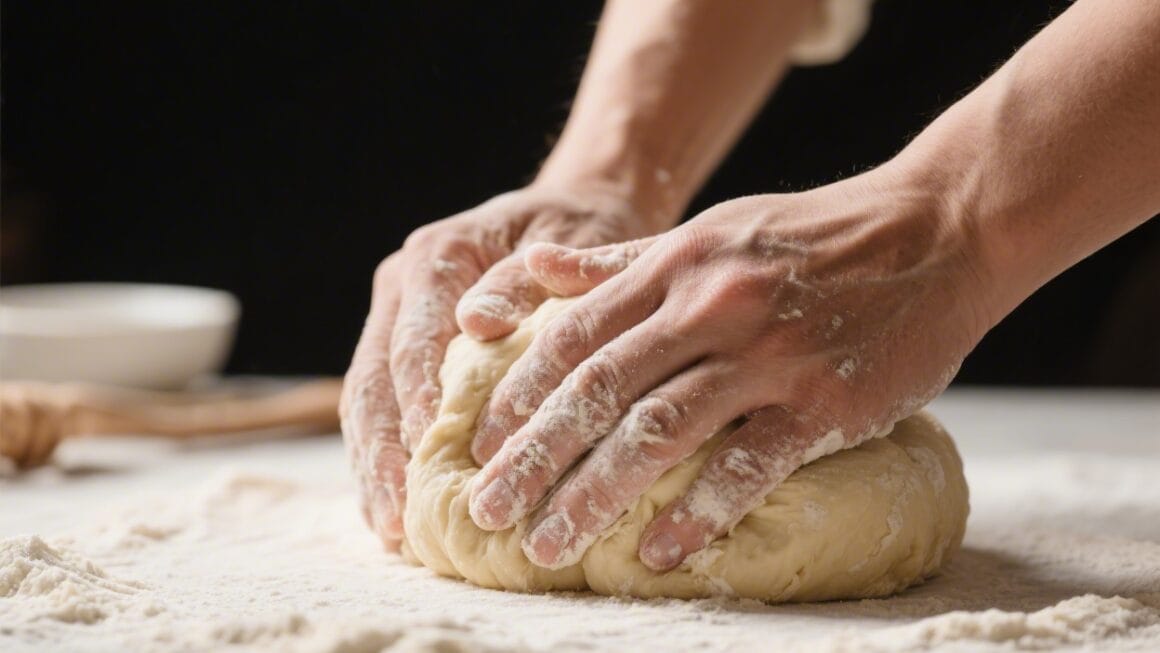
- Knead until smooth: Knead with the mixer on medium-low for 5–6 minutes, or by hand 8–10 minutes, until the dough is smooth and elastic.It will be tacky but should clean the bowl sides.
- Add butter: With the mixer running, add the softened butter in small pieces. Keep kneading until fully absorbed and the dough becomes glossy, 5–7 more minutes. If kneading by hand, smear butter into the dough and continue kneading until silky.
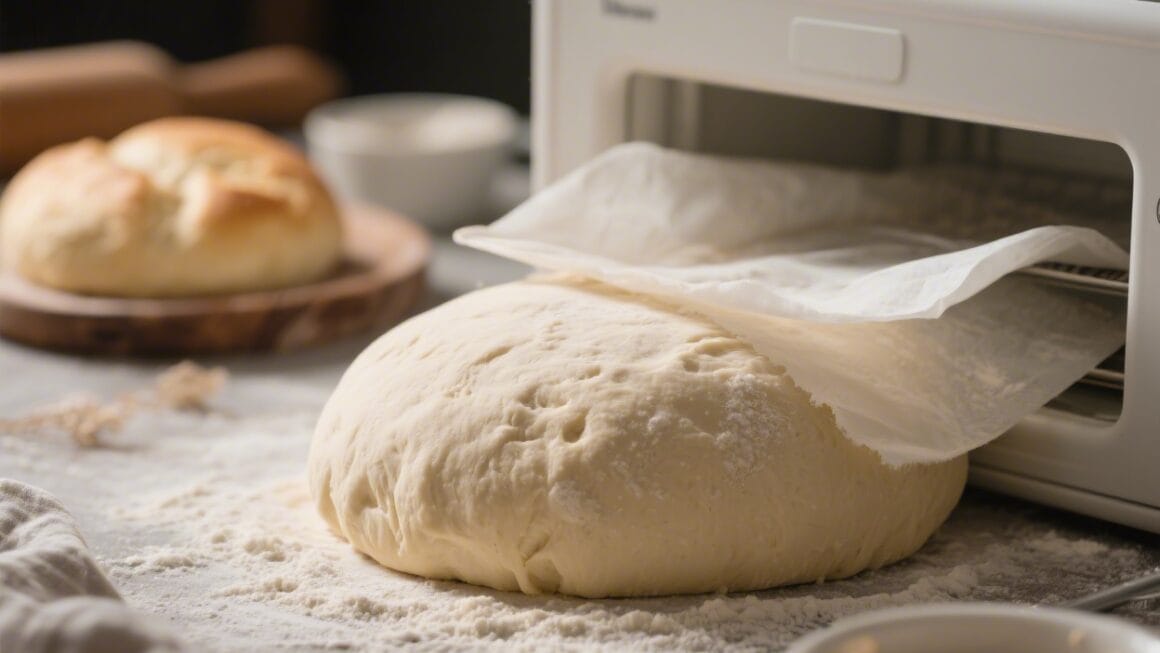
- First rise: Shape the dough into a ball and place it in a greased bowl.Cover and let rise in a warm, draft-free spot until doubled, 60–90 minutes. The dough should feel airy and springy.
- Prepare the pan: Butter a 9×5-inch (23×13 cm) loaf pan. Lightly flour your counter.
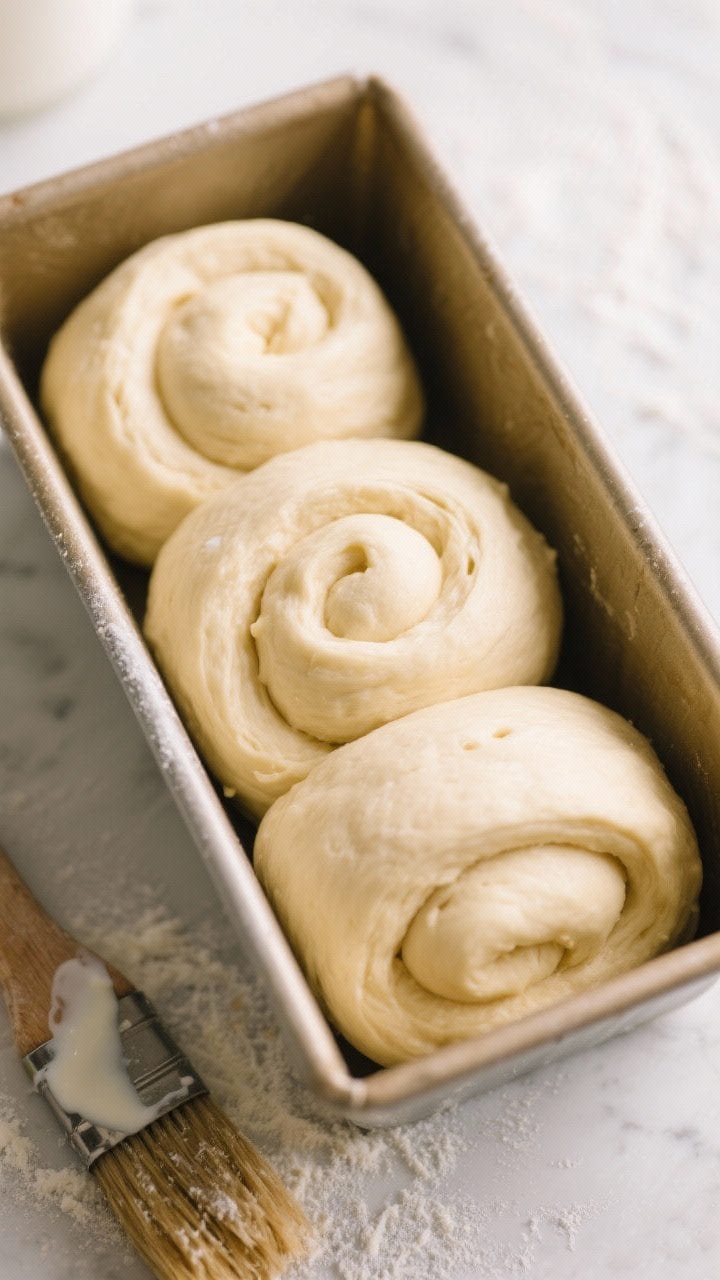
- Divide and shape: Punch down the dough gently to release air. Divide into 3 equal pieces.Working with one piece at a time, roll into a rough rectangle about 5×8 inches. Fold the short sides toward the center like a letter, then roll up tightly from the short end into a log. Repeat with the remaining pieces.
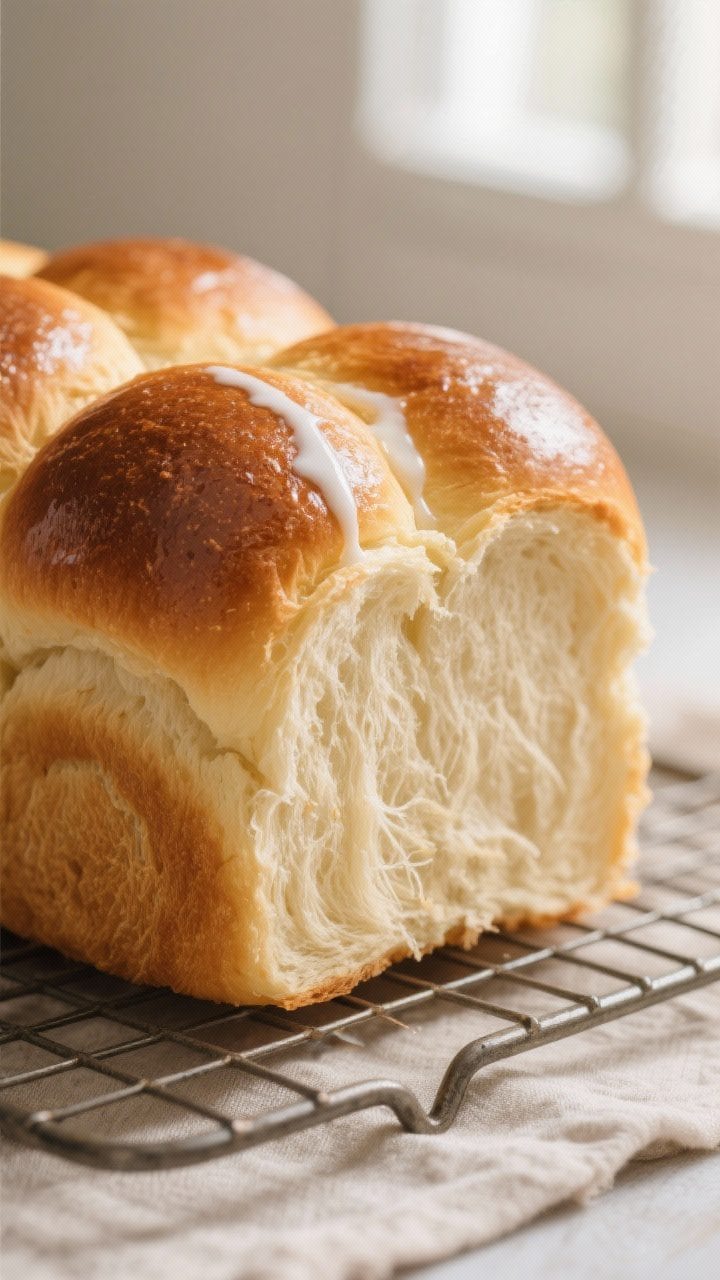
- Pan the dough: Place the three logs seam-side down in the pan, side by side.This creates the classic domed, pull-apart look.
- Second rise: Cover and let rise until the dough crowns about 1 inch above the pan, 45–75 minutes depending on room temperature. When gently poked, the dough should slowly spring back, leaving a slight indentation.
- Preheat and brush: Preheat the oven to 350°F (175°C). Brush the top with milk for a soft, shiny crust (optional).
- Bake: Bake 25–30 minutes until golden brown. Internal temperature should reach about 190–195°F (88–90°C).If browning too fast, tent loosely with foil halfway through.
- Cool: Remove from the pan after 5–10 minutes and cool on a rack. For the softest crust, cover the warm loaf with a clean towel as it cools.
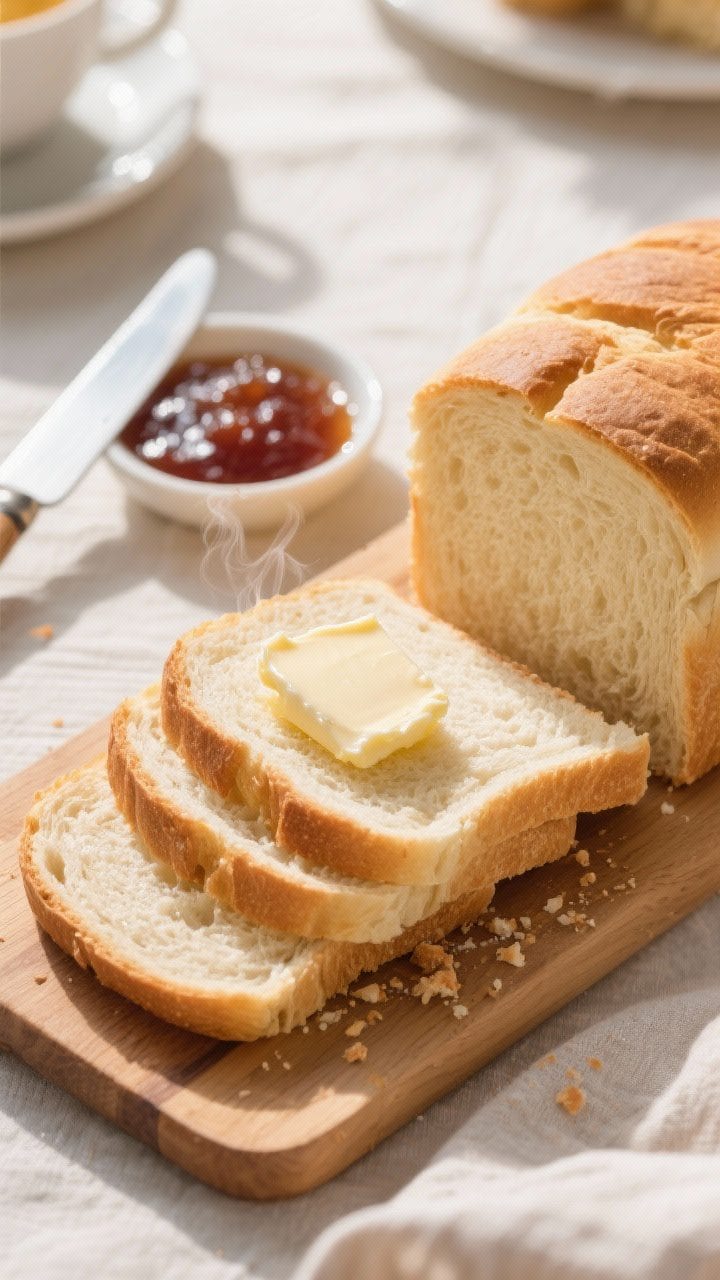
- Slice and enjoy: Let it cool at least 45 minutes before slicing for neat slices. Warm slices with butter are hard to resist.
Keeping It Fresh
- Room temperature: Store in a bread box or wrapped in a clean towel, then in a loose plastic bag for up to 3 days.
- Freeze: Slice the loaf, wrap tightly, and freeze up to 2 months.Toast straight from frozen or thaw at room temperature.
- Refresh: If the crust softens too much, a quick 5-minute warm-up in a 300°F oven brings back a gentle chew.
Why This is Good for You
- Better ingredients: You control the sugar, salt, and fats—fewer additives than most store-bought loaves.
- Steady energy: The enriched dough provides carbs and some protein from milk and egg, great for breakfast or pre-workout fuel.
- Mindful eating: Homemade bread encourages smaller portions and appreciation of texture and flavor.
- Customizable: You can add whole grains, seeds, or alternative dairy to meet your needs.
Common Mistakes to Avoid
- Overheating the milk: Milk hotter than 110°F can weaken or kill yeast. Warm to body temperature—pleasantly warm, not hot.
- Skipping the tangzhong: It’s key to the ultra-soft texture. Don’t rush it.
- Under-kneading after adding butter: Butter needs time to incorporate.Knead until the dough is smooth and stretchy.
- Underproofing or overproofing: Watch the dough, not the clock. Aim for the gentle spring-back test before baking.
- Slicing too soon: Cutting while hot crushes the crumb. Let it set for cleaner slices.
Alternatives
- No egg: Replace the egg with 3 tbsp milk plus 1 tbsp neutral oil.Texture stays soft, with a slightly less rich flavor.
- Dairy-free: Use unsweetened oat or soy milk and vegan butter. Choose a plant milk with some protein for better structure.
- Active dry yeast: Use the same amount, but proof it in the warm milk with a pinch of sugar for 5–10 minutes before mixing.
- Whole wheat version: Swap 1 cup (120 g) of bread flour for whole wheat. Add 1–2 tbsp extra milk if the dough feels dry.
- Sweet rolls: Roll dough with a little sugar and cinnamon, slice, and bake as pull-apart rolls at 350°F for 18–22 minutes.
FAQ
Can I make this without a stand mixer?
Yes.
Mix with a spatula, then knead by hand until smooth and elastic. Expect 12–15 minutes of kneading total, adding butter gradually and using a light dusting of flour only if the dough is sticking severely.
What if my dough is too sticky?
Slight stickiness is normal. Lightly oil your hands and the counter instead of adding lots of flour.
If needed, add 1–2 teaspoons of flour at a time, but keep the dough soft to maintain that fluffy texture.
How do I know it’s fully kneaded?
The dough should be smooth, elastic, and slightly tacky. It should stretch into a thin windowpane without tearing easily. If it tears quickly, keep kneading a few minutes longer.
Why did my loaf collapse?
It may have overproofed or baked before it was ready.
Use the poke test: a slow spring-back with a faint dent means it’s ready. Also ensure your oven is fully preheated and avoid opening the door early.
Can I bake this as rolls?
Absolutely. Divide into 12 equal balls, place in a buttered 9×13-inch pan, proof until puffy, and bake at 350°F for 18–22 minutes until golden.
Is bread flour required?
Bread flour gives a springier crumb, but all-purpose works in a pinch.
If using all-purpose, knead a bit longer and be careful not to add too much extra flour.
Final Thoughts
Milk bread feels special, yet it fits into everyday life. The tangzhong keeps it tender, the shaping makes it beautiful, and the flavor is gentle and comforting. Once you get the feel for the dough, it’s a dependable recipe you can tweak and reuse.
Toast it, stack it into sandwiches, or tear it warm at the table—this ultra soft and fluffy loaf is one you’ll want to bake again and again.
Printable Recipe Card
Want just the essential recipe details without scrolling through the article? Get our printable recipe card with just the ingredients and instructions.