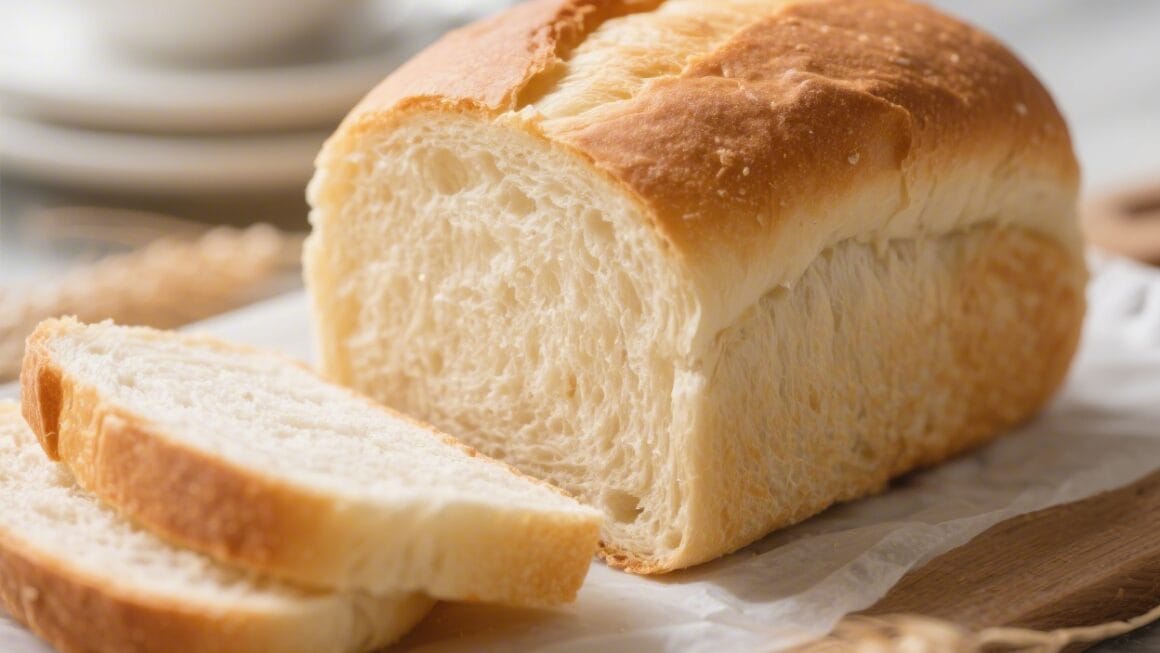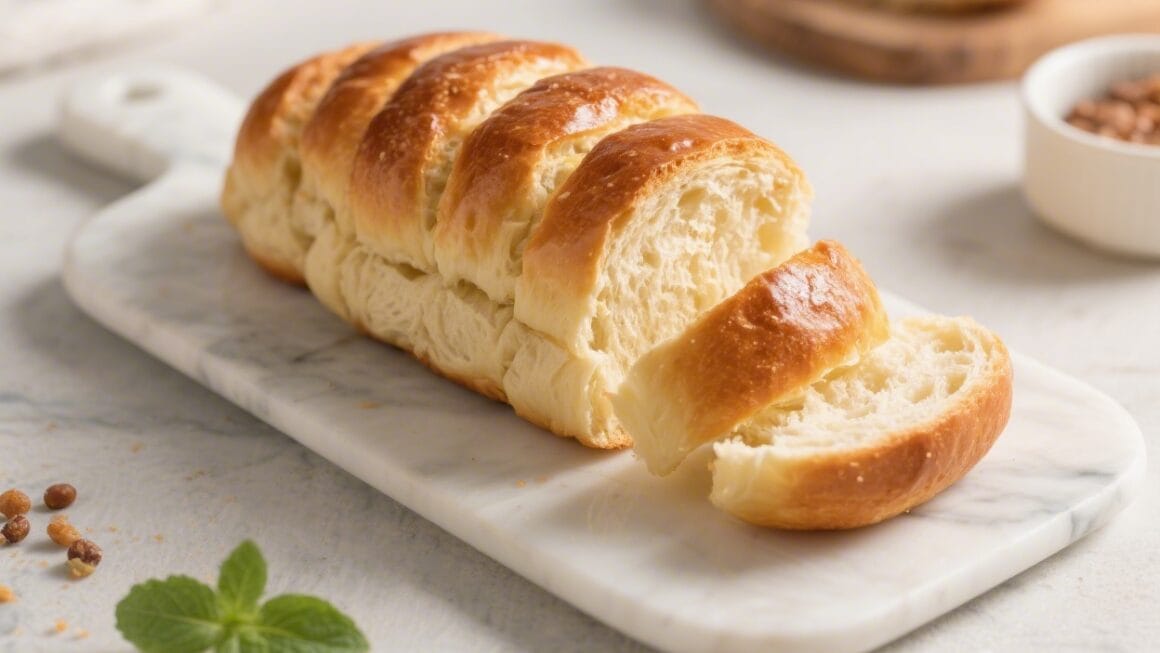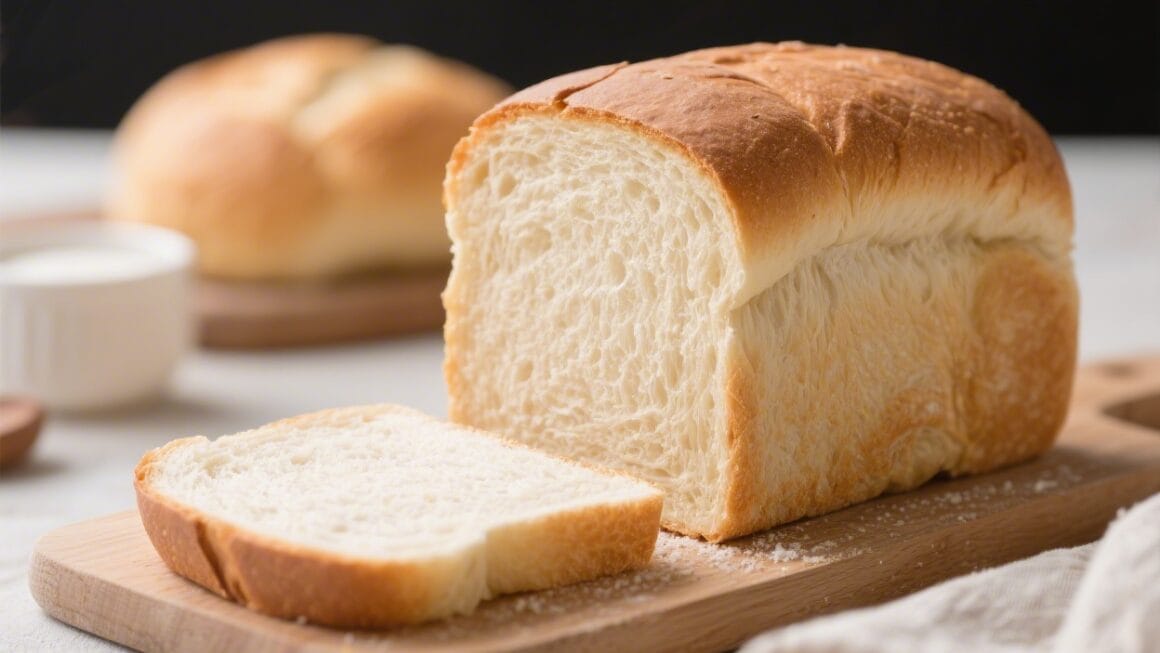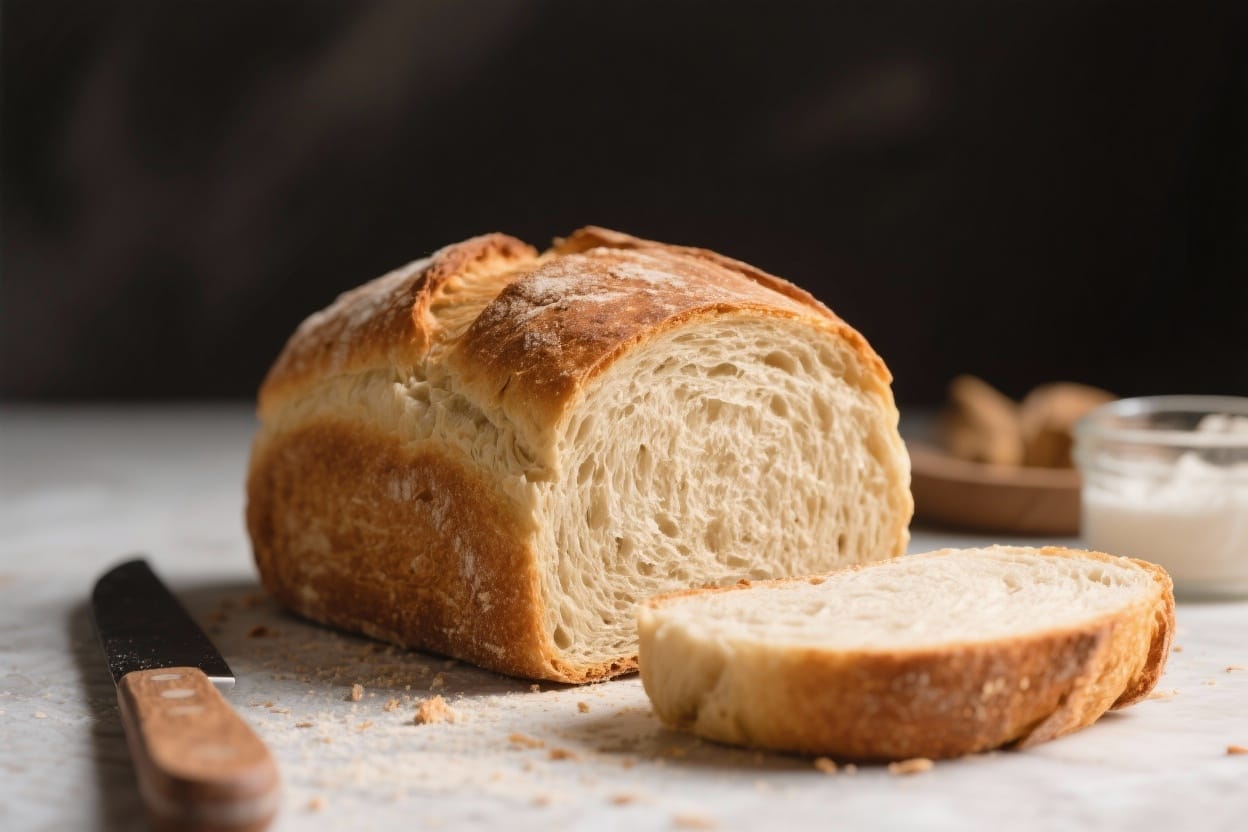
If you’ve ever wanted warm, fresh bread without a long, complicated process, this is your recipe. Lazy-Day Homemade Bread is the kind you can throw together on a slow afternoon, let it do its thing, and enjoy by dinner. The dough is forgiving, the steps are straightforward, and you don’t need special equipment.
It’s soft inside, a little crisp on the outside, and perfect for sandwiches or soup. Even if you’ve never baked bread, you can handle this.
What Makes This Recipe So Good
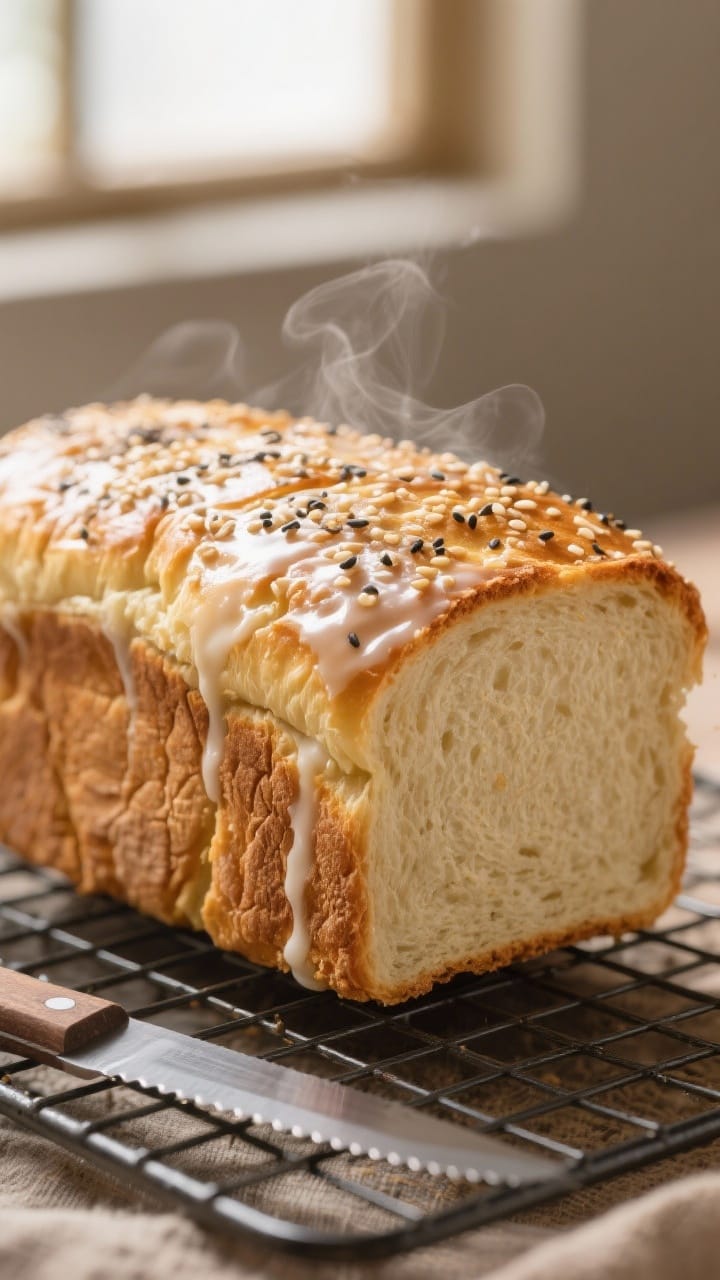
- Minimal effort: The dough is mixed in one bowl with no stand mixer required. A quick knead, a rest, and into the oven.
- Pantry-friendly: Just flour, yeast, water, sugar, oil, and salt.Nothing fancy.
- Flexible timing: The dough can rise at room temperature or rest in the fridge if your day gets busy.
- Reliable texture: Soft crumb with a light crust, great for toast, sandwiches, or soaking up sauces.
- Beginner-friendly: Clear steps, simple checks for doneness, and easy to troubleshoot.
Ingredients
- 3 1/2 to 4 cups all-purpose flour (or bread flour), plus extra for dusting
- 1 packet (2 1/4 teaspoons) instant yeast or active dry yeast
- 1 1/2 cups warm water (about 105–115°F / 40–46°C)
- 1 tablespoon sugar or honey
- 2 tablespoons olive oil or melted butter
- 1 1/2 teaspoons fine salt
- Optional: 1 tablespoon milk or water for brushing the top, seeds for sprinkling
Instructions
- Proof the yeast (if using active dry): In a large bowl, stir warm water and sugar until dissolved. Sprinkle in the yeast. Let it sit 5–10 minutes until foamy.If using instant yeast, skip the wait and proceed.
- Mix the dough: Add oil and salt to the bowl. Stir in 3 1/2 cups of flour, about a cup at a time, until a shaggy dough forms. If it’s very sticky, add a little more flour, a tablespoon at a time.
- Knead briefly: Turn the dough onto a lightly floured surface.Knead for 5–7 minutes until smooth and elastic. The dough should be soft and slightly tacky, not gluey.
- First rise: Place the dough in a lightly oiled bowl, turning once to coat. Cover with a towel or plastic wrap and let rise in a warm spot until doubled, about 60–90 minutes.Cooler kitchens may take longer.
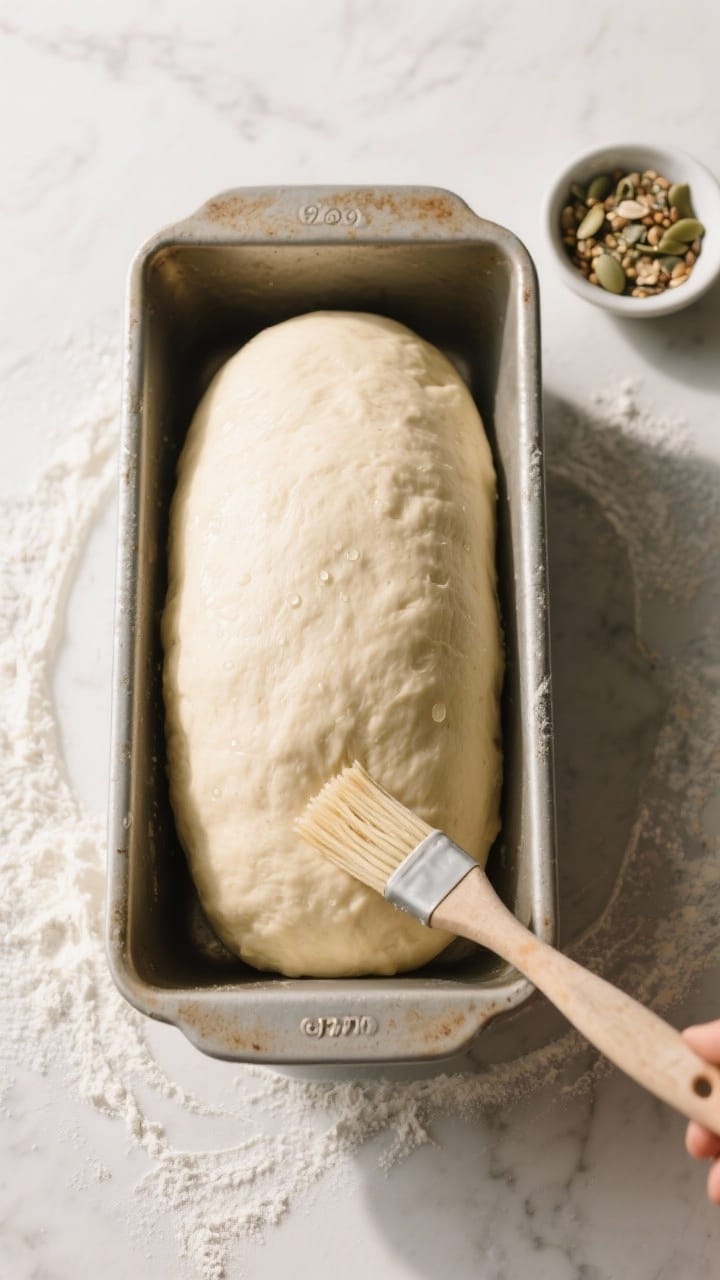
- Shape the loaf: Gently press the air out of the dough. Pat into a rectangle, then roll it up tightly from the short end. Pinch the seam, tuck the ends under, and place seam-side down in a greased 9×5-inch loaf pan.
- Second rise: Cover and let rise until the dough crowns about 1 inch above the rim of the pan, 30–45 minutes.Near the end of the rise, preheat the oven to 375°F (190°C).
- Optional glaze: For a tender top, brush with a little milk. For a chewier crust, brush with water. Sprinkle seeds if you like.
- Bake: Bake 30–35 minutes until golden brown.The loaf should sound hollow when tapped on the bottom, and an instant-read thermometer should read about 195–200°F (90–93°C).
- Cool: Remove from the pan and cool on a rack at least 30 minutes before slicing. This helps the crumb set and prevents squishing.
How to Store
- Room temperature: Store the cooled loaf in a bread box or wrapped in a clean towel for up to 3 days. Avoid the fridge, which dries bread out.
- Freezer: Slice, wrap tightly, and freeze for up to 2 months.Toast slices straight from the freezer.
- Revive leftovers: Warm slices in a low oven (300°F/150°C) for 5–8 minutes to refresh the crumb.
Health Benefits
- Simple ingredients: No additives or preservatives, so you know exactly what you’re eating.
- Customizable flour: Swap in some whole wheat flour for extra fiber and nutrients.
- Portion control: Slicing your own loaf makes it easy to manage serving sizes.
- Balanced energy: Homemade bread, paired with protein and healthy fats, makes a satisfying meal or snack.
Common Mistakes to Avoid
- Water too hot: If the water is scorching, it can kill the yeast. Aim for warm bath temperature.
- Adding too much flour:</-strong> A stiff dough makes a dry loaf. Keep it slightly tacky for a softer crumb.
- Underproofing or overproofing: Dough that hasn’t risen enough won’t spring in the oven.Overproofed dough can collapse. Look for a soft, puffy rise that slowly springs back when poked.
- Slicing too soon: Cutting hot bread compresses the crumb. Let it cool at least 30 minutes.
- Skipping the pan prep: Grease the loaf pan well, or use parchment, to prevent sticking.
Variations You Can Try
- Whole wheat blend: Use 1–1 1/2 cups whole wheat flour and the rest all-purpose.Add 1–2 extra tablespoons water if needed.
- Herb and garlic: Mix in 1–2 teaspoons dried herbs and 1 teaspoon garlic powder for a savory loaf.
- Seeded crust: Press sesame, poppy, or sunflower seeds onto the top after brushing with water.
- Honey oat: Replace sugar with honey and sprinkle rolled oats on top before baking.
- No-knead shortcut: Use 3 cups flour, 1/2 teaspoon yeast, 1 1/4 cups cool water, and 1 teaspoon salt. Stir, cover, and rest 8–12 hours. Shape, then bake in a preheated Dutch oven at 450°F (230°C) for 30 minutes covered, 10–15 uncovered.
FAQ
Can I use active dry yeast instead of instant yeast?
Yes.
Just proof it in the warm water with sugar until foamy before mixing. Instant yeast can be added directly to the flour if you prefer.
Why didn’t my dough rise?
Common culprits are old yeast, water that’s too hot or too cold, or a chilly kitchen. Check the yeast’s expiration date, use warm water, and give the dough more time if your space is cool.
How do I get a crispier crust?
Bake on the middle rack and place a small pan of hot water on the lower rack for the first 10 minutes.
You can also bake the last 5 minutes with the loaf out of the pan directly on the rack.
Can I make this dairy-free?
Absolutely. Use olive oil instead of butter and brush the top with water, not milk. The bread will still be soft and flavorful.
What’s the best way to slice the loaf?
Use a sharp serrated knife and let the bread cool first.
Cut with gentle sawing motions to avoid squashing the crumb.
Can I double the recipe?
Yes. Mix and proof in a larger bowl, then divide into two loaf pans. Baking time stays roughly the same; start checking at 28–30 minutes.
How can I add more flavor?
Try a longer, cooler rise in the fridge for 8–12 hours after the first knead.
Cold fermentation adds a deeper, slightly tangy taste.
Wrapping Up
Lazy-Day Homemade Bread keeps things simple: a few ingredients, a couple of rises, and a golden loaf that tastes like comfort. It’s the kind of recipe you can trust on busy weeks and slow Sundays alike. Once you make it a few times, it becomes second nature—and your kitchen will smell amazing every time.
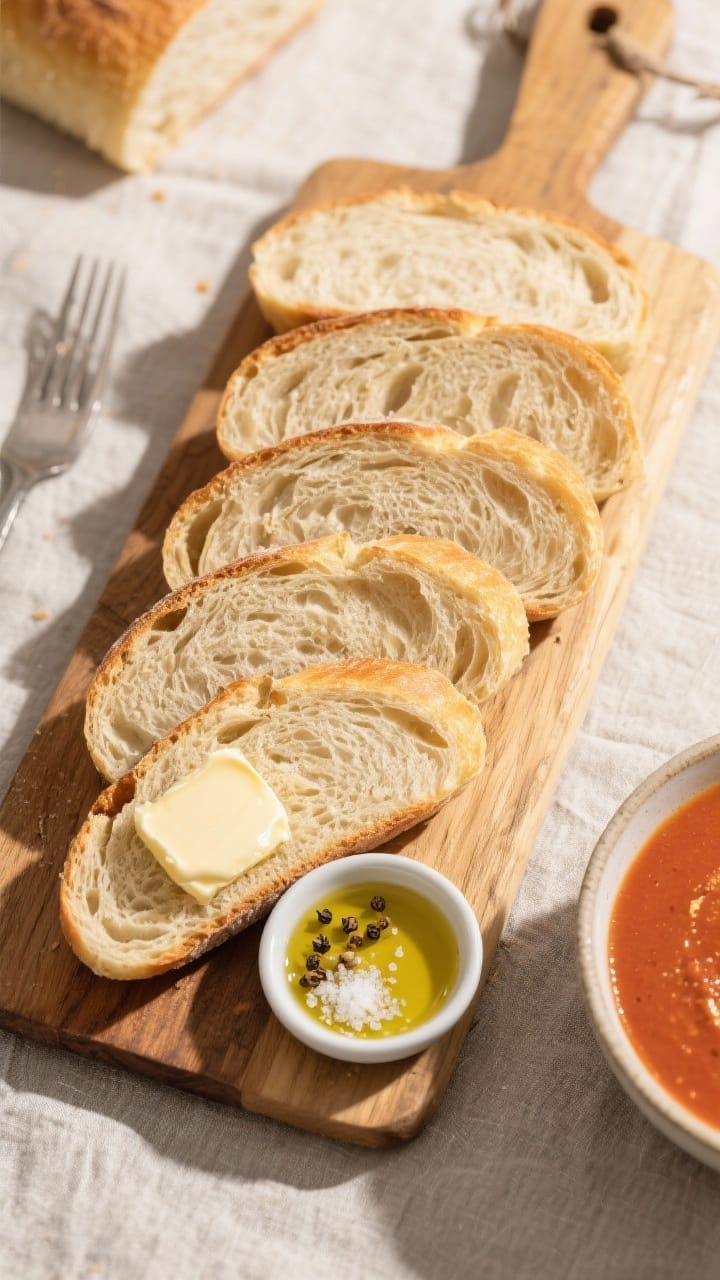
Enjoy it warm with butter, as morning toast, or as the base of your favorite sandwich.
Printable Recipe Card
Want just the essential recipe details without scrolling through the article? Get our printable recipe card with just the ingredients and instructions.