Flatbread Sandwich Bread – Soft, Flexible, and Perfect for Everyday Sandwiches
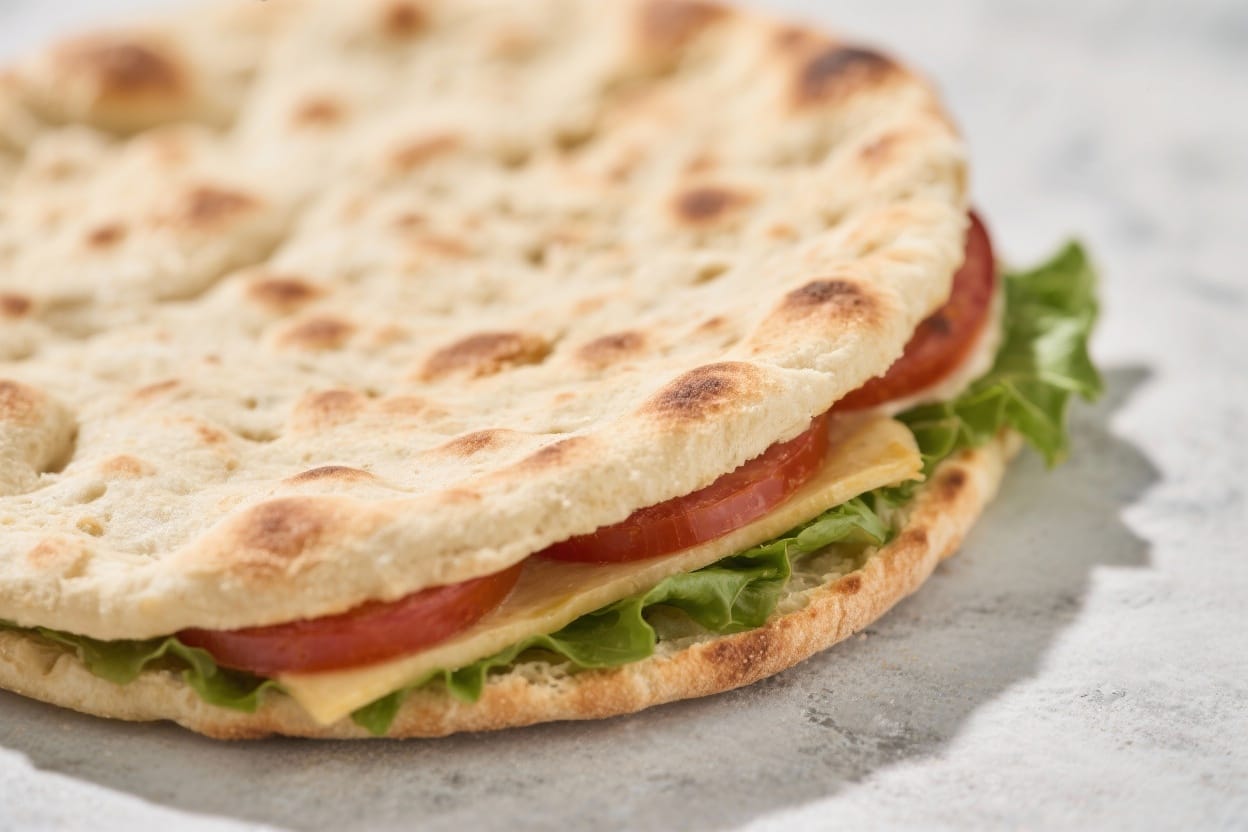
This flatbread sandwich bread is soft, flexible, and just sturdy enough to hold your favorite fillings without cracking. It cooks on the stovetop in minutes, so you don’t need to turn on the oven. The dough is simple and forgiving, and you can customize it with herbs or whole grains. Whether you’re making wraps, lunchbox sandwiches, or quick pizzas, this flatbread fits right in. It’s the kind of recipe you’ll make once and keep coming back to.
Why This Recipe Works
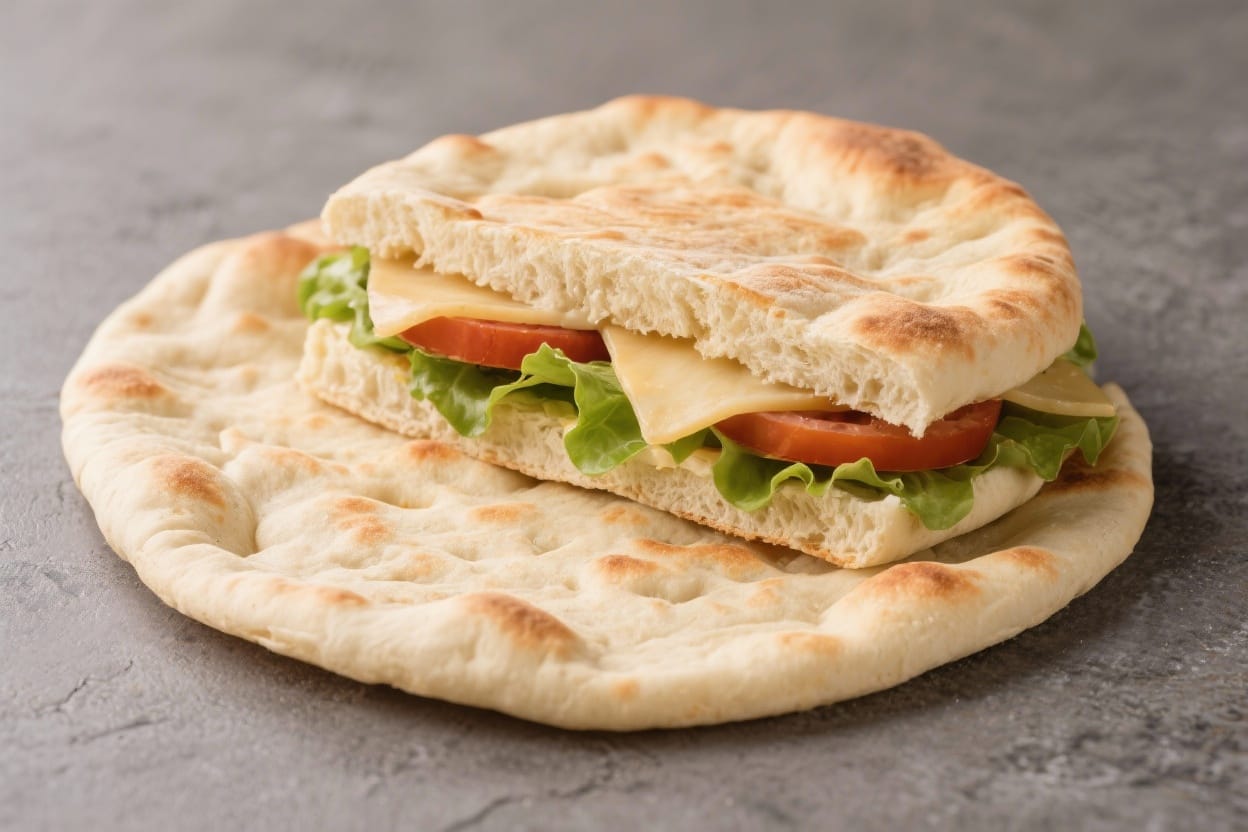
Flatbread sandwich bread – Flatbread Sandwich Bread – Soft, Flexible, and Perfect for Everyday Sandwiches This flatbread sandwi
- Yogurt and oil keep the bread tender. A touch of fat and acidity creates a soft, pliable texture that won’t dry out.
- Stovetop cooking gives control. You can cook each flatbread to your preferred doneness, from lightly pale and soft to charred and chewy.
- Simple pantry ingredients. No special flour or tools needed—just mix, rest, roll, and cook.
- Quick rest for gluten relaxation. A short rest makes the dough easier to roll thin without bouncing back.
- Balanced hydration. Enough moisture to keep the bread flexible, but not sticky, so rolling is easy.
Ingredients
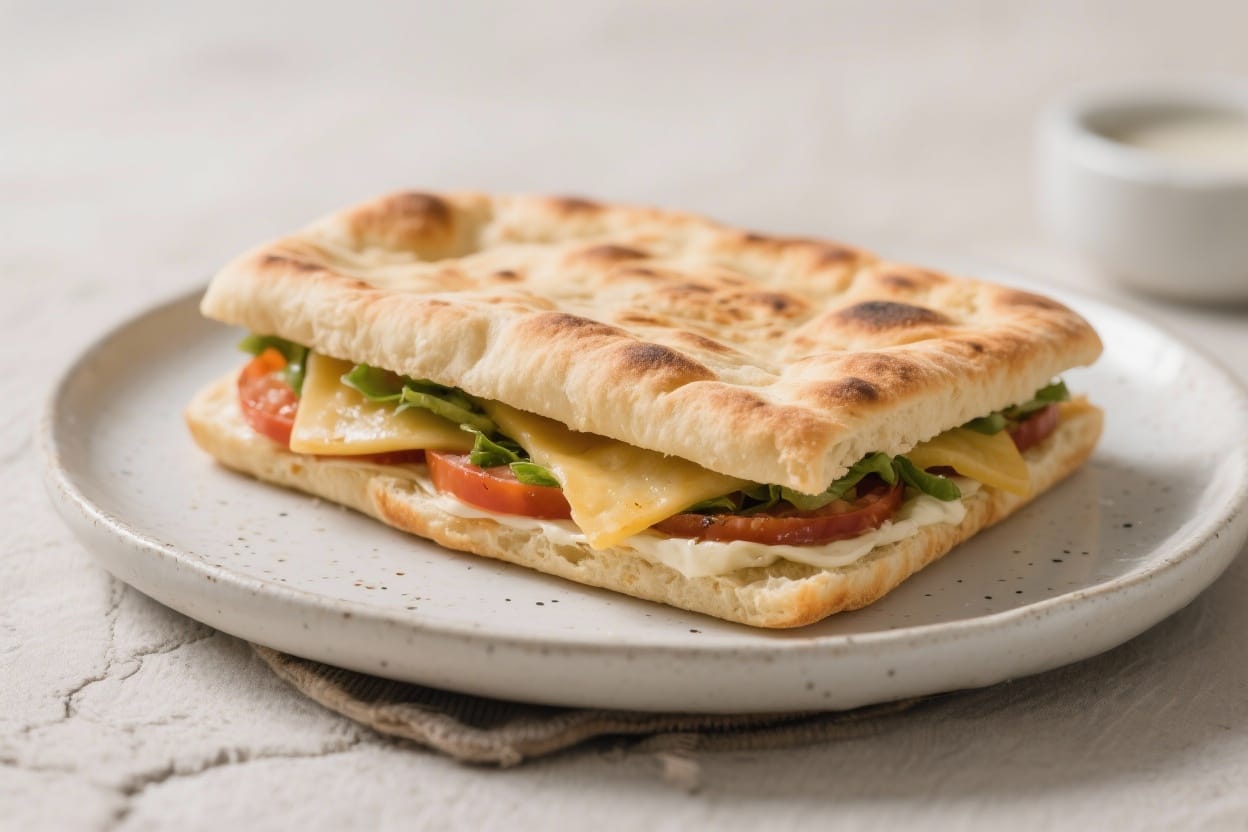
Flatbread sandwich bread – It cooks on the stovetop in minutes, so you don’t need to turn on the oven
- 2 cups (250 g) all-purpose flour, plus extra for dusting
- 1 teaspoon baking powder
- 1 teaspoon fine salt
- 2 teaspoons sugar or honey (optional, for browning and softness)
- 2 tablespoons olive oil (or neutral oil)
- 3/4 cup (180 g) plain yogurt (Greek or regular), room temperature
- 1/4 cup (60–80 ml) warm water, as needed
- Optional add-ins: 1 teaspoon dried oregano, 1 teaspoon garlic powder, or 1 tablespoon sesame seeds
Instructions
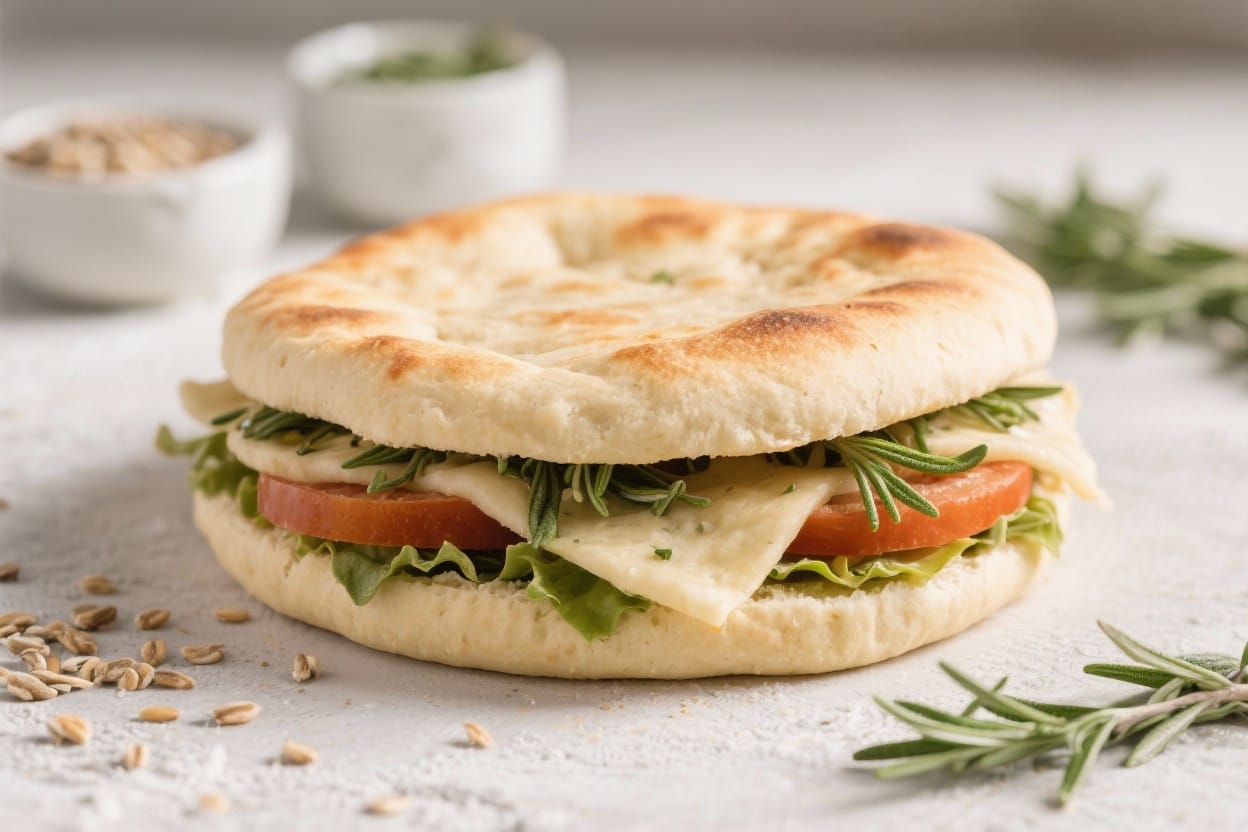
Flatbread sandwich bread – The dough is simple and forgiving, and you can customize it with herbs or whole grains
- Combine dry ingredients. In a large bowl, whisk the flour, baking powder, salt, and sugar (if using). Stir in any optional herbs or spices.
- Add wet ingredients. Add the yogurt and olive oil. Use a spoon or your hand to mix until shaggy and evenly moistened.
- Bring the dough together. Add warm water a little at a time until the dough comes together into a soft, slightly tacky ball. You may not need all the water.
- Knead briefly. Turn the dough onto a lightly floured surface and knead for 2–3 minutes, just until smooth. The dough should feel soft and elastic, not sticky.
- Rest the dough. Place the dough back in the bowl, cover with a towel or plastic wrap, and let it rest for 20–30 minutes. This makes rolling easier.
- Divide and shape. Cut the dough into 8 equal pieces for sandwich-sized flatbreads. Roll each piece into a ball, then flatten gently.
- Preheat the pan. Heat a cast-iron skillet or heavy nonstick pan over medium to medium-high heat for 3–4 minutes. No oil needed.
- Roll the first flatbread. On a lightly floured surface, roll one dough piece into an oval or circle about 6–7 inches wide and 1/8 inch thick. Keep the rest covered to prevent drying.
- Cook the flatbread. Lay the dough in the hot pan. Cook for 45–60 seconds until bubbles form and the bottom has light brown spots. Flip and cook another 45–60 seconds. Adjust heat so it doesn’t burn before it cooks through.
- Steam-soften (optional). For extra softness, stack cooked flatbreads in a clean towel as you work. The steam keeps them pliable.
- Repeat. Roll and cook the remaining pieces. If the pan gets too hot, lower the heat slightly. If using sesame seeds, press them onto the surface before cooking.
- Cool and serve. Let the flatbreads cool slightly before filling. They’ll stay bendy and tender.
How to Store
- Room temperature: Wrap tightly and keep at room temp for up to 2 days. Reheat briefly in a dry skillet or microwave under a damp paper towel.
- Refrigerator: Store in an airtight bag for up to 5 days. Warm before serving to restore softness.
- Freezer: Stack with parchment between each piece, seal in a freezer bag, and freeze for up to 2 months. Thaw at room temperature or warm directly from frozen in a skillet.
Benefits of This Recipe
- Fast and fuss-free. No long rises or oven preheating.
- Flexible for fillings. Great for wraps, grilled sandwiches, breakfast eggs, or quick pizzas.
- Budget-friendly. Uses basic ingredients and makes eight generous flatbreads.
- Customizable. Adjust herbs, flours, and thickness to match your taste or dietary needs.
- Beginner-friendly. The dough is forgiving and doesn’t require advanced techniques.
Common Mistakes to Avoid
- Skipping the rest. If you roll immediately, the dough may shrink and tear. Resting relaxes gluten.
- Using too much flour. Over-dusting while rolling creates dry, tough flatbread. Use just enough to prevent sticking.
- Overcooking. Dark spots are fine, but too long on the heat dries out the bread. Aim for about a minute per side.
- Pan not hot enough. A cool pan yields pale, dry flatbread. Preheat well so bubbles form quickly.
- Rolling too thick or too thin. Too thick stays doughy; too thin becomes brittle. About 1/8 inch is a good target.
Variations You Can Try
- Whole wheat version: Swap 1 cup all-purpose flour for whole wheat. Add 1–2 tablespoons extra water if needed to keep the dough soft.
- Garlic-herb flatbread: Mix 1 teaspoon garlic powder and 1 teaspoon dried oregano or thyme into the dough.
- Olive and rosemary: Fold in 2 tablespoons finely chopped olives and 1 teaspoon chopped rosemary for savory sandwiches.
- Dairy-free: Replace yogurt with a thick, unsweetened plant-based yogurt or use 3/4 cup warm water total, plus 1 tablespoon extra oil.
- Seeded crust: Press sesame, poppy, or nigella seeds onto the surface before cooking for extra texture.
- Tortilla-thin wraps: Roll slightly thinner and cook a touch less for super-flexible wraps.
- Mini rounds: Divide into 12 pieces for snack-size flatbreads or sliders.
FAQ
Can I make the dough ahead of time?
Yes. Make the dough, wrap it well, and refrigerate for up to 24 hours. Let it sit at room temperature for 20–30 minutes before rolling so it’s easier to handle.
What if I don’t have yogurt?
Use buttermilk or milk with a teaspoon of lemon juice. You can also use water plus a little extra oil, though the texture will be slightly less tender.
Why isn’t my flatbread puffing?
The pan may be too cool, or the dough might be rolled too thick. Make sure the skillet is well preheated and aim for about 1/8-inch thickness. A brief rest also helps puffing.
Can I bake these instead of cooking on the stovetop?
Yes. Bake on a preheated baking stone or sheet at 475°F (245°C) for 2–3 minutes per side until lightly spotted. Stovetop still gives better control and softness.
How do I keep them soft for lunchboxes?
Stack warm flatbreads in a towel to trap steam, cool to room temperature, then wrap tightly. Add a small layer of spread (like hummus) when assembling to keep fillings from drying them out.
What fillings work best?
Grilled chicken, turkey, tuna salad, falafel, roasted veggies, egg and cheese, or simple tomato and mozzarella all work well. Anything you’d put in a wrap will fit here.
Can I use bread flour?
You can, but it may make the dough slightly chewier. If you use bread flour, add a tablespoon more oil or a splash more water to keep it tender.
How do I reheat without drying out?
Warm in a covered skillet for 20–30 seconds per side or microwave with a damp paper towel for 10–15 seconds. Don’t overheat.
Final Thoughts
This flatbread sandwich bread is simple, quick, and adaptable, making it an easy win for weeknights and meal prep. With a short ingredient list and minimal equipment, you get soft, sturdy flatbreads perfect for any filling. Keep a batch in the freezer, and you’ll always have a better sandwich waiting. Once you try it, you’ll wonder why you ever bought wraps at the store.
Printable Recipe Card
Want just the essential recipe details without scrolling through the article? Get our printable recipe card with just the ingredients and instructions.