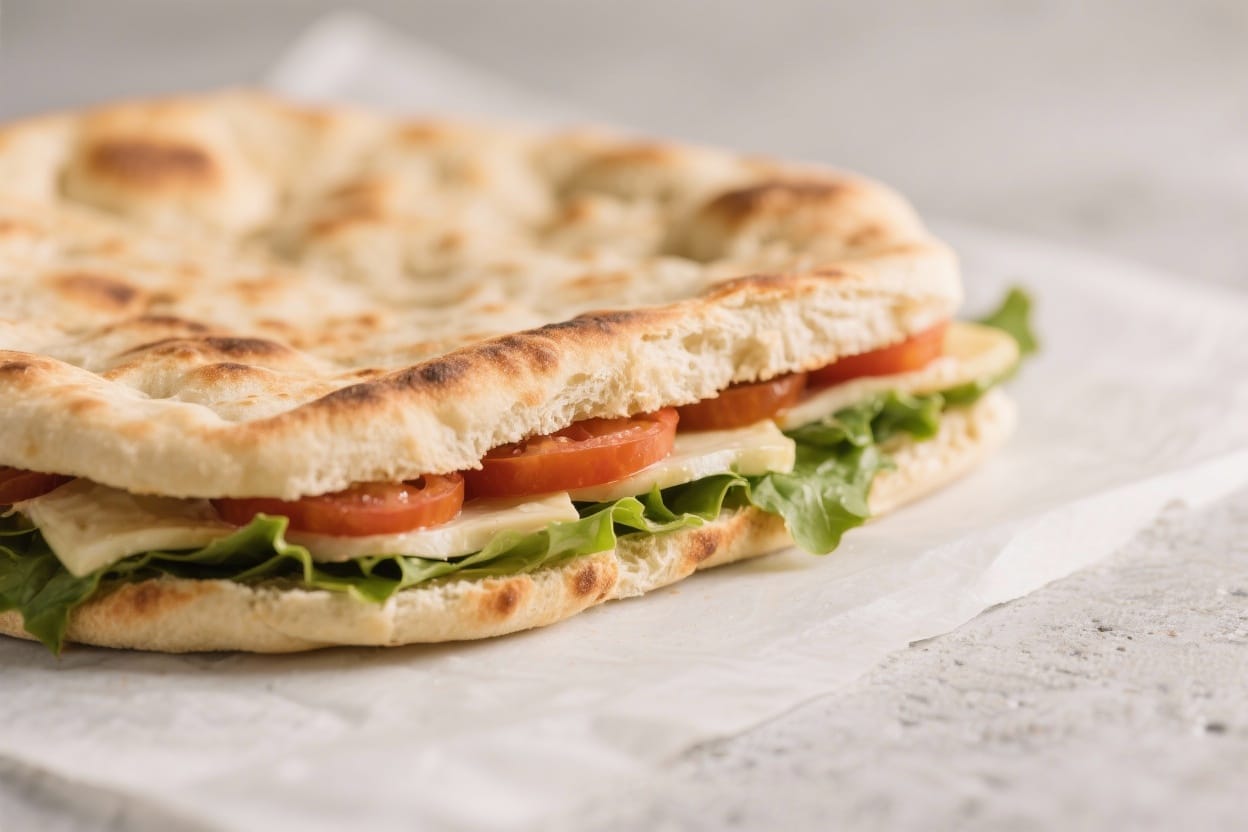
Flatbread sandwich bread is the kind of recipe that earns a permanent spot in your weekly rotation. It’s fast, forgiving, and easy for beginners, yet it tastes like something from a bakery. You can roll it thicker for hearty wraps or thinner for foldable pockets.
The dough is soft, easy to work with, and cooks in minutes on the stovetop. If you’re tired of store-bought wraps that crack or taste bland, this homemade version will be a game-changer.
Why This Recipe Works
- High hydration and yogurt (or milk) keep the dough soft and flexible, so the flatbreads bend without breaking.
- A quick rest relaxes the gluten, making rolling easier and the final texture tender.
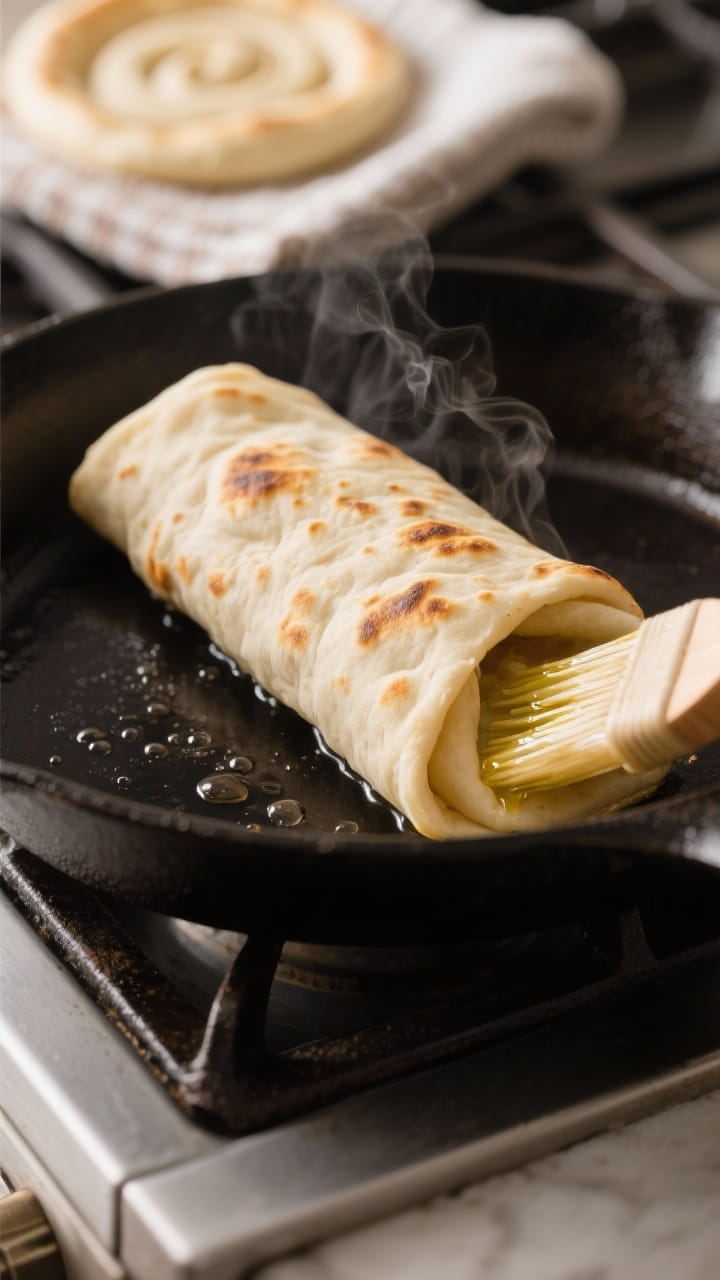
- Skillet cooking delivers charred spots and light puffing without needing an oven or special equipment.
- Neutral oil gives moisture and a subtle richness, so the breads stay soft even after cooling.
- Simple ingredients you probably have: flour, water, yogurt (or milk), oil, salt, and a little baking powder.
Ingredients
- All-purpose flour (or bread flour)
- Plain yogurt (Greek or regular) or milk
- Warm water
- Olive oil or neutral oil (like canola or avocado)
- Baking powder
- Fine sea salt
- Optional: sugar or honey (a small amount for tenderness)
- Optional seasonings: garlic powder, dried herbs, sesame seeds, nigella seeds
- Optional finishing: melted butter or olive oil for brushing
Instructions
- Mix the dry ingredients. In a large bowl, whisk 3 cups flour, 2 teaspoons baking powder, and 1 teaspoon salt. If using, add 1 teaspoon sugar or honey (if honey, add it with the wet ingredients).
- Add the wet ingredients. Stir in 1/2 cup plain yogurt, 3/4 cup warm water, and 2 tablespoons olive oil.If the dough seems dry, add water 1 tablespoon at a time until a soft, slightly tacky dough forms.
- Knead briefly. Turn the dough onto a lightly floured surface. Knead for 2–3 minutes until smooth. It should be soft and elastic but not sticky.Adjust with a dusting of flour only if needed.
- Rest the dough. Place the dough back in the bowl, cover, and rest for 20–30 minutes. This relaxes the gluten and makes rolling easier.
- Divide and preheat. Cut the dough into 8 equal pieces for wrap-sized breads or 10–12 for smaller sandwiches. Shape each piece into a ball.Preheat a cast-iron or heavy skillet over medium heat for at least 5 minutes.
- Roll the flatbreads. On a lightly floured surface, roll each ball into a circle or oval, about 6–8 inches wide and 1/8–1/4 inch thick. Keep the rest covered so they don’t dry out.
- Cook the first side. Place a rolled dough round onto the hot dry skillet. Cook 45–75 seconds until bubbles appear and the bottom has light brown spots.
- Flip and finish. Flip and cook 30–60 seconds on the second side.If you want extra char, give it another quick flip. The bread should be pliable with scattered golden spots.
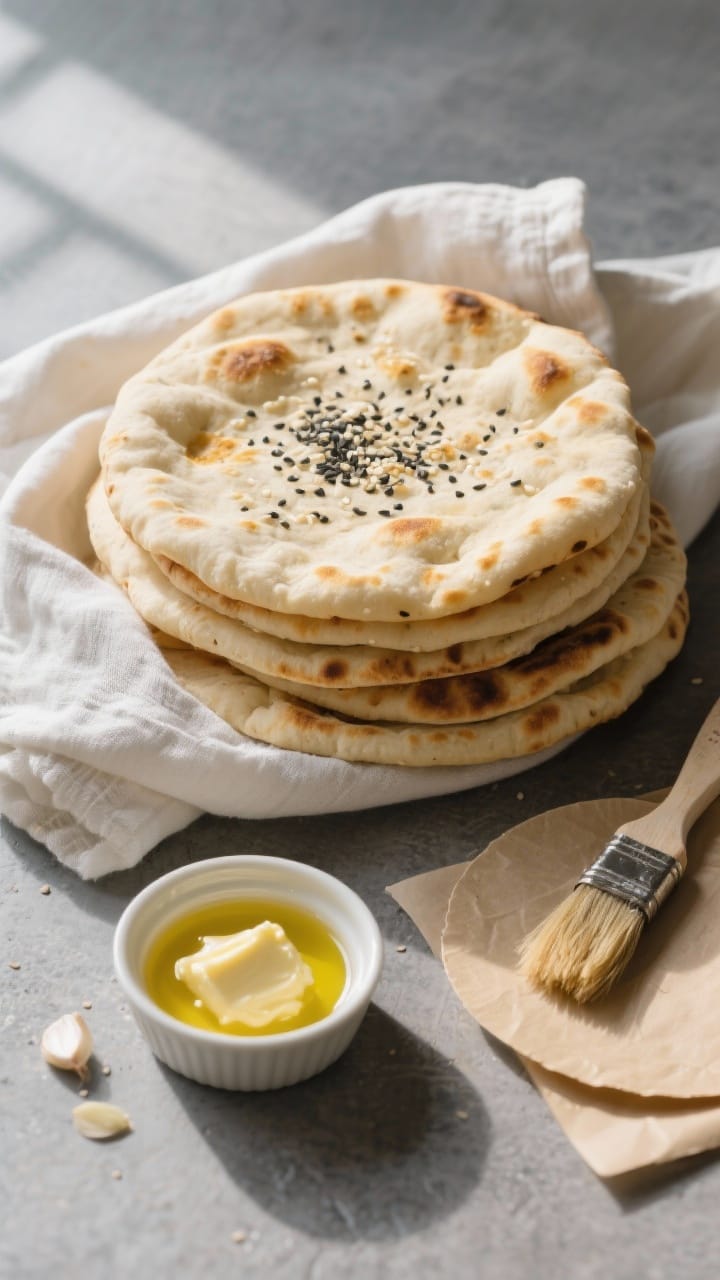
- Optional brushing. For extra softness and flavor, brush the hot bread with melted butter or a thin swipe of olive oil. Keep cooked breads wrapped in a clean towel to stay warm and tender.
- Repeat. Continue rolling and cooking the remaining dough.Adjust heat as needed to avoid burning or drying out.
How to Store
- Room temperature: Cool completely. Store in a zip-top bag or airtight container for up to 2 days. Layer with parchment if stacking.
- Refrigerator: Keeps well for 4–5 days.Warm briefly in a skillet or microwave with a damp paper towel to restore softness.
- Freezer: Freeze flatbreads with parchment between each piece in a sealed bag for up to 2 months. Thaw at room temp or reheat from frozen in a skillet.
- Reheating tip: A quick steam helps. Sprinkle a few drops of water in the skillet, cover for 20–30 seconds, then uncover to keep it pliable.
Why This is Good for You
- Simple, whole ingredients: No preservatives or additives, and you control the salt and oil.
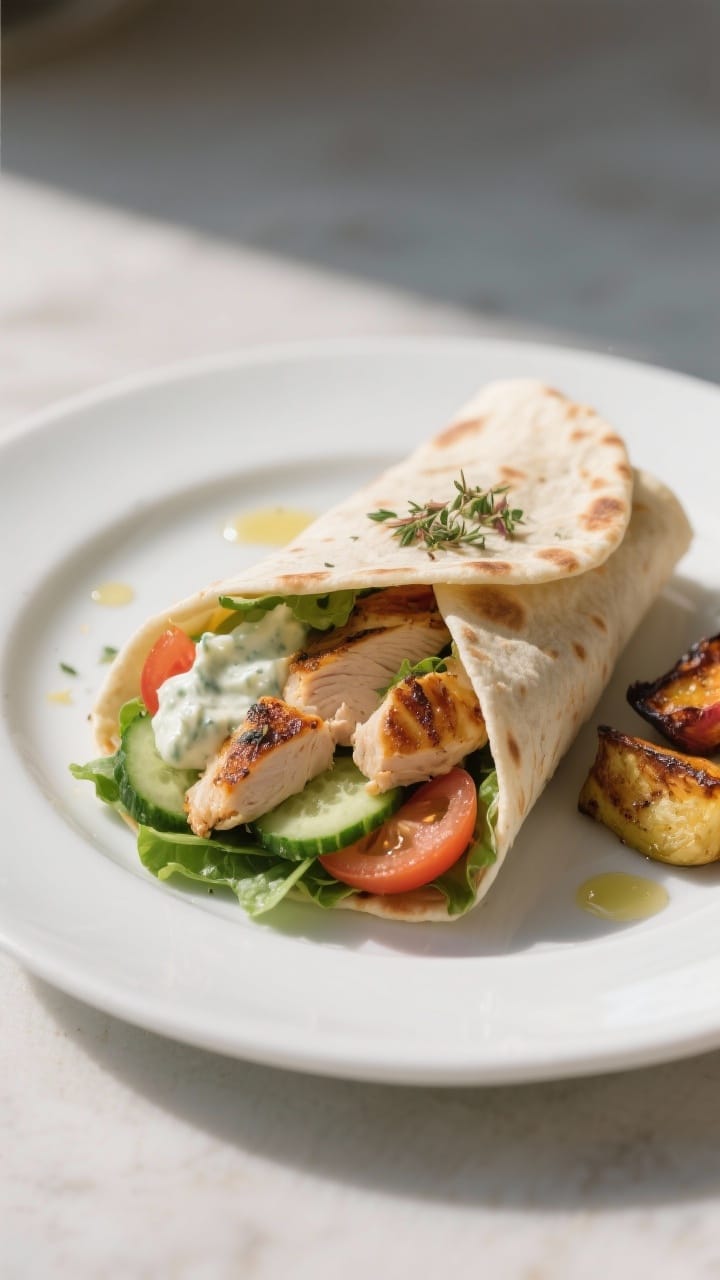
- Balanced carbs and protein: Pairing the bread with lean proteins and veggies makes a satisfying, steady-energy meal.
- Customizable nutrition: Swap part of the flour for whole wheat, add seeds, or use olive oil for heart-healthy fats.
- Portion-friendly: Make smaller rounds for snack wraps or mini sandwiches to match your needs.
Common Mistakes to Avoid
- Too much flour during kneading: This makes the bread dry and stiff.Aim for soft and slightly tacky dough.
- Skipping the rest: Without resting, the dough fights back and rolls unevenly. A short rest improves texture and shape.
- Low skillet heat: Warm, not blazing, is best. If it’s too cool, the bread dries out before it browns.
- Overcooking: Extended time in the pan makes the bread brittle.Pull it once you see light browning and puffing.
- Stacking without covering: Keep cooked breads wrapped in a towel to prevent drying while you finish the batch.
Recipe Variations
- Whole Wheat: Use 50% whole wheat flour and 50% all-purpose. Add 1–2 extra tablespoons of water if needed.
- Dairy-Free: Replace yogurt with an extra 1/4 cup warm water or use a non-dairy yogurt. Use oil instead of butter for brushing.
- Garlic-Herb: Add 1 teaspoon garlic powder and 2 teaspoons mixed dried herbs to the dry ingredients.Brush cooked breads with garlic-infused olive oil.
- Seeded: Press sesame or nigella seeds onto the surface after rolling. Roll lightly once more to help them stick.
- Fluffy “Pocket” Style: Roll slightly thicker (closer to 1/4 inch) and cook on a hotter pan to encourage puffing. Slice to create pockets once cooled slightly.
- Gluten-Free: Use a quality 1:1 gluten-free flour blend with xanthan gum.Increase resting time to 30–40 minutes and handle gently.
FAQ
Can I use self-rising flour?
Yes. If using self-rising flour, omit the baking powder and reduce the salt to 1/2 teaspoon. Follow the recipe as written otherwise.
What if I don’t have yogurt?
Use milk or a non-dairy milk and add an extra tablespoon of oil.
The texture will still be soft, though yogurt adds a bit more tenderness and flavor.
Why isn’t my flatbread puffing?
Usually the pan isn’t hot enough, or the dough is rolled too thick or too thin. Aim for consistent medium heat and an even 1/8–1/4 inch thickness. A well-rested dough also helps.
Can I bake these in the oven?
You can.
Preheat a baking steel or inverted sheet pan to 475°F (245°C). Bake each flatbread for 2–3 minutes, flipping once. The stovetop gives better control, but the oven works for larger batches.
How do I keep them soft for lunchboxes?
Brush lightly with oil or butter after cooking, cool completely, then wrap well.
Add your fillings just before eating, or layer greens to keep moisture off the bread.
Can I make the dough ahead?
Yes. Refrigerate the dough, covered, for up to 24 hours. Let it sit at room temperature for 30–45 minutes before rolling and cooking.
What fillings work best?
Grilled chicken, tuna salad, roasted veggies, hummus, sliced turkey, avocado, tomato, cucumbers, and crisp greens all work great.
Add a spread like tzatziki, pesto, or mustard for extra flavor.
Wrapping Up
Flatbread sandwich bread is practical, quick, and consistently good. With a handful of pantry ingredients, you can make soft, flexible wraps that won’t crack and hold up to hearty fillings. Once you try this method, you’ll find plenty of ways to tweak the flavor and texture to suit your meals.
Keep a stack in the freezer, and lunch is always a few minutes away.
Printable Recipe Card
Want just the essential recipe details without scrolling through the article? Get our printable recipe card with just the ingredients and instructions.