Easy Pan Rolls – Soft, Quick, and Homemade
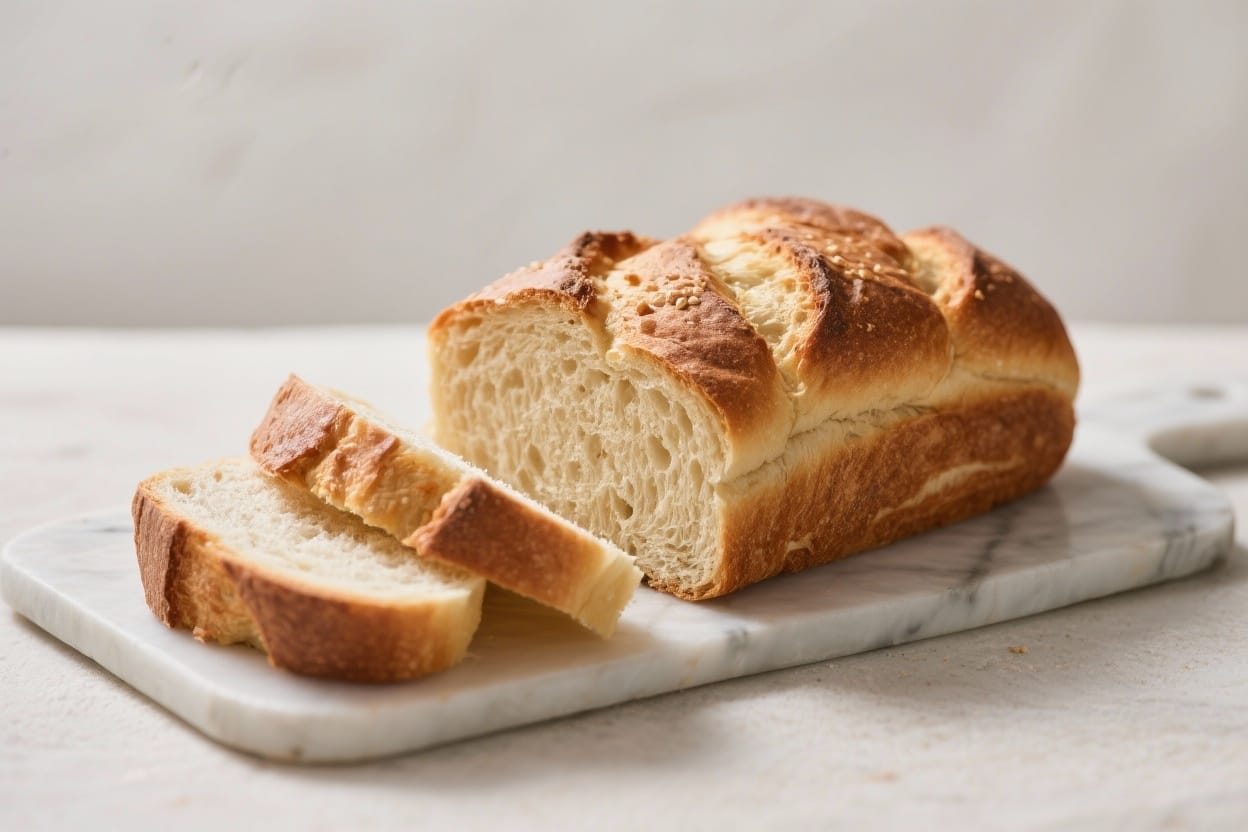
These easy pan rolls are the kind of bread you make when you want something warm and homemade without a long wait. The dough comes together quickly, and the texture is soft and fluffy with a light golden crust. You don’t need special equipment—just a bowl, a spoon, and a pan. They’re perfect for weeknight dinners, holiday gatherings, or Sunday breakfast. If you’re new to yeast bread, this is a great place to start.
Why This Recipe Works
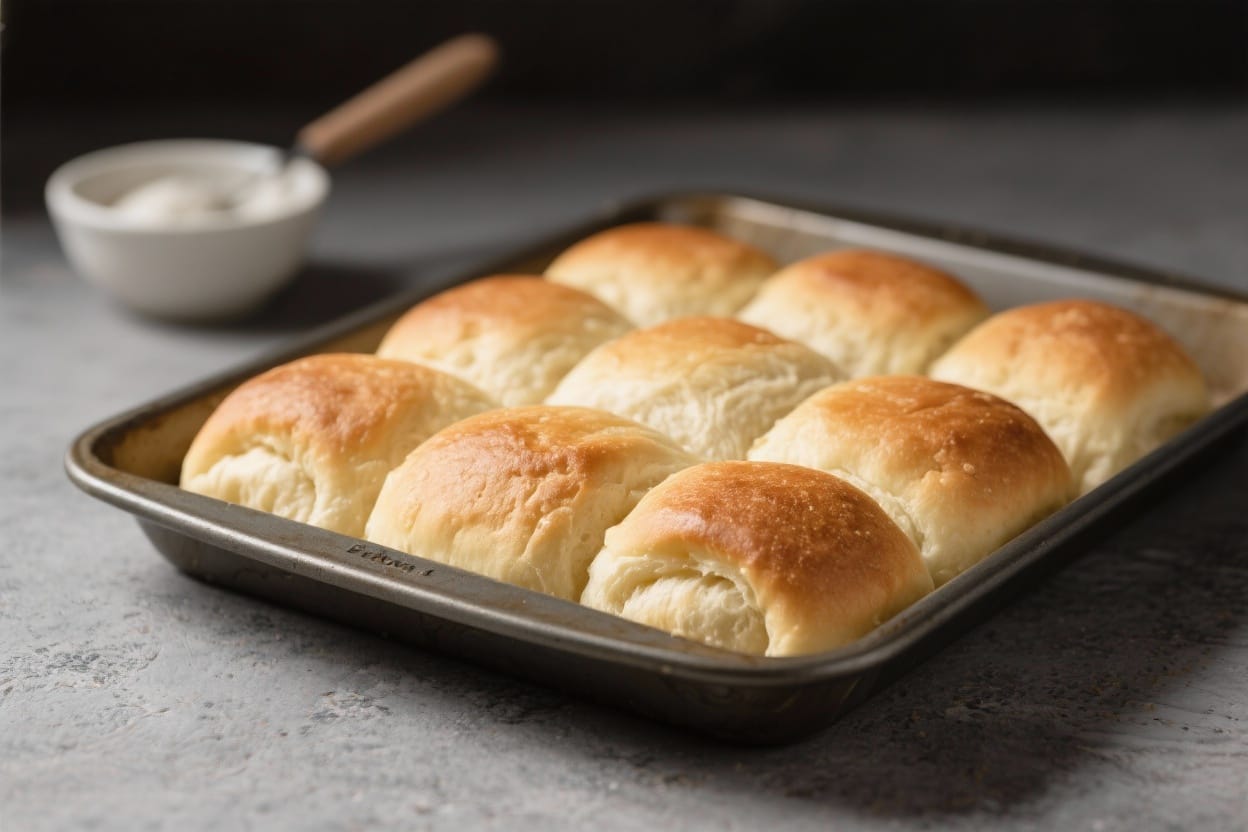
Easy pan rolls – Easy Pan Rolls – Soft, Quick, and Homemade These easy pan rolls are the kind of bread you make when
These rolls use a simple enriched dough with milk, a touch of sugar, and butter, which keeps them soft and tender. Instant yeast makes the rise faster and more reliable. A warm oven preheat creates the right environment for proofing without any fuss. Shaping into a pan means the rolls help each other rise tall, so you get soft sides and a fluffy crumb. A quick butter brush at the end adds flavor and a pretty sheen.
Ingredients
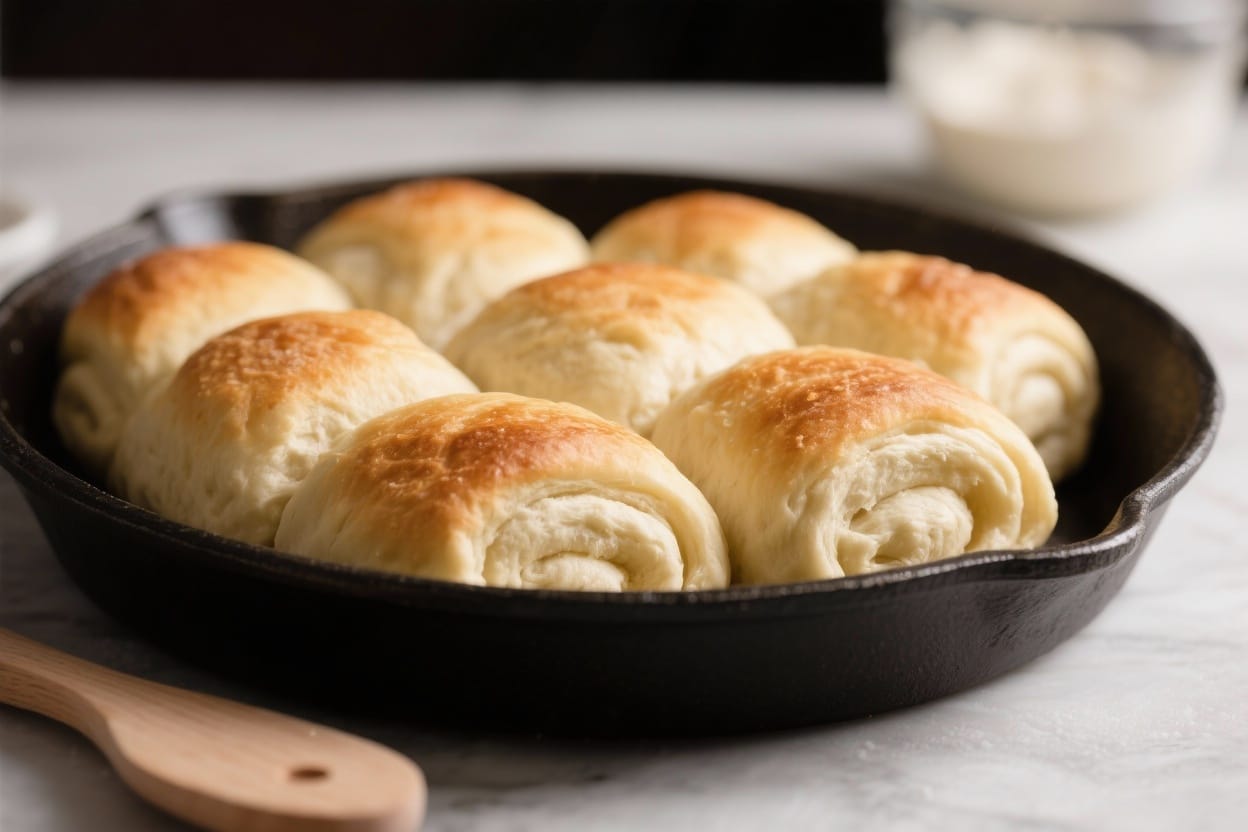
Easy pan rolls – The dough comes together quickly, and the texture is soft and fluffy with a light golden crust
- 3 cups (360 g) all-purpose flour, plus more for dusting
- 2 1/4 teaspoons instant yeast (one 0.25 oz packet)
- 2 tablespoons granulated sugar
- 1 teaspoon fine sea salt
- 1 cup (240 ml) warm milk (about 105–115°F)
- 3 tablespoons unsalted butter, melted and slightly cooled (plus more for greasing and brushing)
- 1 large egg, room temperature
- Optional: flaky salt or sesame seeds for topping
Instructions
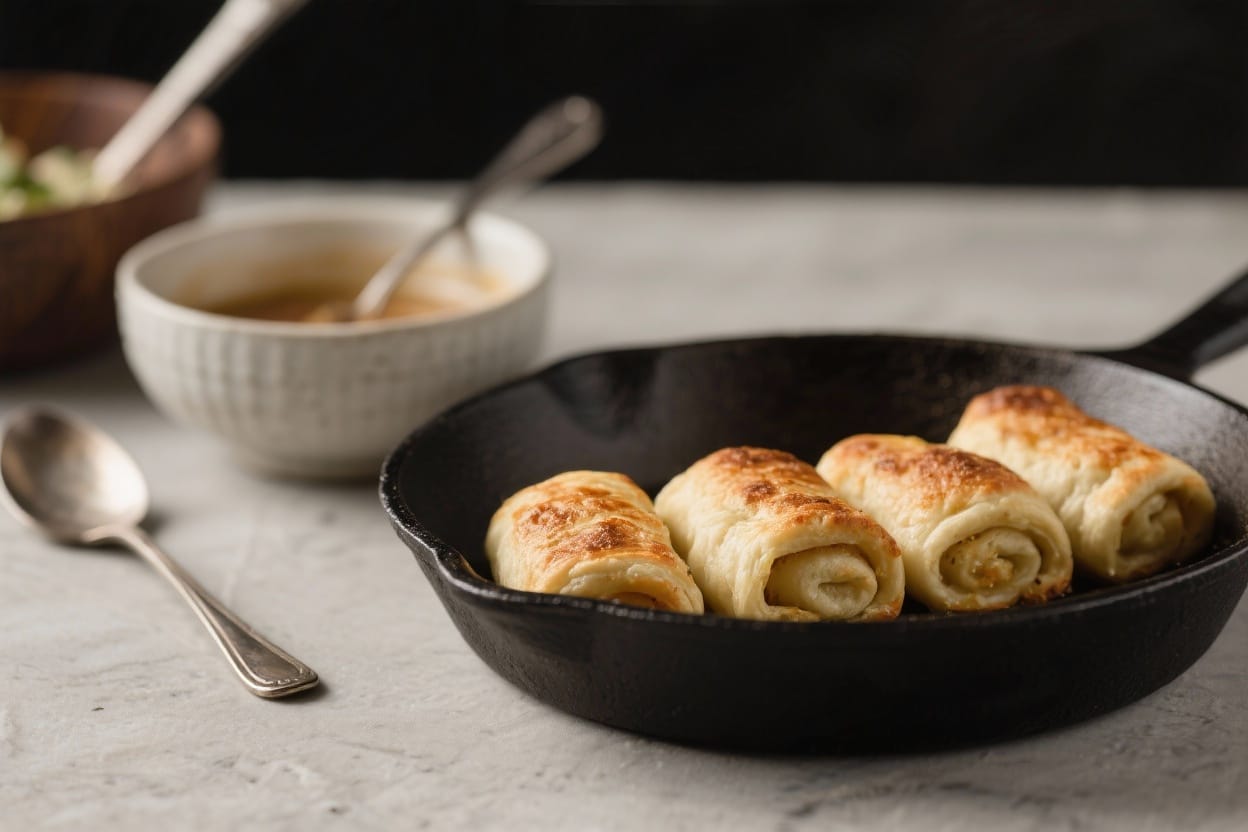
Easy pan rolls – You don’t need special equipment—just a bowl, a spoon, and a pan
- Prep the pan. Lightly grease a 9×13-inch baking pan with butter or oil. Set aside. Preheat your oven to 200°F (90°C) for 5 minutes, then turn it off. This creates a warm spot for proofing.
- Mix dry ingredients. In a large bowl, whisk the flour, instant yeast, sugar, and salt until evenly combined.
- Add wet ingredients. In a measuring cup, whisk the warm milk, melted butter, and egg. Pour the mixture into the dry ingredients.
- Bring the dough together. Stir with a wooden spoon until a shaggy dough forms. If it feels very sticky, add 1–2 tablespoons more flour, a little at a time. If it’s dry, add 1–2 teaspoons more milk.
- Knead. Turn the dough onto a lightly floured surface and knead for 5–7 minutes until smooth and springy. It should be soft and slightly tacky but not cling to your hands.
- First rise (quick proof). Shape the dough into a ball and place it back in the bowl. Cover with a clean towel and place in the warm (turned-off) oven or a warm spot. Let rise until doubled, about 30–45 minutes.
- Shape the rolls. Punch down the dough to release air. Divide into 12 equal pieces (about 60–65 g each). Shape each piece into a tight ball by tucking the edges under and rolling on the counter with a cupped hand.
- Pan the rolls. Arrange the dough balls in the greased pan in 3 rows of 4. Leave a little space between them so they can expand.
- Second rise. Cover the pan and let the rolls rise in a warm spot until puffy and touching, 20–30 minutes. Meanwhile, preheat the oven to 375°F (190°C).
- Bake. Bake for 15–18 minutes, until the tops are golden and the centers register about 190°F (88°C) on a thermometer. If browning too fast, tent loosely with foil.
- Finish and serve. Brush the hot rolls with melted butter and sprinkle with a pinch of flaky salt if you like. Cool in the pan for 10 minutes, then serve warm.
How to Store
- Room temperature: Keep leftover rolls in an airtight container for up to 2 days. Add a paper towel to absorb moisture and maintain softness.
- Freeze: Wrap tightly in foil, then place in a freezer bag for up to 2 months. Thaw at room temperature, then warm in a 300°F (150°C) oven for 8–10 minutes.
- Reheat: For soft rolls, wrap in foil and warm at 300°F (150°C) for 8–10 minutes. For a quicker option, microwave in 10–15 second bursts with a damp paper towel.
Why This is Good for You
These rolls are simple, homemade, and made with ingredients you recognize. Homemade bread often has less sodium and fewer additives than store-bought options. Using milk adds a little protein and calcium, while the egg contributes structure and nutrients. You control the portion and the sweetness, so it fits your needs. Plus, baking at home is a relaxing, satisfying habit that encourages mindful eating.
Pitfalls to Watch Out For
- Milk too hot: If the milk is above 120°F (49°C), it can harm the yeast and prevent rising. Aim for warm, not hot.
- Too much flour: Adding lots of extra flour makes dense rolls. Keep the dough soft and slightly tacky.
- Skipping the second rise: This step gives you that fluffy, airy texture. Don’t rush it.
- Underbaking: Pale rolls may be doughy inside. Look for golden tops and an internal temp near 190°F (88°C).
- Cold ingredients: A cold egg or milk slows yeast. Room temperature works best.
Alternatives
- Whole wheat version: Swap 1 cup of all-purpose flour for whole wheat. Add 1–2 teaspoons extra milk if the dough feels dry.
- Dairy-free: Use warm oat or almond milk and replace butter with a neutral oil or dairy-free butter.
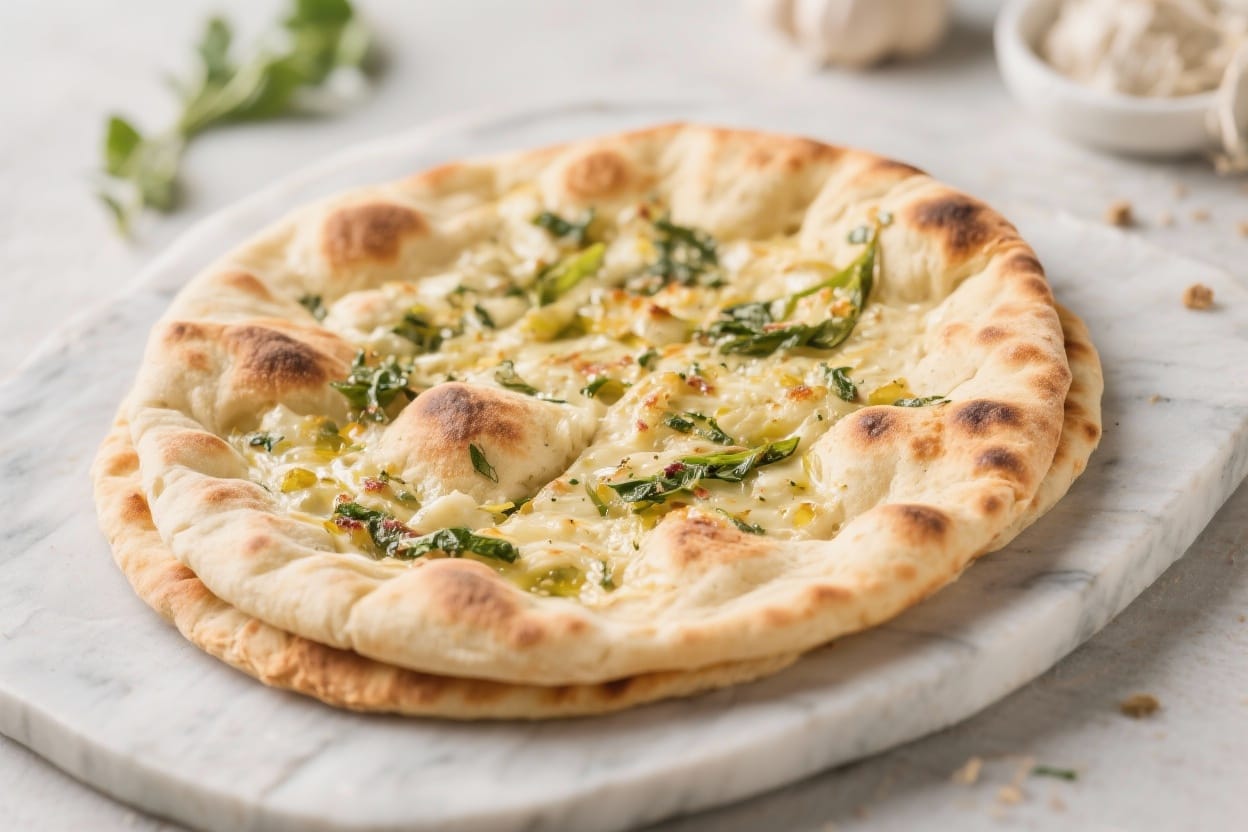
- Garlic herb rolls: Stir 1 teaspoon garlic powder and 1 tablespoon chopped fresh herbs (like parsley or chives) into the flour. Brush baked rolls with garlic butter.
- Sweeter brunch rolls: Increase sugar to 3–4 tablespoons and add a pinch of cinnamon. Great with honey or jam.
- Cheesy tops: Sprinkle shredded cheddar or parmesan on the rolls during the last 5 minutes of baking.
FAQ
Can I use active dry yeast instead of instant?
Yes. Use the same amount, but proof it first: mix the sugar with warm milk, sprinkle the yeast on top, and let it foam for 5–10 minutes before adding to the dry ingredients.
Do I need a stand mixer?
No. A spoon and your hands are enough. If you have a mixer, you can knead with a dough hook on low speed for 5–6 minutes.
How do I make smaller or larger rolls?
For sliders, divide into 15–16 pieces and bake 12–15 minutes. For larger sandwich rolls, divide into 9 pieces and bake 18–20 minutes, watching the color.
My dough isn’t rising. What happened?
Check yeast freshness and temperature. If your milk was too hot or your kitchen is chilly, the rise slows. Move the dough to a warmer spot or give it more time.
Can I make the dough ahead?
Yes. After the first rise, shape the rolls, cover tightly, and refrigerate up to 18 hours. Let them sit at room temperature 30–45 minutes before baking.
How can I get softer crusts?
Brush melted butter over the rolls right after baking and cover the pan loosely with a towel for 10 minutes to trap steam.
Can I bake these in a cast iron skillet?
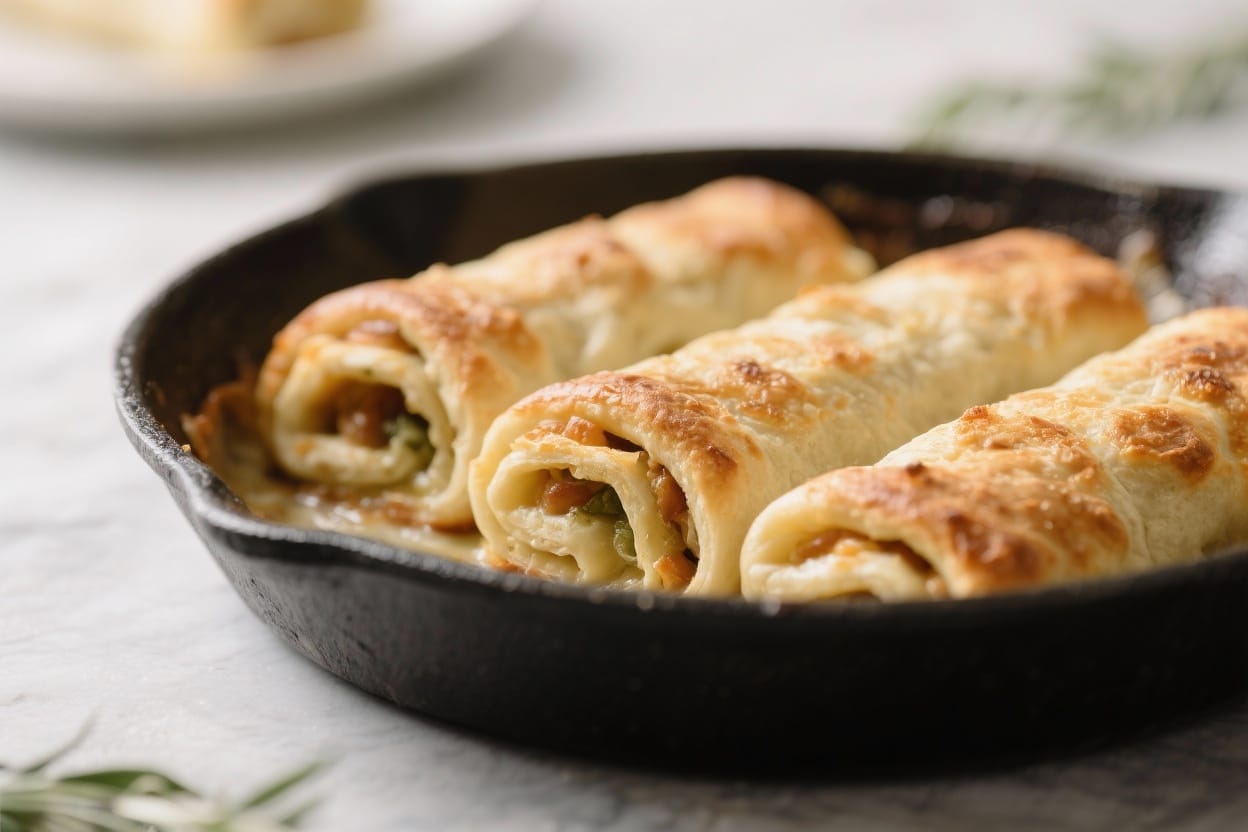
Absolutely. Grease a 10–12 inch skillet and arrange the rolls. Bake as directed, checking a minute or two early since cast iron holds heat well.
What if I don’t have milk?
Use water and add 1 extra tablespoon of butter or 1 tablespoon of oil. The rolls will still be soft, just a bit less rich.
Wrapping Up
Easy pan rolls are the kind of recipe you’ll keep on repeat. They’re forgiving, quick to rise, and always a hit at the table. With a handful of pantry ingredients and simple steps, you get warm, soft bread any night of the week. Make them once, and they’ll become your go-to for everything from soups and salads to holiday dinners.
Printable Recipe Card
Want just the essential recipe details without scrolling through the article? Get our printable recipe card with just the ingredients and instructions.