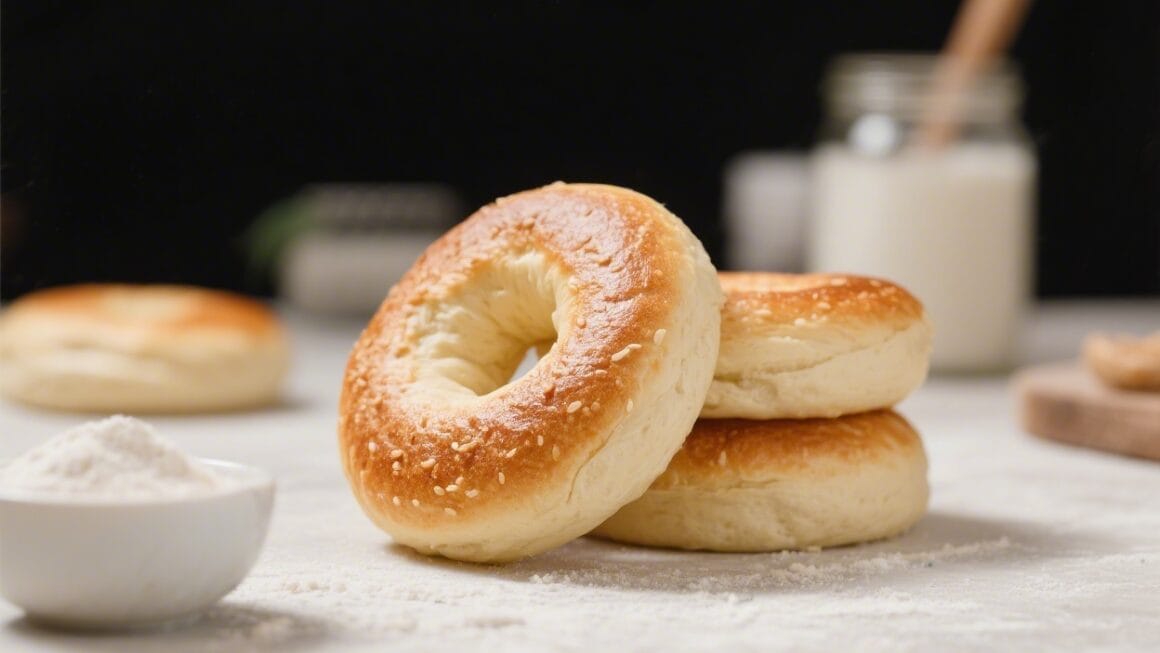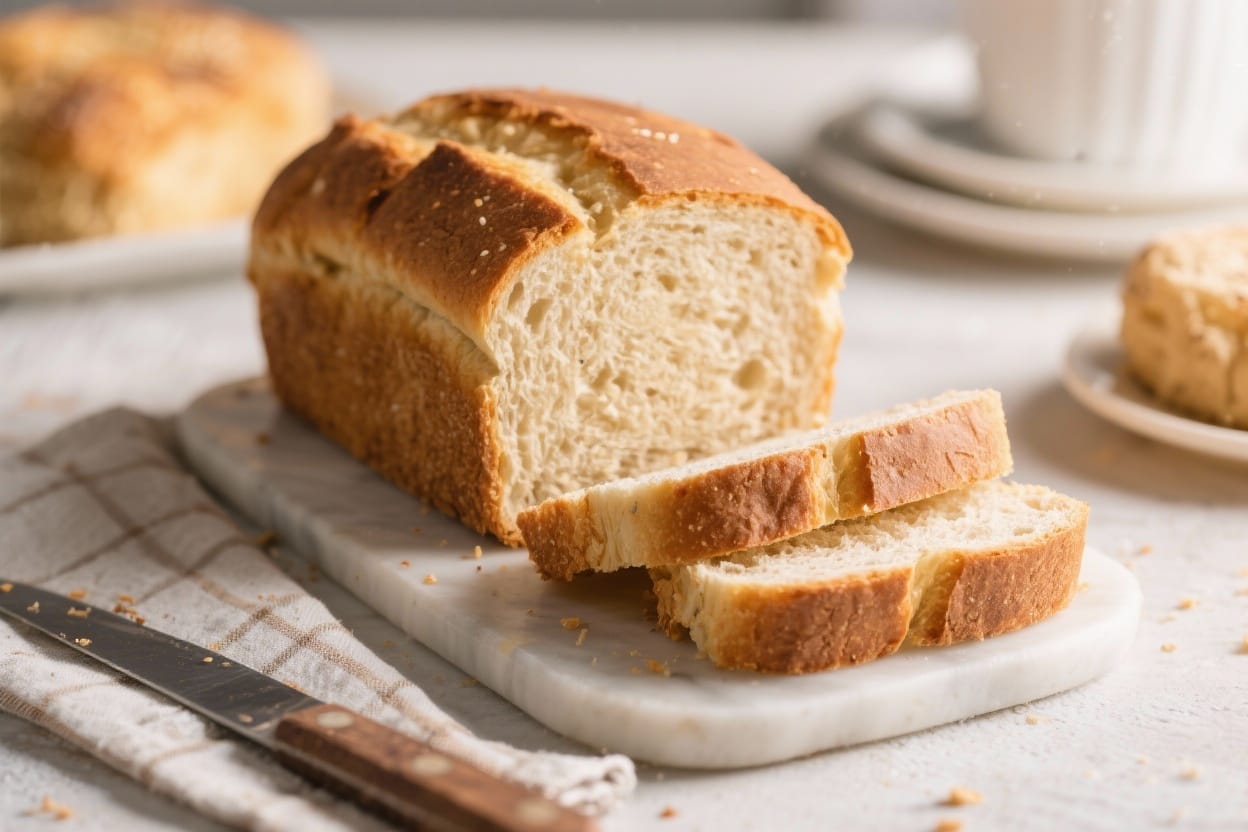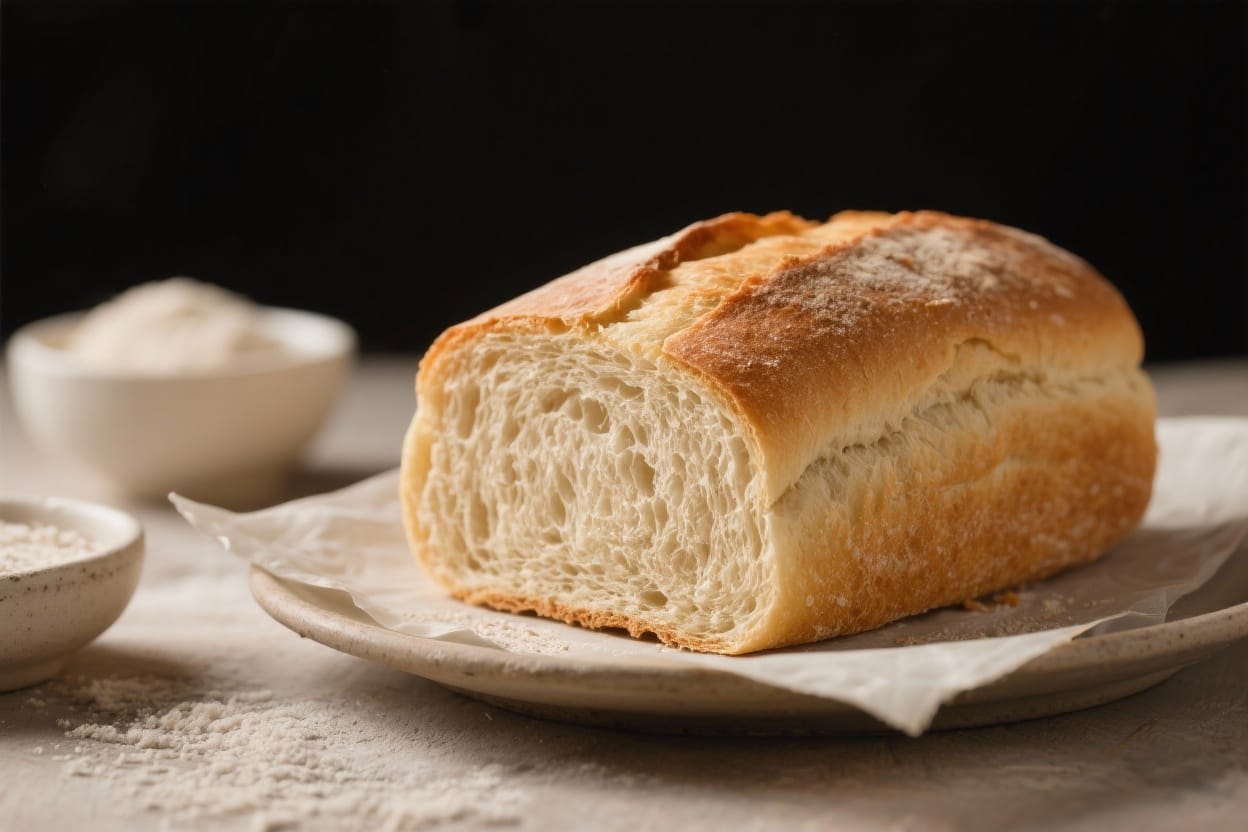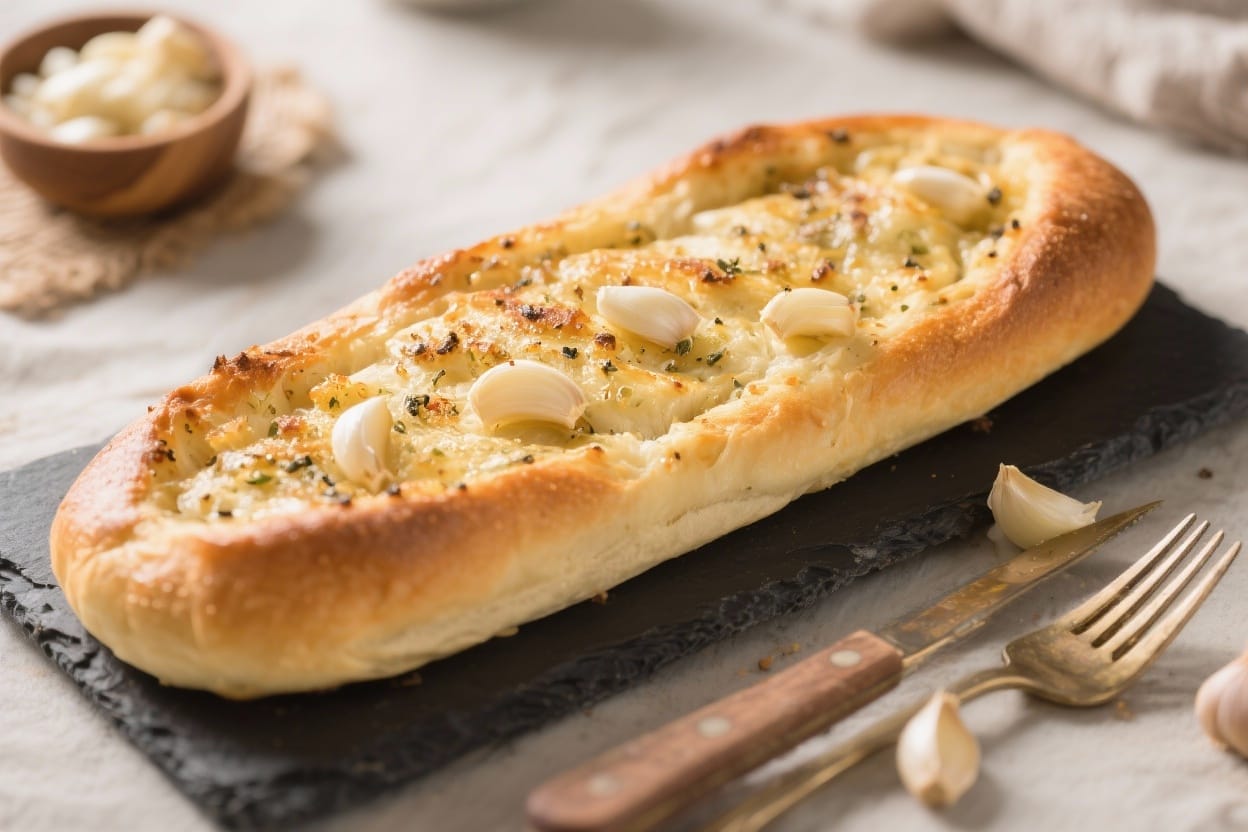
No-yeast garlic bread is your weeknight hero: warm, comforting, and ready in under 30 minutes. No waiting for dough to rise, no special equipment, and no fuss. It’s perfect when pasta is bubbling on the stove or soup needs a cozy side.
The texture is soft and biscuit-like, with a golden crust and a buttery garlic finish. If you love garlic bread but don’t want the yeast or the wait, this one hits the spot.
What Makes This Special
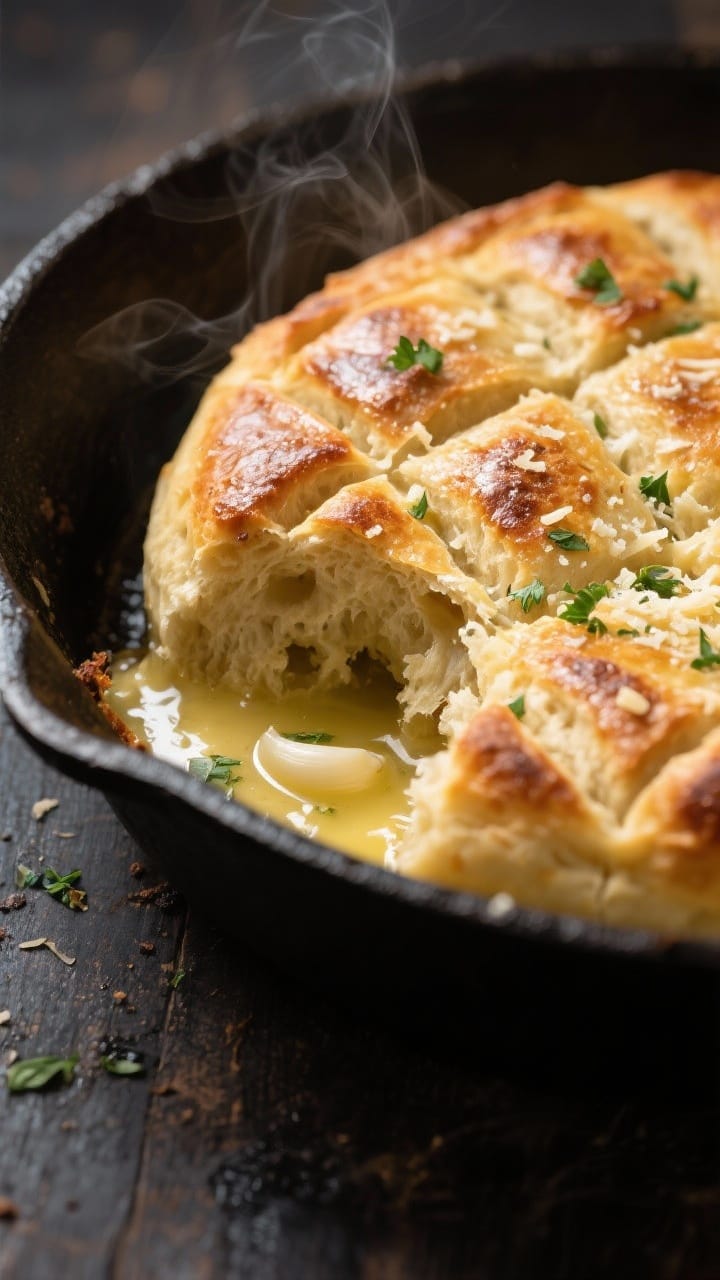
This recipe skips yeast and uses baking powder to create lift, giving you soft, tender bread in a fraction of the time. The dough comes together in one bowl, and you can bake it in a skillet or on a sheet pan.
It’s super flexible: add herbs, cheese, or even a hint of spice to fit the mood.
Because it’s yeast-free, the flavor is clean and buttery with a strong garlic aroma. You get the same comforting vibe as traditional garlic bread without the planning. It’s the kind of recipe you’ll reach for when you need something fast that still feels homemade and cozy.
Ingredients
- All-purpose flour – 2 cups (plus a little for dusting)
- Baking powder – 2 teaspoons
- Salt – 1 teaspoon
- Sugar – 1 teaspoon (balances the flavor and helps browning)
- Whole milk – 3/4 cup (or buttermilk for extra tenderness)
- Plain yogurt or sour cream – 1/4 cup (adds moisture and tang)
- Unsalted butter – 4 tablespoons, melted (plus more for brushing)
- Olive oil – 1 tablespoon (for flavor and browning)
- Fresh garlic – 3 to 5 cloves, finely minced or grated
- Fresh parsley – 2 tablespoons, chopped (or 1 teaspoon dried parsley)
- Optional add-ins – 1/4 cup grated Parmesan, 1/2 teaspoon dried oregano, pinch of red pepper flakes, or shredded mozzarella for topping
Instructions
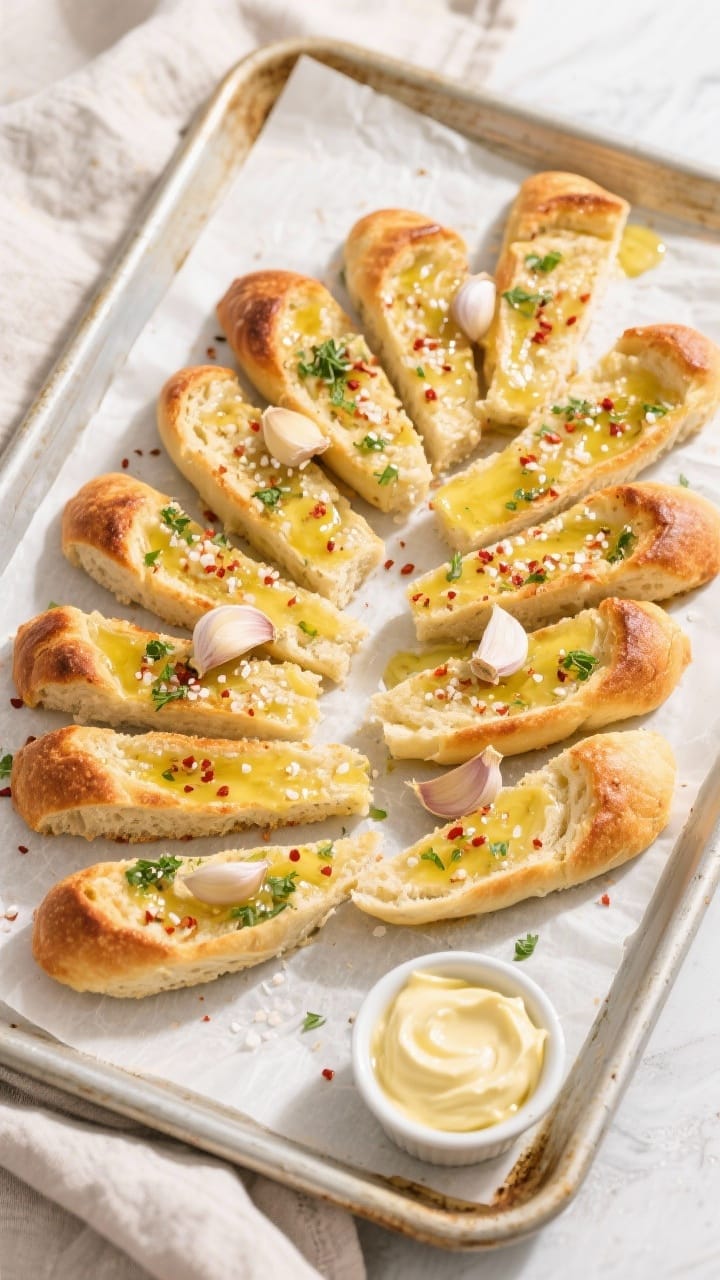
- Heat the oven: Preheat to 400°F (200°C).Line a baking sheet with parchment, or lightly grease a cast-iron skillet for a crisp bottom.
- Mix the dry ingredients: In a large bowl, whisk flour, baking powder, salt, and sugar until evenly combined.
- Stir the wet ingredients: In a measuring cup, whisk milk, yogurt (or sour cream), and olive oil. Add 2 tablespoons of the melted butter to this mixture.
- Combine to make a soft dough: Pour the wet ingredients into the dry. Stir with a spatula just until a shaggy dough forms.If it feels too dry, add a splash of milk; if too sticky, dust with a little flour. Do not overmix.
- Shape the dough: Turn the dough onto a floured surface. Gently pat it into a 3/4-inch-thick round or oval. You can also divide into 6–8 small rounds for individual breads.
- Transfer and score: Place the dough onto your prepared pan or skillet.Lightly score the top with a knife in a crisscross pattern to help it bake evenly.
- Make the garlic butter: Mix the remaining melted butter with the minced garlic and parsley. Add Parmesan or oregano if using.
- Brush and bake: Brush half the garlic butter over the dough. Bake for 14–18 minutes, until the top is golden and the center feels set.Small rounds will bake faster; start checking at 12 minutes.
- Finish with more garlic butter: Remove from the oven and brush on the remaining garlic butter while hot. For extra color, broil for 1 minute at the end—watch closely.
- Rest and serve: Let it rest 3–5 minutes, then slice or tear. Sprinkle with extra parsley or a pinch of flaky salt if you like.
Keeping It Fresh
This bread is best warm on the day you make it.
If you have leftovers, wrap them in foil and store at room temperature for up to 24 hours. For longer storage, refrigerate in an airtight container for up to 3 days.
To reheat, wrap in foil and warm in a 325°F (165°C) oven for 8–10 minutes. A quick skillet reheat with a tiny knob of butter also brings back the crisp edges. Avoid microwaving if you can; it makes the texture rubbery.

Benefits of This Recipe
- No proofing and no yeast: From bowl to table in under half an hour.
- Simple pantry staples: Flour, baking powder, milk, and garlic are all you really need.
- Customizable: Works with herbs, cheese, or spice, and pairs with almost everything.
- Beginner-friendly: No kneading or special technique.Just mix, shape, and bake.
- Consistent results: Baking powder keeps it tender and reliable every time.
What Not to Do
- Don’t overmix the dough. It makes the bread tough.
- Don’t skip the salt. It balances the garlic and boosts flavor.
- Don’t use old baking powder. If it’s flat, the bread will be too.
- Don’t drown the dough in liquid. Aim for soft and slightly tacky, not sticky-wet.
- Don’t burn the garlic. If broiling at the end, keep a close eye to avoid bitterness.
Alternatives
- Dairy-free: Use unsweetened oat or almond milk and a dairy-free yogurt.Swap butter for olive oil or vegan butter.
- Gluten-free: Use a 1:1 gluten-free baking blend with xanthan gum. The dough may be softer; pat it gently and bake a few minutes longer.
- Cheesy version: Add 1/2 cup shredded mozzarella to the dough or sprinkle on top halfway through baking.
- Herb-forward: Mix in 1 teaspoon dried Italian seasoning or 1 tablespoon chopped fresh rosemary or chives.
- Spicy: Add 1/4 teaspoon red pepper flakes to the garlic butter for gentle heat.
- Skillet breadsticks: Shape into 8 strips, brush with garlic butter, and bake 10–12 minutes.
FAQ
Can I make the dough ahead?
You can mix the dry ingredients ahead and keep them sealed at room temperature. For best texture, combine with the wet ingredients right before baking.
The baking powder starts working as soon as it’s hydrated, so a long rest can reduce lift.
What if I don’t have yogurt or sour cream?
Use all milk and add 1 teaspoon of lemon juice or vinegar to mimic the tang. Let it sit for 5 minutes before mixing. The bread will still be soft and flavorful.
Can I cook this on the stovetop?
Yes.
Use a lightly oiled nonstick or cast-iron skillet over medium-low heat. Cook small rounds 4–5 minutes per side with a lid on, brushing with garlic butter as they finish.
How do I know it’s done?
The top will be golden, the edges set, and a toothpick in the center will come out clean or with a few crumbs. If the center looks pale and doughy, give it a few more minutes.
Is fresh garlic required?
Fresh garlic gives the best flavor, but you can use 1 to 1.5 teaspoons garlic powder in the butter mixture and a little in the dough.
It won’t brown the same way, but it still tastes great.
Can I use self-rising flour?
Yes. Replace the all-purpose flour, baking powder, and salt with 2 cups self-rising flour. Taste the dough for salt and adjust if needed.
What should I serve this with?
It’s great with pasta, soups, salads, roasted chicken, or a simple omelet.
It also makes a nice base for quick flatbread pizzas—just add sauce and cheese and broil for a minute.
How can I make it extra crisp?
Preheat your pan in the oven for 10 minutes before adding the dough. A hot surface helps set a golden crust fast. A brief broil at the end also adds color and crunch.
Wrapping Up
No-yeast garlic bread brings together speed, comfort, and big flavor.
You mix, shape, brush with garlic butter, and bake—simple as that. It’s flexible enough for a quiet night in or a last-minute dinner with friends. Keep these ingredients on hand, and you’ll always have a warm, garlicky side ready to go.
Printable Recipe Card
Want just the essential recipe details without scrolling through the article? Get our printable recipe card with just the ingredients and instructions.