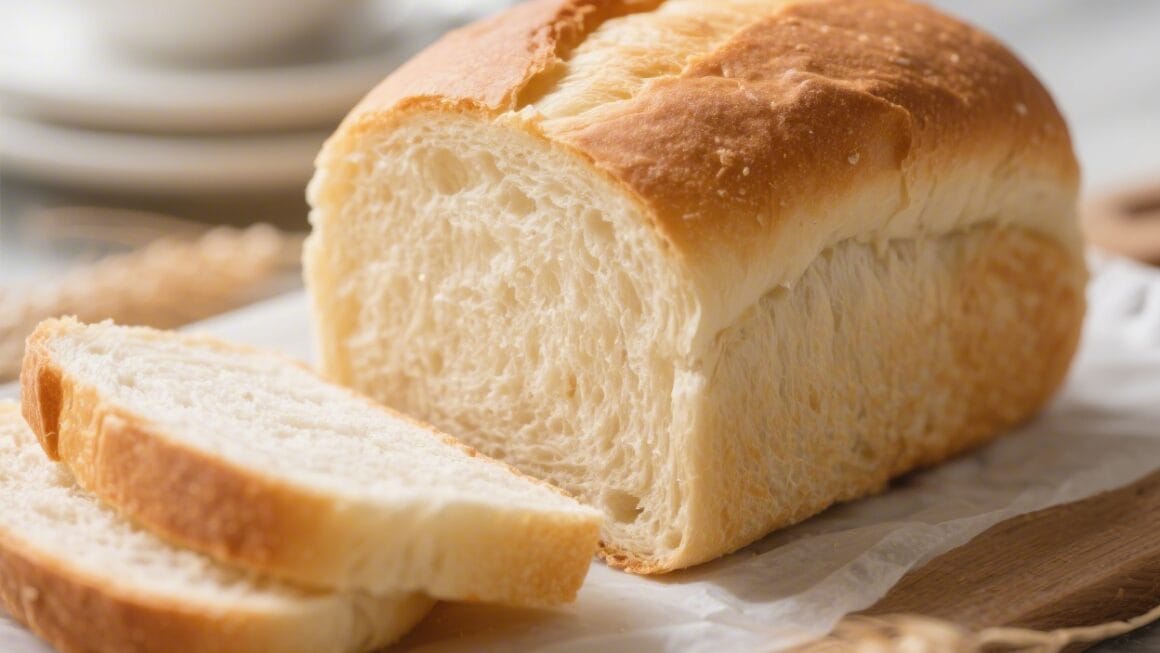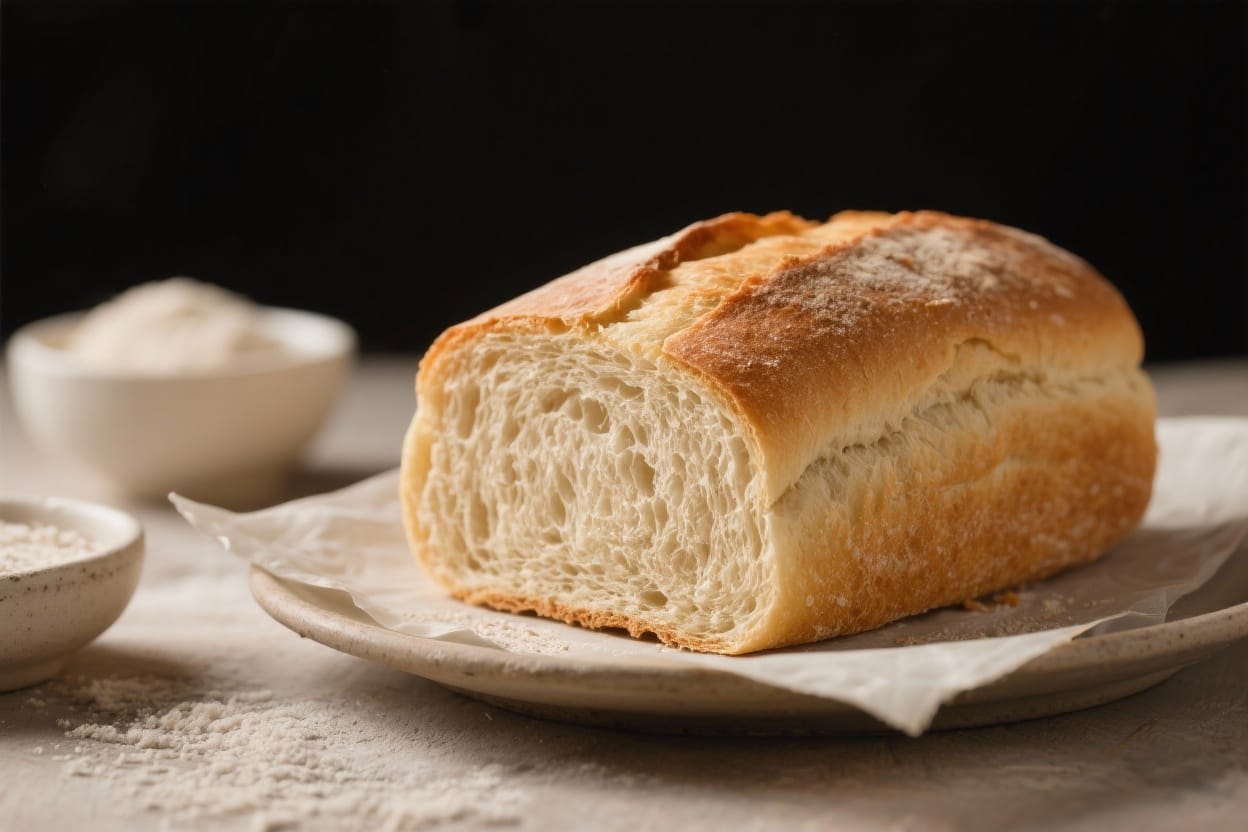
If you’re new to bread baking, this simple no-proof loaf is the perfect place to start. It uses pantry staples, mixes up fast, and heads straight to the oven—no waiting for dough to rise. The texture is soft inside with a thin, crisp crust, and the flavor is mild and comforting.
It’s great for toast, sandwiches, or serving warm with butter. You’ll get fresh bread on the table in under an hour, and you won’t need a mixer or any special tools.
Why This Recipe Works
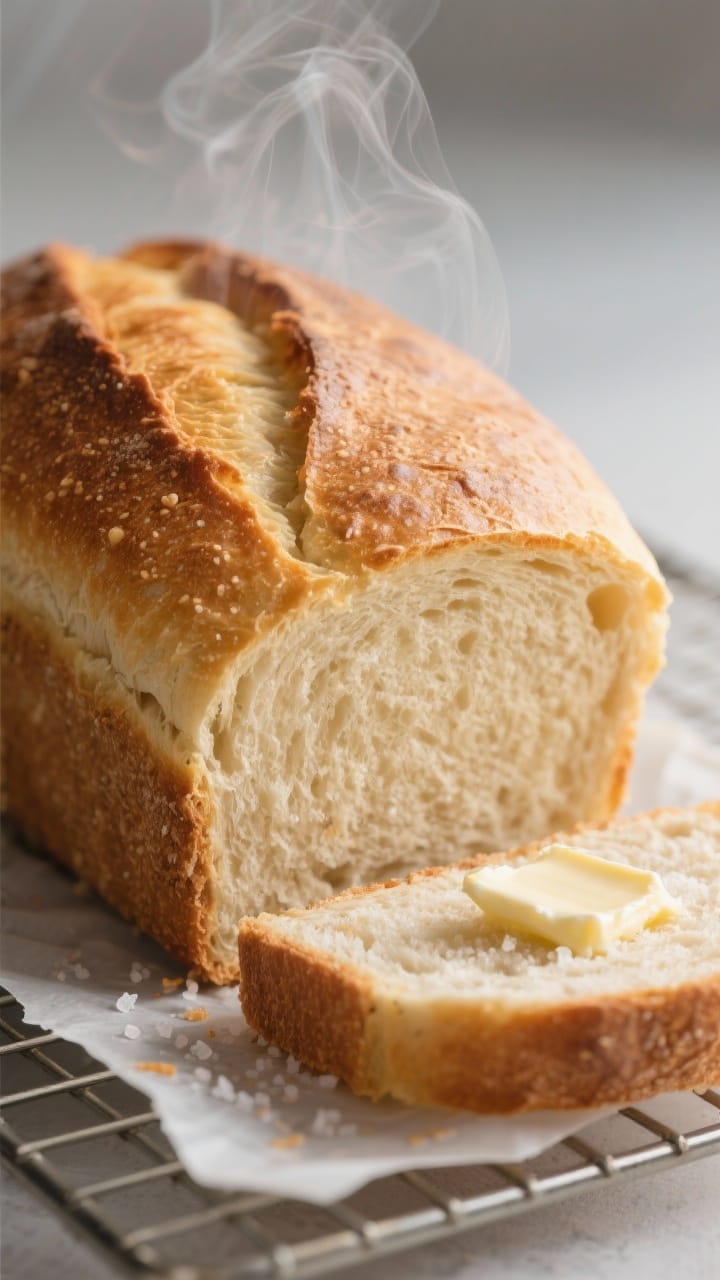
This bread skips proofing by using a generous kick of leavening and higher-hydration dough. Instead of relying on time for the gluten and yeast to do their work, it uses a blend of baking powder and instant yeast for fast lift in the oven.
The yeast adds a classic bread aroma, while the baking powder ensures the loaf rises even without a long wait. A slightly wet dough helps create steam, which gives the loaf a tender crumb. A hot oven sets the structure quickly, so the bread bakes up tall and light.
It’s a great stepping stone for beginners who want success without fuss.
Ingredients
- 3 cups (360 g) all-purpose flour (or bread flour for a chewier texture)
- 2 teaspoons baking powder
- 1 teaspoon instant yeast (also called rapid-rise or bread machine yeast)
- 1 teaspoon fine salt
- 1 tablespoon sugar or honey (optional, for flavor and browning)
- 1 to 1 1/8 cups (240–270 ml) warm water (about 105–115°F / 40–46°C)
- 1 tablespoon neutral oil or melted butter (optional, for a softer crumb)
- Extra flour for dusting
- Oil or butter for greasing the pan
Instructions
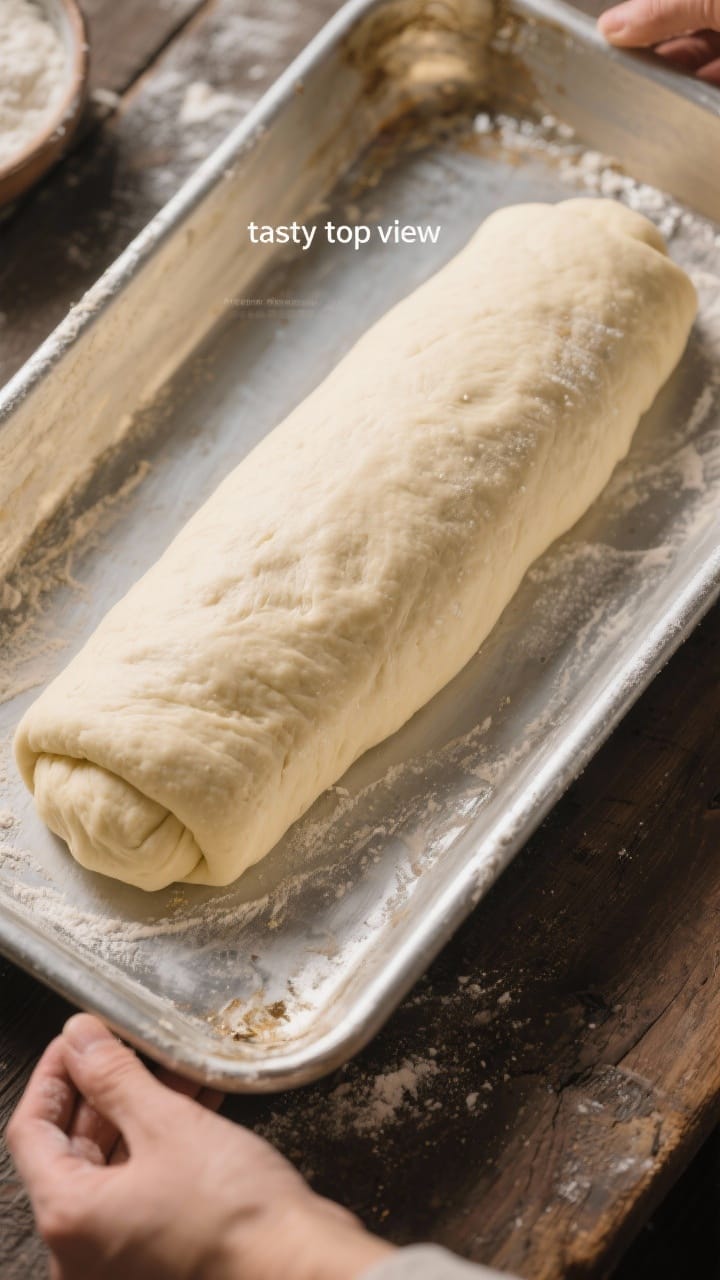
- Preheat the oven and prep the pan. Heat the oven to 400°F (200°C). Lightly grease an 8.5×4.5-inch loaf pan or a 9×5-inch pan. You can also line it with parchment for easy release.
- Mix dry ingredients. In a large bowl, whisk together the flour, baking powder, instant yeast, salt, and sugar (if using).This ensures the leaveners are evenly distributed.
- Add wet ingredients. Stir in 1 cup of warm water and the oil or melted butter. Mix with a spoon or spatula until a shaggy dough forms. If it looks dry, add the remaining water a tablespoon at a time.The dough should be soft and slightly sticky.
- Brief knead (1 minute). Lightly flour your hands and knead in the bowl or on a floured surface for about 60–90 seconds. You’re not developing full gluten—just bringing the dough together smoothly. Avoid adding too much flour.
- Shape and pan. Form the dough into a rough log and place it in the prepared pan.Smooth the top with damp fingertips. Use a sharp knife to make a shallow slit down the center for controlled expansion.
- Bake. Place the pan on the middle rack and bake for 30–38 minutes. The loaf is done when the top is golden, it sounds hollow when tapped, and an instant-read thermometer in the center reads 200–205°F (93–96°C).
- Cool. Let the bread rest in the pan for 5 minutes, then turn it out onto a rack.Cool at least 20 minutes before slicing to keep the crumb from squashing.
- Serve. Slice and enjoy warm with butter, or let it cool completely for neater slices. Toasts beautifully and makes simple sandwiches.
Storage Instructions
- Room temperature: Wrap the cooled loaf in a clean towel or store in a bread box for up to 2 days. Avoid airtight plastic if you want to preserve the crust.
- For softness: Store in a sealed bag for 2–3 days, but expect the crust to soften.
- Freezing: Slice, wrap tightly, and freeze for up to 2 months.Toast slices straight from frozen or thaw at room temp.
- Reviving: To crisp the crust, place the loaf in a 350°F (175°C) oven for 8–10 minutes.

Health Benefits
- Simple ingredients: Flour, water, yeast, and salt keep additives low and the ingredient list clean.
- Energy and fiber: Using part whole wheat flour can add fiber and steady energy. Try swapping 1 cup of the all-purpose flour with whole wheat.
- Reduced sugar: The loaf works without added sugar, so you control sweetness.
- Customizable: Add seeds like flax or sunflower for healthy fats and texture.
What Not to Do
- Don’t use active dry yeast without adjusting: If using active dry yeast, bloom it in warm water for 5 minutes first. Instant yeast can go straight in.
- Don’t over-flour the dough: A slightly sticky dough gives better lift.Too much flour makes the loaf dense.
- Don’t skip preheating: The hot oven triggers the rise. A cool oven leads to a flat loaf.
- Don’t overbake: Dry bread happens fast. Watch for color and internal temperature.
- Don’t slice immediately: Cutting too soon compresses the crumb and makes it gummy.
Alternatives
- Whole wheat version: Replace 1 cup of all-purpose flour with whole wheat.Add 1–2 tablespoons extra water if the dough seems stiff.
- Herb and garlic: Mix in 1 teaspoon dried Italian herbs and 1/2 teaspoon garlic powder for a savory loaf.
- Dairy boost: Swap half the water for milk for a softer crumb and richer flavor.
- Olive oil loaf: Use olive oil instead of neutral oil and add 1 tablespoon chopped rosemary for a rustic twist.
- Seeded top: Brush the dough with water or milk and sprinkle sesame, poppy, or sunflower seeds before baking.
- Skillet round: Shape into a round and bake on a greased cast-iron skillet for 25–30 minutes. Slash the top for expansion.
FAQ
Can I make this without yeast?
Yes. For a quick bread without yeast, increase baking powder to 2 1/2 teaspoons and add 1/2 teaspoon baking soda.
Use 1 tablespoon lemon juice or vinegar in the liquid. The texture will be more like soda bread—still tasty, just different.
Why use both baking powder and yeast?
The yeast adds classic bread aroma and a bit of flavor, while baking powder guarantees lift without waiting for fermentation. Together, they make a tall loaf fast, with a familiar bread taste.
Can I knead this in a stand mixer?
You can, but it’s not necessary.
If you prefer, mix on low with a dough hook for 1–2 minutes just until smooth. Avoid overmixing; this dough doesn’t need heavy kneading.
How do I know the dough has enough water?
It should feel soft and slightly tacky, not dry. If it cracks when you shape it, add a teaspoon or two of water and mix briefly.
If it’s very sticky, dust your hands lightly with flour instead of adding a lot to the dough.
What size pan works best?
An 8.5×4.5-inch loaf pan gives a taller loaf; a 9×5-inch pan makes a slightly wider, shorter loaf. Both work well. For free-form baking, shape a round and bake on a sheet or skillet.
Can I add cheese or mix-ins?
Yes.
Fold in up to 1/2 cup shredded cheese, chopped olives, or seeds. Keep add-ins small and dry so they don’t weigh down the dough.
How do I get a shinier crust?
Brush the top with milk or a beaten egg before baking. For extra color, add 1 teaspoon sugar or honey to the dough.
Why did my loaf come out dense?
Common causes include too much flour, a cool oven, or old leaveners.
Check that your baking powder and yeast are fresh, measure flour by weight if possible, and preheat the oven fully.
Final Thoughts
Beginner Bread Without Proofing is your shortcut to warm, homemade bread any day of the week. It’s forgiving, fast, and flexible, with simple ingredients and reliable results. Once you’ve tried it, you can tweak the flour, herbs, or fats to suit your taste.
Keep this base recipe handy—you’ll reach for it whenever you want fresh bread without the wait.


Printable Recipe Card
Want just the essential recipe details without scrolling through the article? Get our printable recipe card with just the ingredients and instructions.