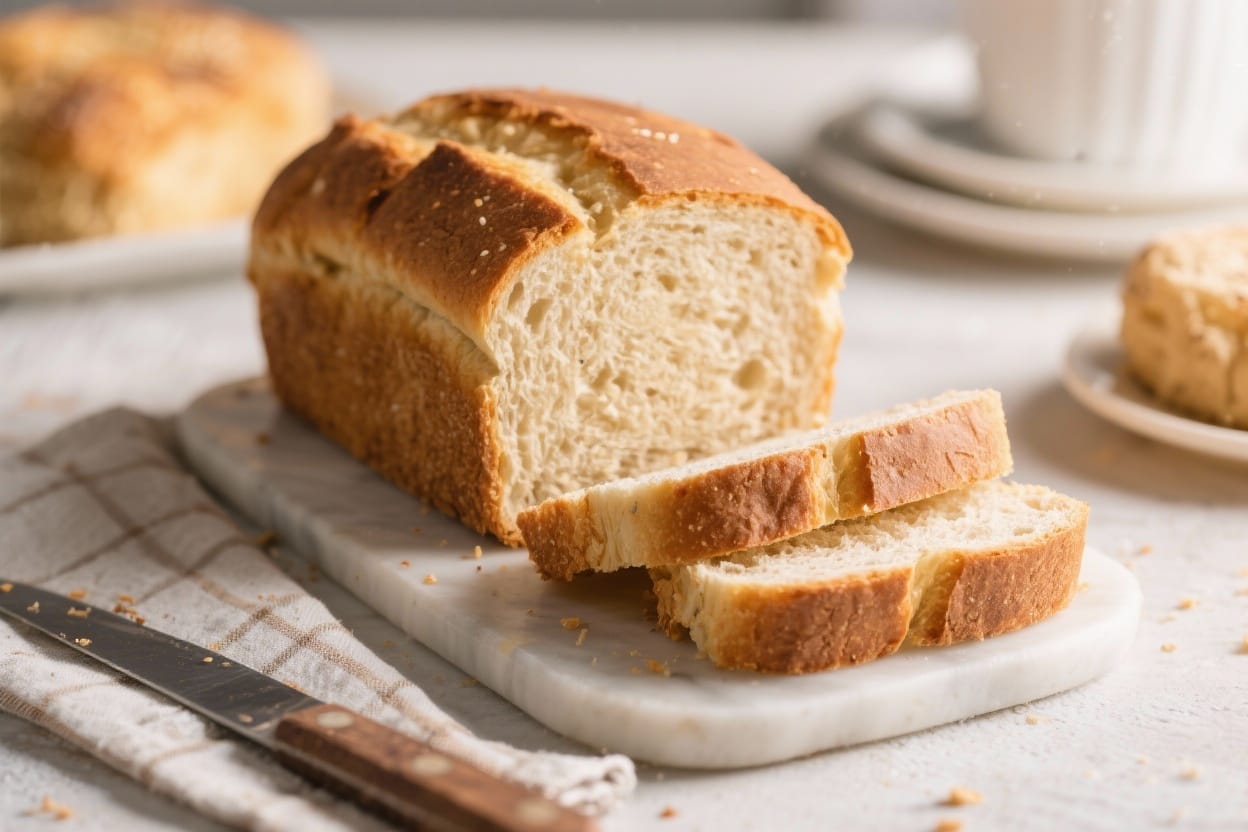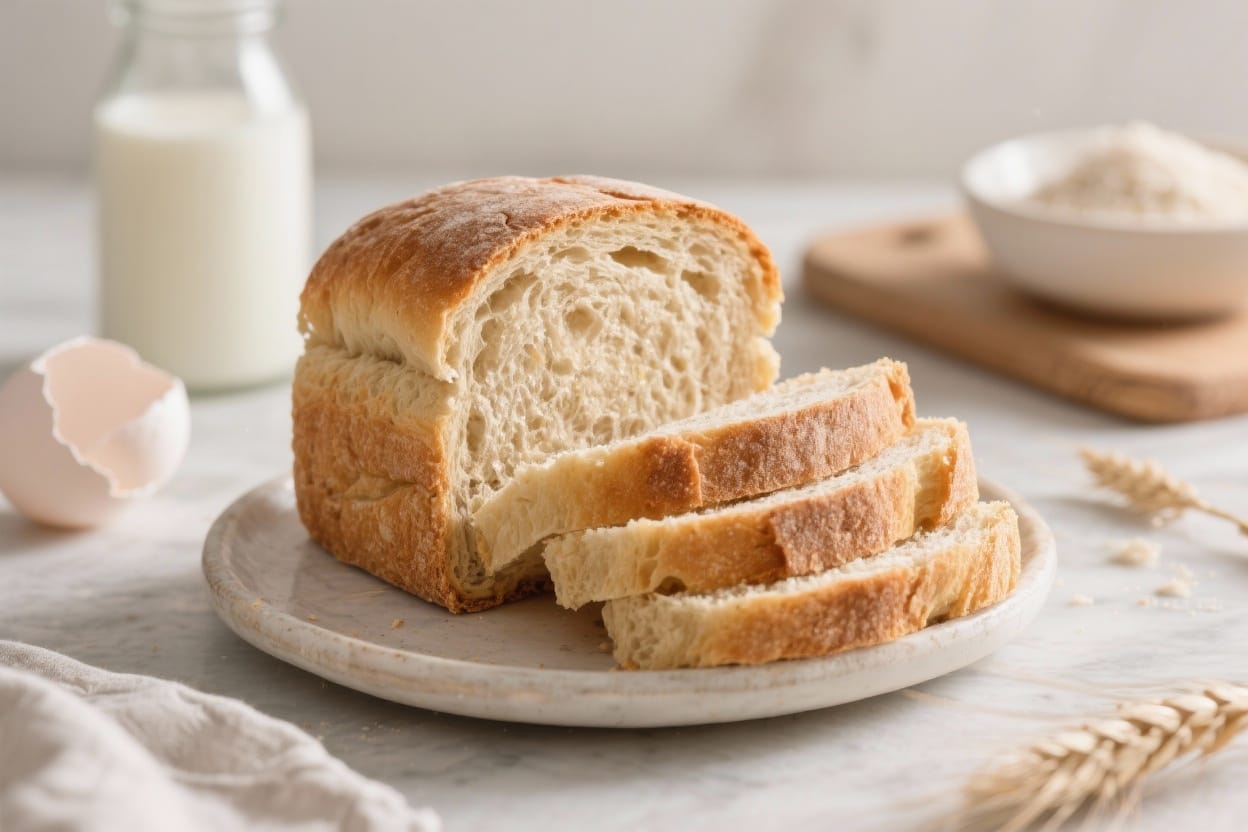
When the pantry is low or time is tight, this emergency bread has your back. It’s quick to mix, bakes fast, and doesn’t need yeast, eggs, or special equipment. The result is a tender, sturdy loaf with a golden top and a mild flavor that works with sweet or savory toppings.
If you’ve never baked bread before, this is a stress-free place to start. If you bake all the time, consider it your shortcut for busy days.
What Makes This Special
This bread relies on simple chemistry to rise, not yeast or eggs. Baking powder and an acidic ingredient team up to create lift, so you still get a nice crumb without waiting for dough to proof.
The texture is somewhere between a biscuit and a rustic loaf—soft inside, lightly crisp on the outside. It’s also highly flexible. You can use plain yogurt, buttermilk, or even milk with a splash of vinegar to activate the leavening.
You can bake it as a full loaf, a skillet round, or even into rolls. It takes about 10 minutes to mix and 30–40 minutes to bake, which makes it perfect for last-minute meals.
Ingredients
- 2 cups (250 g) all-purpose flour (or a mix of all-purpose and whole wheat for a heartier loaf)
- 1 tablespoon baking powder
- 1/2 teaspoon baking soda (boosts lift if you’re using an acidic liquid)
- 1 teaspoon fine salt
- 2 tablespoons sugar or honey (optional, for a lightly sweet note)
- 1 cup (240 ml) buttermilk or plain yogurt (or 1 cup milk + 1 tablespoon vinegar or lemon juice, rested 5 minutes)
- 2 tablespoons neutral oil or melted butter (for moisture and tenderness)
- Optional add-ins: 1/2 cup shredded cheese, 2 tablespoons chopped herbs, 1/4 cup seeds, or 1/3 cup raisins
Instructions

- Preheat the oven to 400°F (200°C). If you have a cast-iron skillet or a baking sheet, place it in the oven to preheat. A hot surface helps the loaf set quickly and develop a crisp base.
- Prep your pan. Line a baking sheet with parchment or lightly oil a 9-inch skillet or loaf pan.If using a loaf pan, note it may bake a bit longer.
- Mix dry ingredients. In a large bowl, whisk together the flour, baking powder, baking soda, salt, and sugar (if using). Whisking evenly distributes the leavening for a better rise.
- Combine wet ingredients. In a measuring cup, mix your buttermilk (or soured milk), oil, and honey if using. Stir until smooth.
- Bring the dough together. Pour the wet mixture into the dry.Stir with a spatula just until no dry flour remains. The dough will be thick and slightly sticky. Avoid overmixing—this keeps the crumb tender.
- Add extras, if you like. Fold in cheese, herbs, or seeds.Keep it light so you don’t weigh down the loaf.
- Shape the loaf. Lightly flour your hands and form the dough into a round. If it’s very sticky, dust the top with a little flour. Transfer to the prepared pan or the hot skillet.
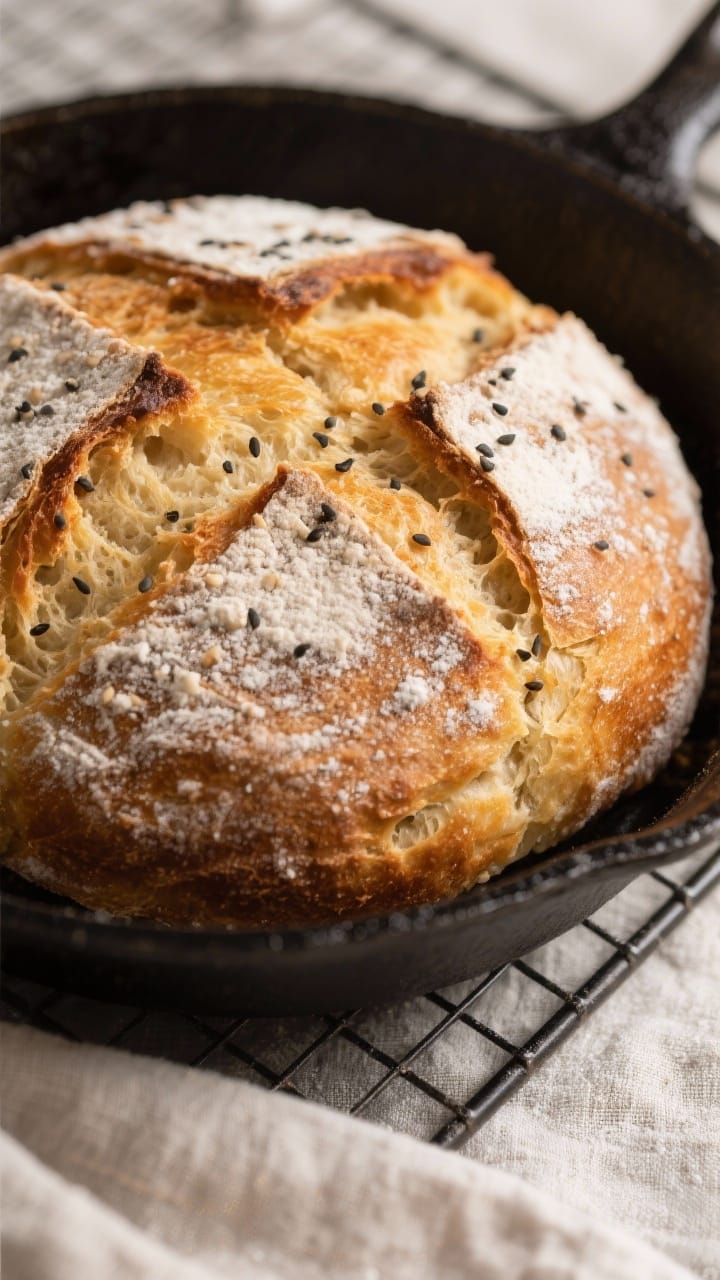
- Score the top. Use a sharp knife to cut an X about 1/2 inch deep.This helps the loaf expand nicely and cook evenly.
- Bake. Place in the oven and bake for 30–40 minutes, depending on shape and pan. You’re looking for a deep golden top and a hollow sound when tapped. Internal temperature should be around 200–205°F (93–96°C).
- Cool before slicing. Let the bread rest on a rack for at least 15–20 minutes.This sets the crumb so it slices cleanly and stays moist.
Keeping It Fresh
Bread like this is best the day it’s baked, but it holds up well for a couple of days. Store it at room temperature in a paper bag or wrapped in a clean kitchen towel to keep the crust from getting soggy. For longer storage, slice and freeze it in a zip-top bag, pressing out excess air.
Toast slices straight from the freezer for quick breakfasts or soup sides. If the crust softens overnight, refresh it in a 350°F (175°C) oven for 5–7 minutes. It will crisp right back up.

Why This is Good for You
You’re getting simple, recognizable ingredients and a short ingredient list—no additives required.
The loaf gives you steady energy from complex carbs, and you can add fiber by swapping in up to 1 cup of whole wheat flour. Using yogurt or buttermilk brings a bit of calcium and a pleasant tang without extra sugar. Because it doesn’t rely on yeast or eggs, this bread fits more dietary needs and is faster to make.
You control the salt and sweetness, making it easy to keep things balanced.
Pitfalls to Watch Out For
- Overmixing the dough: Stir just until combined. Overworking develops too much gluten and can make the loaf tough.
- Skipping the acid: If you’re using baking soda, you need an acidic liquid (buttermilk, yogurt, or soured milk). Without it, you’ll lose lift and get a soapy taste.
- Underbaking: The outside may brown quickly.Check the center with a skewer or thermometer. If the top browns too fast, tent with foil and continue baking.
- Cutting while hot: It’s tempting, but slicing too soon compresses the crumb and makes it gummy. A short rest makes all the difference.
- Too many add-ins: Heavy mix-ins can weigh down the rise.Keep extras modest, especially moist ingredients like olives or sun-dried tomatoes.
Alternatives
- Dairy-free: Use oat or soy milk plus 1 tablespoon vinegar or lemon juice to sour it. Swap the butter for oil.
- Gluten-free: Use a 1:1 gluten-free flour blend that includes xanthan gum. The dough may be softer; bake in a loaf pan for support and add 1–2 tablespoons extra liquid if needed.
- Herb and garlic version: Add 1 teaspoon garlic powder and 2 tablespoons chopped fresh herbs, plus a sprinkle of sea salt on top.
- Sweet breakfast bread: Increase sugar or honey to 3 tablespoons and add 1 teaspoon vanilla and 1/3 cup raisins or chocolate chips.
- Seeded crust: Brush the top with a little milk or oil and sprinkle sesame, poppy, or sunflower seeds before baking.
FAQ
Can I make this without baking soda?
Yes.
If you don’t have baking soda, increase the baking powder to 1 tablespoon plus 1 teaspoon and use regular milk. The rise will be slightly different, but the bread will still bake up nicely.
What if I only have self-rising flour?
Use 2 cups self-rising flour, omit the baking powder, baking soda, and salt, and proceed with the recipe. Keep the acidic liquid for flavor and tenderness.
Can I bake this as rolls instead of a loaf?
Absolutely.
Divide the dough into 6–8 portions, shape into rounds, and bake on a parchment-lined sheet for 18–22 minutes at 400°F (200°C), until golden and set.
How do I know it’s done without a thermometer?
Tap the bottom—finished bread sounds hollow. Also look for a well-browned crust and a clean skewer when poked into the center.
Why is my bread dense?
Common causes include overmixing, not enough leavening, or forgetting the acidic liquid when using baking soda. Also ensure your baking powder is fresh; expired leaveners lose power.
Can I add oats or bran?
Yes, but keep it light.
Add up to 1/2 cup quick oats or 1/4 cup wheat bran, and increase the liquid by 1–2 tablespoons to keep the dough moist.
Is this the same as Irish soda bread?
It’s very similar in method and ingredients. Traditional soda bread is typically just flour, baking soda, salt, and buttermilk. This version uses baking powder too, which gives a reliable lift and a softer texture.
In Conclusion
Emergency Bread Without Yeast or Eggs is the kind of recipe you keep handy for busy nights and bare-pantries.
It’s quick, flexible, and forgiving, and the results feel homemade in the best way. Whether you serve it with soup, toast it for breakfast, or slice it for sandwiches, it delivers warm, fresh bread with minimal fuss. Keep the basics on hand, and you’ll never be more than an hour away from a fresh loaf.
Printable Recipe Card
Want just the essential recipe details without scrolling through the article? Get our printable recipe card with just the ingredients and instructions.