Making fresh bread at home doesn’t have to be complicated. With instant yeast and a few pantry staples, you can pull off a warm, crusty loaf that’s perfect for sandwiches, toast, or dipping in soup. This recipe is straightforward and forgiving, even if you’re new to baking.
You’ll mix, rest, shape, and bake—no fussy steps or special tools needed. Once you try it, you’ll want to make it part of your weekly routine.
What Makes This Special
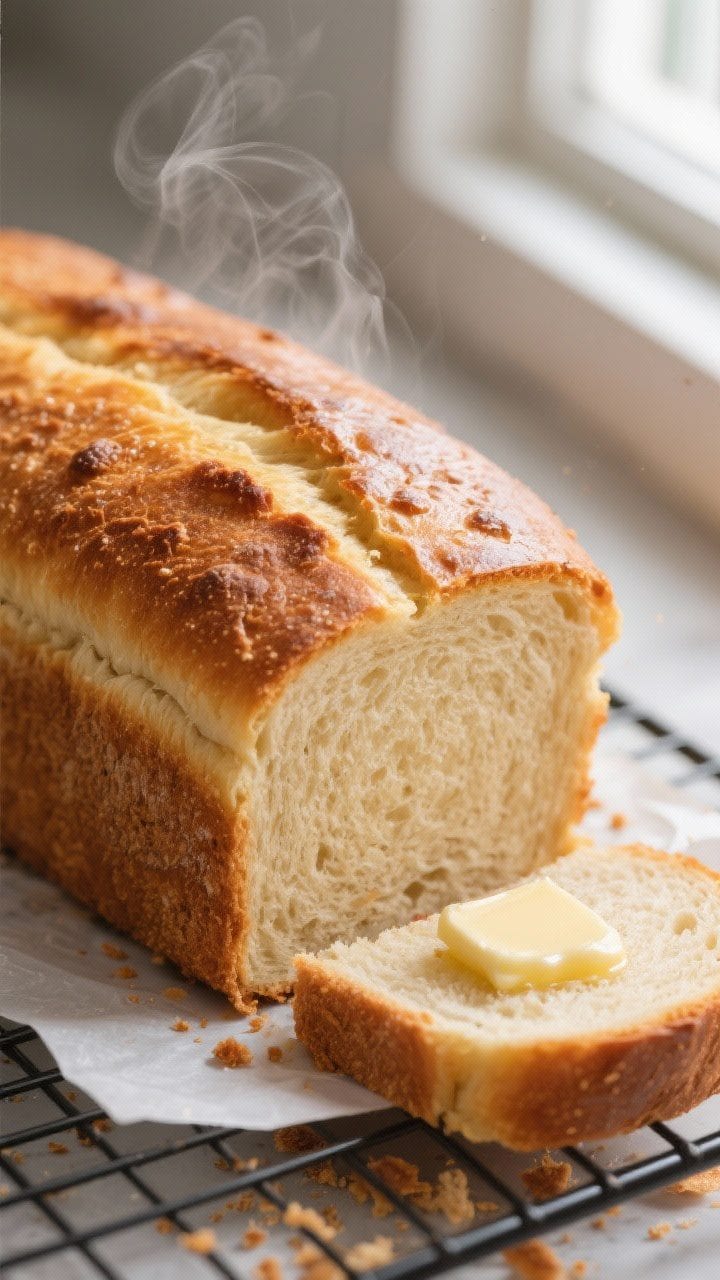
This bread keeps things simple without sacrificing flavor or texture. Instant yeast means you can skip proofing and move straight to mixing.
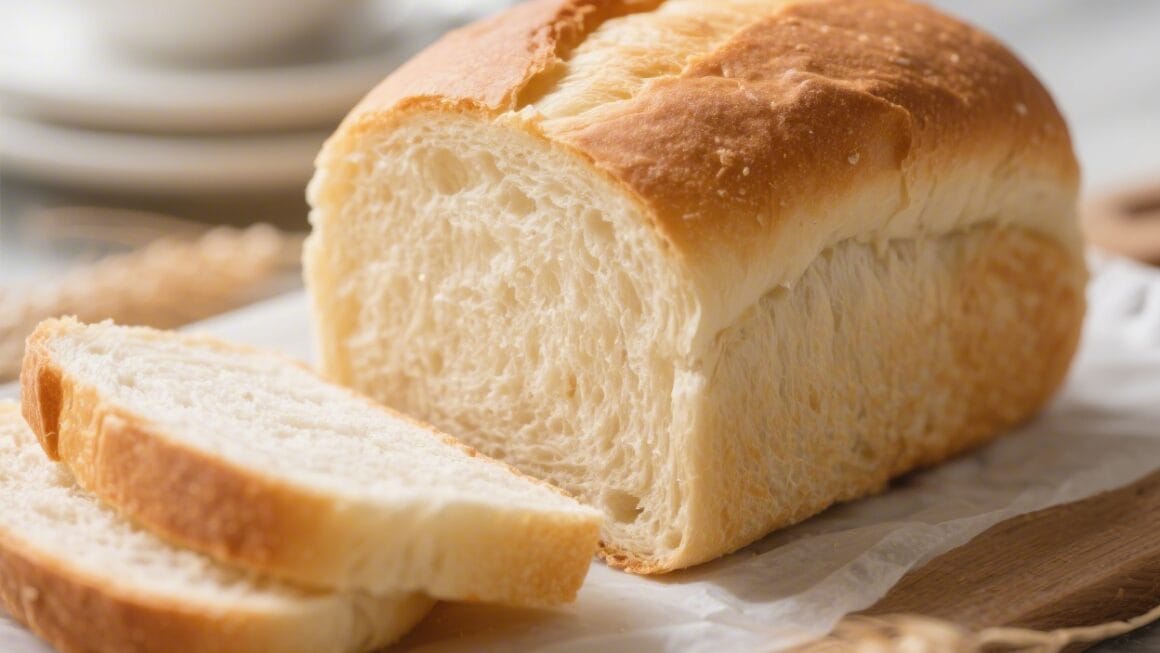
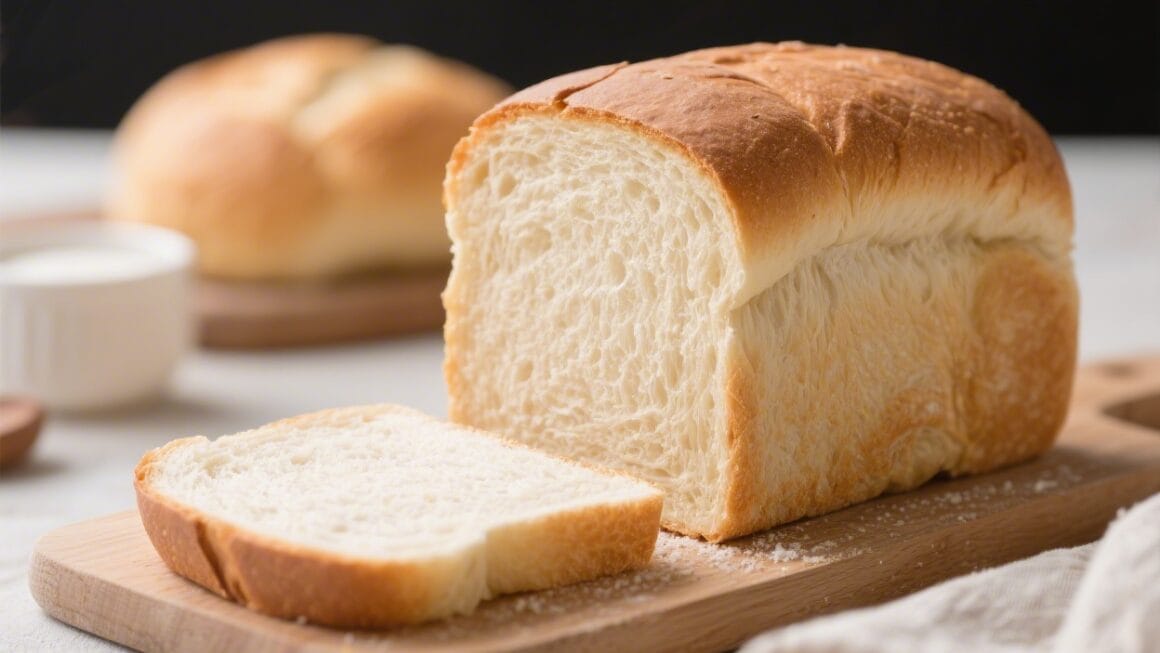
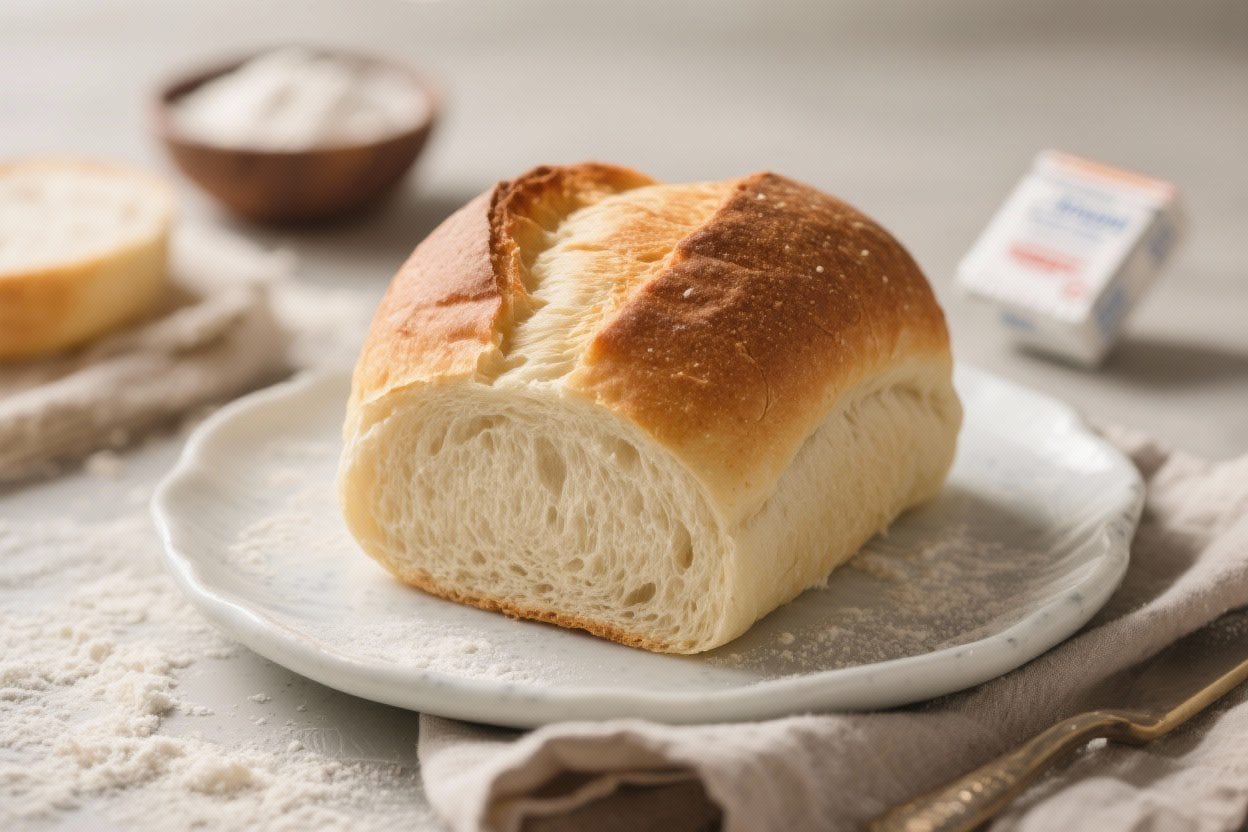
The dough is soft but manageable, so it’s easy to shape into a classic loaf or a rustic round. You’ll get a tender crumb with a lightly crisp crust, the kind of bread that works for just about everything.
It’s also flexible. You can swap in some whole wheat flour, add seeds, or brush the top with butter for a richer finish.
Best of all, the method is consistent and reliable, so your loaf turns out well even on a busy day.
Ingredients
- 3 1/4 to 3 1/2 cups (390–420 g) all-purpose flour, plus extra for dusting
- 1 packet (2 1/4 tsp, 7 g) instant yeast
- 1 1/4 cups (300 ml) warm water (about 105–115°F / 40–46°C)
- 2 tbsp (25 g) sugar or honey
- 1 1/2 tsp (9 g) fine salt
- 2 tbsp (28 g) unsalted butter, melted and cooled slightly (or 2 tbsp olive oil)
- Optional: 1 egg for egg wash, or 1 tbsp butter for brushing after baking
Instructions
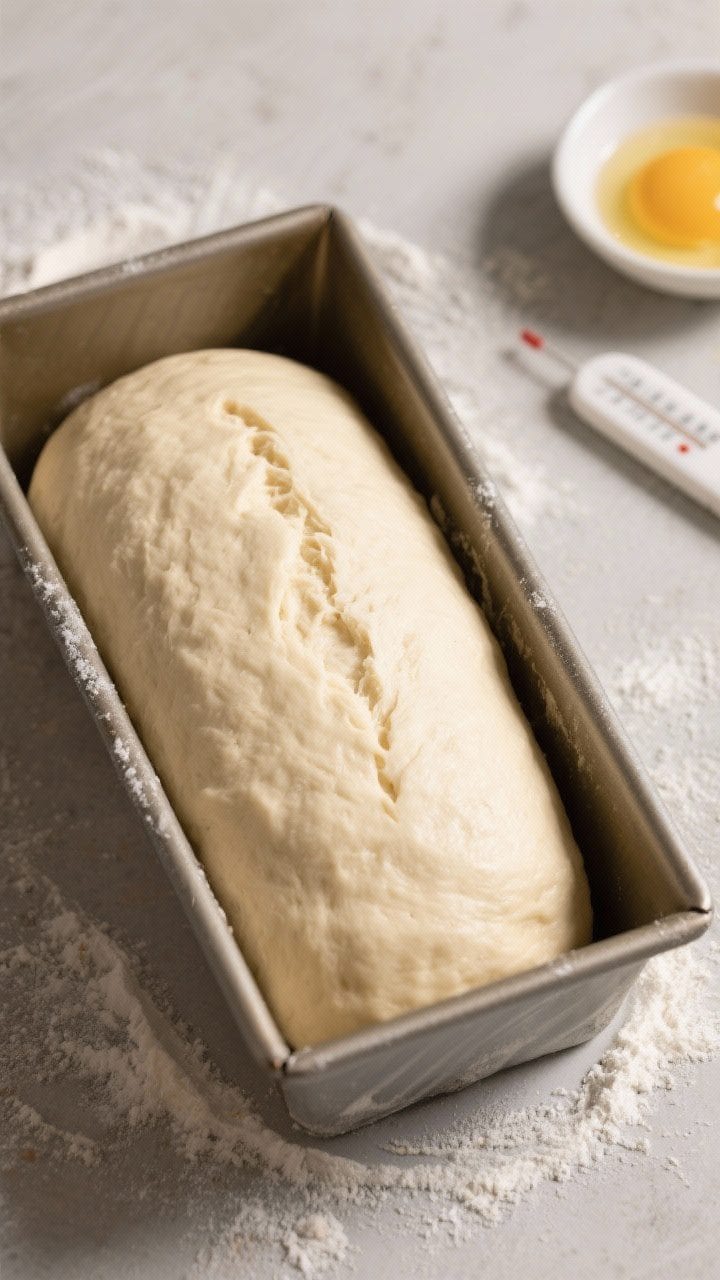
- Combine the dry ingredients. In a large bowl, whisk 3 1/4 cups flour, instant yeast, sugar, and salt. Instant yeast can go straight in—no proofing needed.
- Add liquids. Pour in warm water and melted butter. Stir with a sturdy spoon or spatula until a shaggy dough forms.If it’s very sticky, sprinkle in 1–2 tablespoons more flour.
- Knead the dough. Turn the dough onto a lightly floured surface. Knead for 7–9 minutes until smooth and elastic. The dough should be soft, slightly tacky, but not gluey.Add flour sparingly if needed.
- First rise. Place dough in a lightly oiled bowl, turning it to coat. Cover with a clean towel or plastic wrap. Let it rise in a warm spot until doubled, about 45–75 minutes, depending on your kitchen temperature.
- Shape the loaf. Gently punch down the dough to release air.For a sandwich loaf, pat into a rectangle, roll it up tightly, and pinch the seam. Place seam-side down in a greased 9×5-inch loaf pan. For a round loaf, form a tight ball and set on a parchment-lined baking sheet.
- Second rise. Cover and let rise until puffy and about 1 inch above the rim of the pan (or noticeably larger for a round loaf), 25–45 minutes.Preheat oven to 375°F (190°C) while it rises.
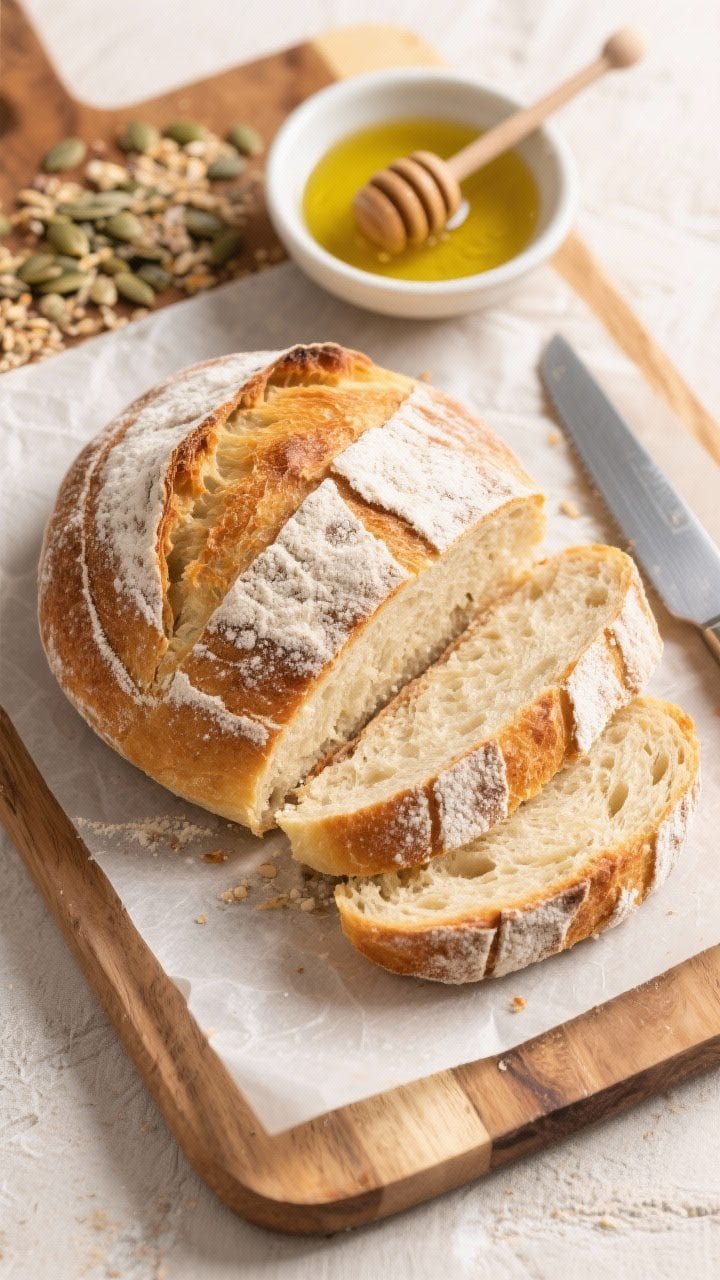
- Optional topping. For a shiny crust, brush with beaten egg. For a rustic look, dust with flour and slash the top with a sharp knife.
- Bake. Bake for 28–35 minutes, until golden brown. The loaf should sound hollow when tapped on the bottom and register about 195–200°F (90–93°C) inside if using a thermometer.
- Cool. Remove from the pan and cool on a wire rack for at least 45 minutes before slicing.This sets the crumb and keeps slices from squishing.
Storage Instructions
- Room temperature: Store cooled bread in a bread box or wrapped in a clean towel for up to 2 days. For longer freshness, use a resealable bag.
- Freezer: Slice, wrap tightly, and freeze for up to 3 months. Toast straight from frozen or thaw at room temp.
- Avoid the fridge: It dries bread out faster.Freeze instead if you won’t finish it within a couple of days.
- Revive the crust: Warm leftover slices in a 350°F (175°C) oven for 5–8 minutes to refresh.
Benefits of This Recipe
- Fast and reliable: Instant yeast keeps things simple and consistent.
- Minimal equipment: No stand mixer needed—just a bowl and your hands.
- Versatile flavor: Neutral, sandwich-friendly bread that works for sweet or savory toppings.
- Customizable: Easy to add seeds, herbs, or swap some of the flour.
- Great texture: Soft crumb with a crisp, golden crust.
Pitfalls to Watch Out For
- Water too hot: If the water is hotter than 120°F (49°C), it can weaken or kill the yeast. Aim for warm, not hot.
- Too much flour: Over-flouring makes dense bread. Keep the dough slightly tacky for better rise and texture.
- Under-kneading: Without enough kneading, the crumb can be heavy.Look for a smooth, stretchy dough.
- Rushing the rise: Bake before it’s fully risen and the loaf may split or be dense. Let it puff properly.
- Slicing too soon: Cutting hot bread compresses the crumb. Let it cool to set.
Variations You Can Try
- Whole wheat blend: Swap 1 cup of all-purpose flour for whole wheat.Add 1–2 extra tablespoons water if needed.
- Herb and garlic: Mix in 2 tsp dried Italian herbs and 1 tsp garlic powder with the dry ingredients.
- Seeded loaf: Add 3 tbsp mixed seeds (sesame, sunflower, poppy) to the dough, and sprinkle more on top before baking.
- Honey oat: Replace sugar with honey and fold in 1/3 cup rolled oats. Brush the top with water and press on extra oats.
- Olive oil and rosemary: Use olive oil instead of butter and add 1 tbsp chopped fresh rosemary.
- Cheddar jalapeño: Fold in 3/4 cup shredded cheddar and 1–2 tbsp chopped pickled jalapeños after the first rise.
FAQ
Can I use active dry yeast instead of instant?
Yes. Use the same amount, but proof it first: mix the yeast with the warm water and sugar, let it sit for 5–10 minutes until foamy, then add to the dry ingredients.
Rising times may be slightly longer.
How do I know the dough has been kneaded enough?
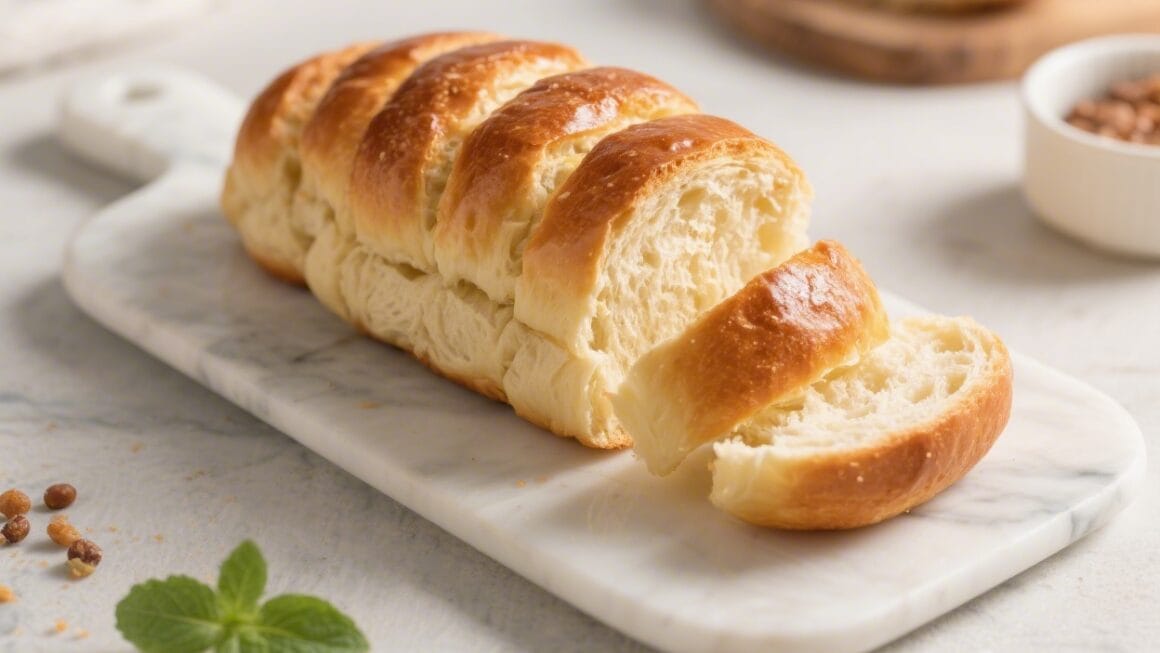
It should feel smooth, springy, and slightly tacky. If you gently stretch a small piece, it should form a thin, stretchy “window” without tearing easily. If it tears right away, keep kneading, and refer to our braided bread recipe for more guidance.
Why did my loaf come out dense?
Common reasons include using too much flour, not kneading enough, or not letting the dough rise fully.
Also check your yeast freshness and make sure your water wasn’t too hot.
Can I make this dough in a stand mixer?
Absolutely. Use the dough hook on low to medium-low speed for about 6–8 minutes, until the dough is smooth and elastic. Scrape the bowl if needed to help it along. This works for any breakfast bread easy recipe.
How can I get a crisper crust?
Place a small pan of hot water on the bottom rack during the first 10 minutes of baking to create steam.
You can also bake the loaf directly on a preheated baking stone if shaping it round.
What’s the best way to slice it cleanly?
Let the bread cool completely and use a serrated bread knife. For very neat slices, chill the loaf briefly (15–20 minutes) after cooling to firm it up before slicing.
Can I double the recipe?
Yes. Mix and knead as usual, then divide into two loaves.
Baking time remains similar, but keep an eye on color and internal temperature to confirm doneness.
Is this recipe vegan?
It can be. Use olive oil instead of butter and skip the egg wash. The bread turns out great with those swaps.
Final Thoughts
This easy bread recipe using instant yeast delivers dependable results with minimal fuss.
It’s the kind of loaf you can bake on a weeknight and enjoy for days. Keep the dough slightly soft, give it time to rise, and don’t rush the cooling. Once you’ve made it a couple of times, you’ll know it by feel—and that’s when baking becomes second nature.
Enjoy every warm, comforting slice.
Printable Recipe Card
Want just the essential recipe details without scrolling through the article? Get our printable recipe card with just the ingredients and instructions.