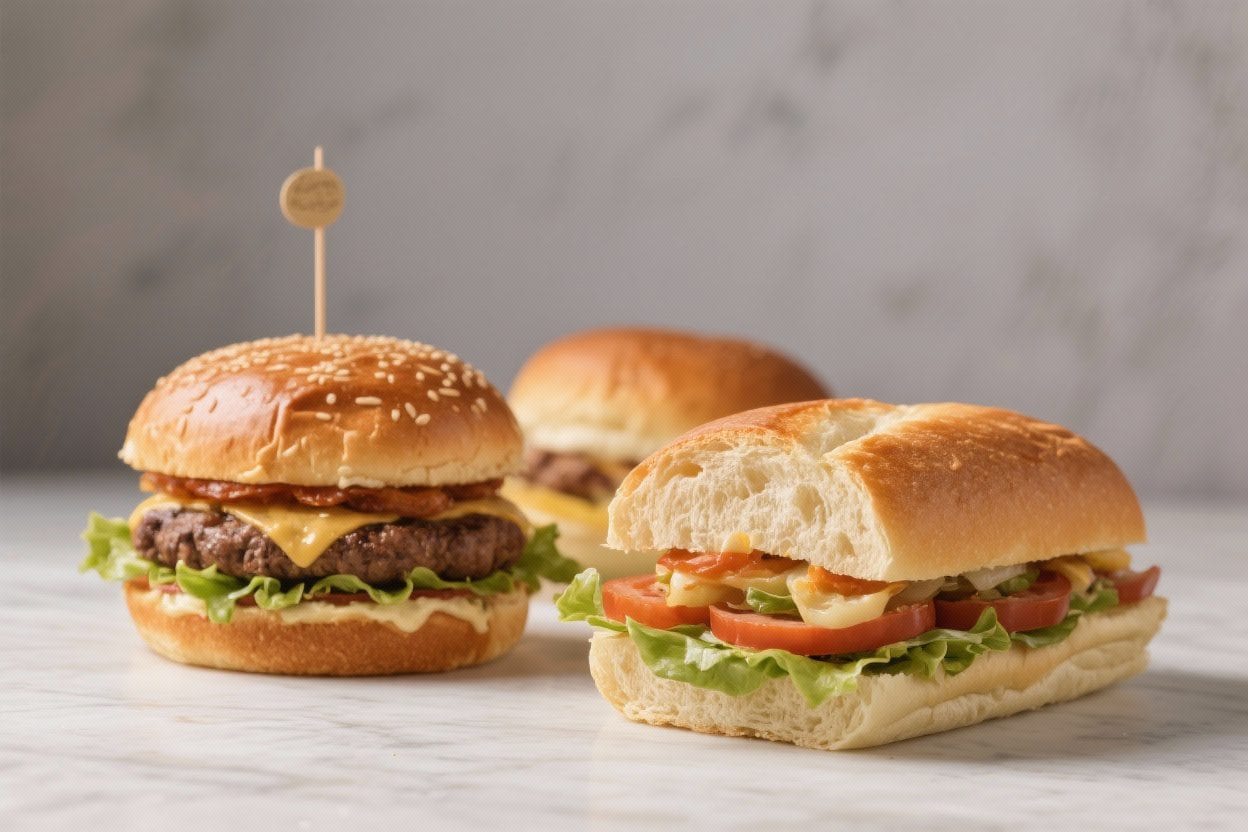
Fresh, homemade bread rolls can turn a simple burger or sandwich into something memorable. These rolls are soft, slightly sweet, and sturdy enough to hold juicy fillings without falling apart. The dough is easy to work with, and you don’t need any special equipment beyond a mixing bowl and an oven.
Whether you’re planning a weekend cookout or prepping lunches for the week, these rolls are a reliable go-to. Once you taste them warm from the oven, you might never go back to store-bought buns.
What Makes This Special

These rolls balance softness and structure, so your burger stays put while the bun stays tender. A touch of sugar and butter adds a bakery-style flavor without making them overly sweet.
The dough is versatile: shape it as burger buns, sandwich rolls, or mini sliders. You can also top them with sesame, poppy, or everything seasoning for extra flavor and texture.
Ingredients
- 3 1/2 cups (420 g) bread flour (or all-purpose flour, plus 1–2 tablespoons extra if the dough is sticky)
- 2 teaspoons instant yeast (or 2 1/4 teaspoons active dry yeast)
- 1 cup (240 ml) warm milk (around 105–110°F/40–43°C)
- 1/3 cup (80 ml) warm water
- 3 tablespoons granulated sugar
- 1 1/2 teaspoons fine salt
- 4 tablespoons unsalted butter, softened (plus more for brushing, optional)
- 1 large egg
- 1 egg for egg wash (1 egg beaten with 1 tablespoon water)
- Sesame seeds or poppy seeds (optional, for topping)
Instructions
- Activate yeast (if using active dry): In a small bowl, mix warm milk with sugar and active dry yeast. Let sit 5–8 minutes until foamy.If using instant yeast, you can skip this step and add it directly to the flour.
- Combine dry ingredients: In a large mixing bowl, whisk flour, salt, and instant yeast (if using). Make a well in the center.
- Mix wet ingredients: In a separate bowl, whisk the warm water, egg, and softened butter until the butter breaks up into small pieces. It won’t fully blend, and that’s fine.
- Make the dough: Pour the yeast mixture (or warm milk and sugar if using instant yeast) and the egg-butter mixture into the dry ingredients.Stir with a wooden spoon or spatula until a shaggy dough forms.
- Knead: Turn the dough onto a lightly floured surface. Knead for 8–10 minutes until smooth and elastic. If it’s sticky, dust with a little flour.If using a stand mixer with a dough hook, knead on medium-low for 6–8 minutes. The dough should be soft and slightly tacky but not gluey.
- First rise: Shape the dough into a ball. Place in a lightly greased bowl, cover with a damp towel or plastic wrap, and let rise in a warm spot until doubled, about 60–90 minutes.
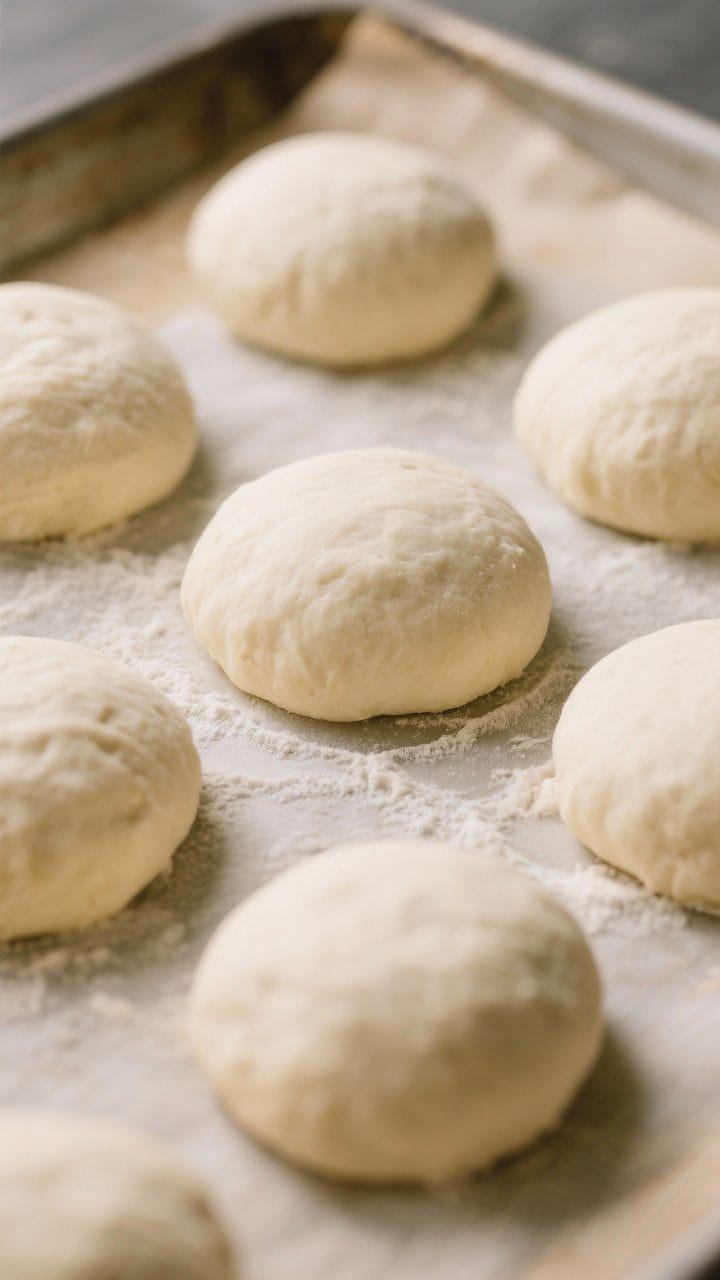
- Divide and shape: Gently deflate the dough.For standard burger buns, divide into 8 equal pieces (about 95–105 g each). For sandwich rolls, divide into 10–12 pieces. Shape each piece into a tight ball by tucking edges under and rolling on the counter to build surface tension.
- Form buns or rolls: For burger buns, gently flatten each ball into a disk about 3 1/2 inches wide.For sandwich rolls or sub-style, roll into short logs and slightly flatten. Place on a parchment-lined baking sheet, leaving space between.
- Second rise: Cover loosely and let rise until puffy, about 40–60 minutes. They should look plump and spring back slowly when gently pressed.
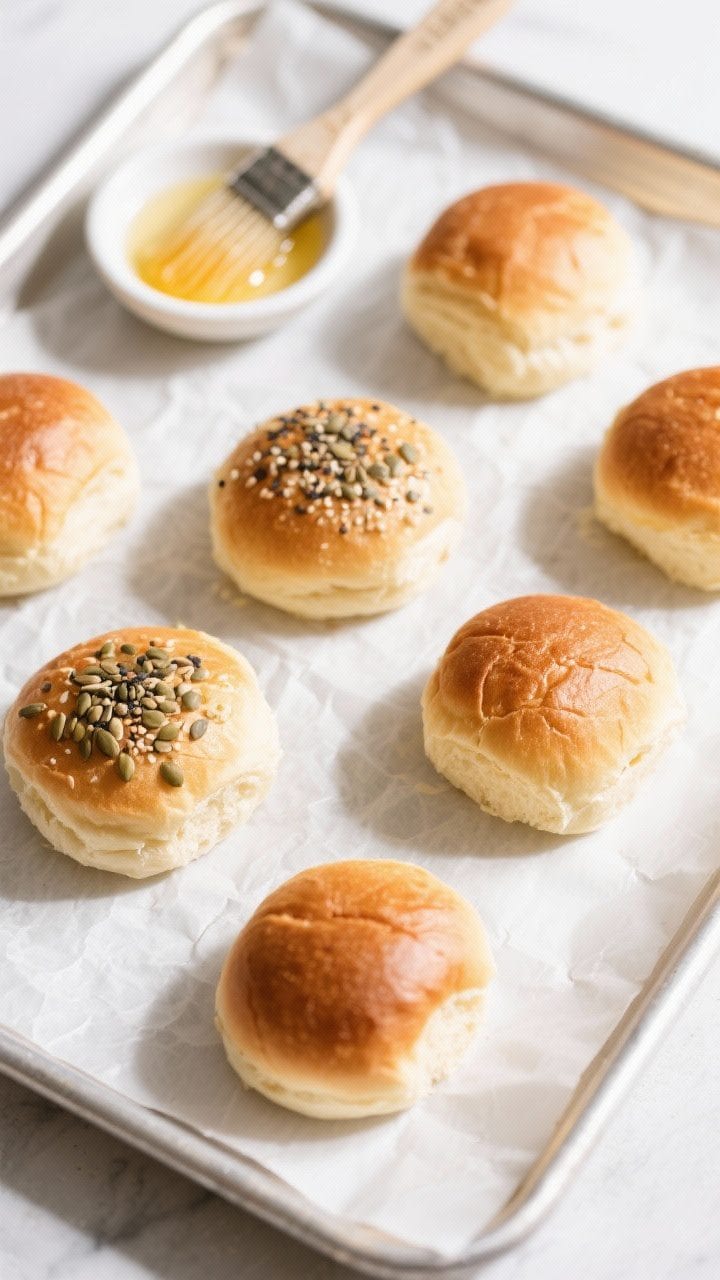
- Preheat and egg wash: Heat the oven to 375°F (190°C).Brush the tops with egg wash for a glossy, golden finish. Sprinkle sesame or poppy seeds if you like.
- Bake: Bake for 15–18 minutes, rotating the pan halfway. The tops should be deep golden and the internal temperature around 195–200°F (90–93°C).
- Finish: For extra softness, brush warm buns lightly with melted butter.Cool on a rack at least 20 minutes before slicing.
Storage Instructions
- Room temperature: Store in an airtight container or bag for up to 3 days. Add a paper towel inside the bag to reduce moisture buildup.
- Freezer: Slice buns, wrap tightly, and freeze for up to 2 months. Thaw at room temperature, then warm in a low oven or toaster for best texture.
- Reviving softness: Lightly mist with water and warm in a 300°F (150°C) oven for 5–7 minutes.
Why This is Good for You
Homemade rolls offer clean, simple ingredients you can pronounce and control.
You can reduce sugar, swap in part whole wheat, and avoid preservatives found in packaged buns. Because these rolls are satisfying and flavorful, you’re less likely to overload on condiments to make up for bland bread. Plus, baking at home can be a calming, hands-on routine that pays off with fresh, wholesome results.
What Not to Do
- Don’t rush the rise. Underproofed dough yields dense buns that split oddly and don’t brown evenly.
- Don’t use hot liquids. Milk or water hotter than about 115°F (46°C) can kill the yeast and stall the dough.
- Don’t add too much flour. A slightly tacky dough bakes softer.Over-flouring makes tough, dry rolls.
- Don’t skip the egg wash. It adds color, shine, and helps seeds stick.
- Don’t slice too soon. Let rolls cool so the crumb sets. Cutting hot bread compresses the structure.
Alternatives
- Whole wheat version: Replace 1 to 1 1/4 cups of the white flour with whole wheat. Add 1 extra tablespoon of water if needed and extend the first rise by 10–15 minutes.
- Dairy-free: Use warm water or plant milk and swap butter for olive oil or a neutral oil.Expect a slightly different flavor but still great texture.
- Sweet brioche style: Increase butter to 6 tablespoons and sugar to 1/4 cup. The dough will be richer and softer, perfect for sliders or pulled pork.
- Seeded crust: Brush with egg wash and sprinkle sesame, poppy, or everything seasoning. For extra stick, press seeds in lightly before baking.
- Garlic-herb rolls: Mix 1 teaspoon garlic powder and 1 teaspoon dried Italian herbs into the flour.Brush baked rolls with garlic butter.
- Gluten-free approach: Use a quality gluten-free bread flour blend designed for yeasted doughs. Follow package hydration guidance and consider adding 1 teaspoon xanthan gum if your blend lacks it.
FAQ
Can I use only water instead of milk?
Yes. Milk adds tenderness and a richer flavor, but water works fine.
If using only water, consider adding an extra tablespoon of butter or oil for softness.
What if I only have active dry yeast?
No problem. Activate it in the warm milk with sugar first. Once it’s foamy, proceed as directed.
If it doesn’t foam after 10 minutes, your yeast might be inactive.
How do I get perfectly round buns?
Shape each piece into a tight ball by tucking edges under, then roll it against the counter with your palm to create tension. Gently flatten into a disk for burger buns and let them proof without crowding.
Why are my rolls dense?
Common causes are not kneading enough, using old yeast, or cutting the rise times short. Also check that you didn’t overload the dough with flour.
Aim for soft and slightly tacky dough.
Can I make the dough ahead?
Yes. After the first rise, shape the rolls, cover, and refrigerate overnight. Let them sit at room temperature for 45–60 minutes before baking to finish proofing.
How do I prevent soggy buns with juicy burgers?
Lightly toast the cut sides before assembling.
You can also spread a thin layer of mayonnaise or butter to create a moisture barrier.
What size should I make for sliders?
Divide the dough into 12–14 pieces and shape into small rounds. Bake for 12–15 minutes, watching closely so they don’t over-brown.
Do I need bread flour?
Bread flour gives a chewier, bakery-style bite, but all-purpose flour works well. If using all-purpose, knead thoroughly and don’t skimp on the rises.
Wrapping Up
With a short list of pantry ingredients and a little patience, you’ll have soft, sturdy rolls that upgrade any burger or sandwich.
The method is straightforward, the dough is forgiving, and the results taste like they came from your favorite bakery. Save a few in the freezer, and you’re always one step away from a great meal. Once you get comfortable with the base recipe, play with toppings and shapes to make it your own.
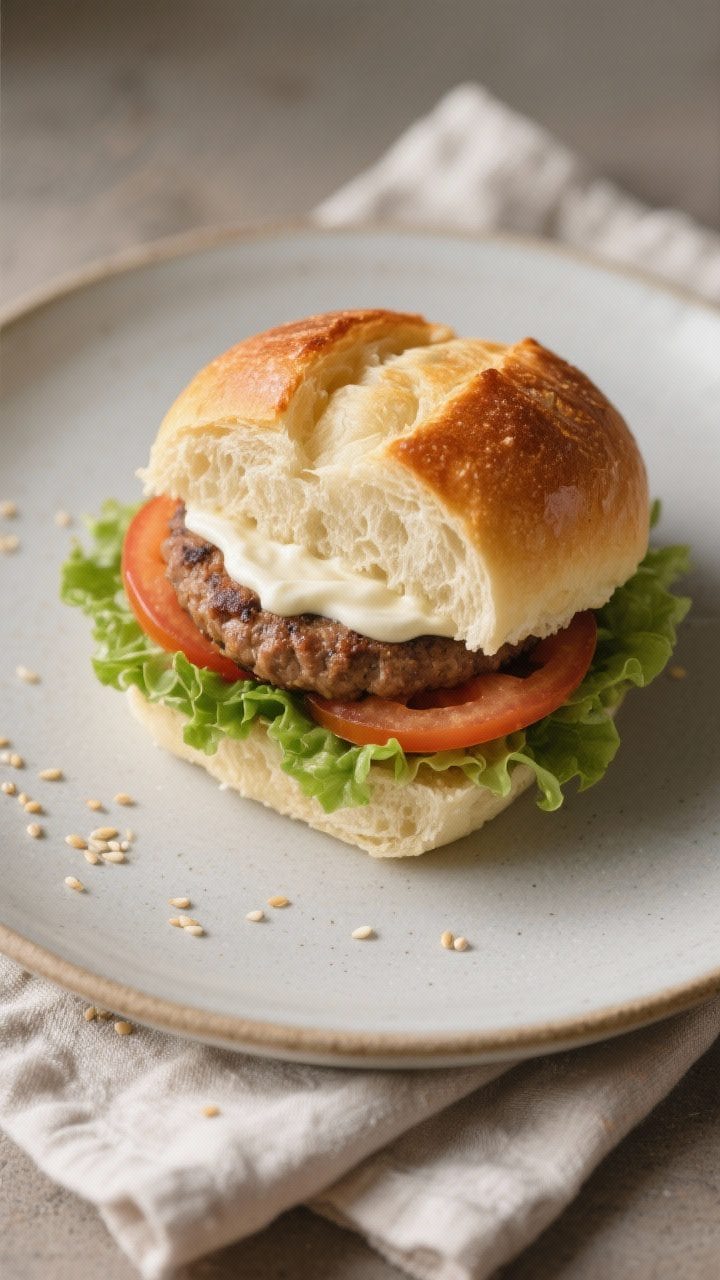
Printable Recipe Card
Want just the essential recipe details without scrolling through the article? Get our printable recipe card with just the ingredients and instructions.