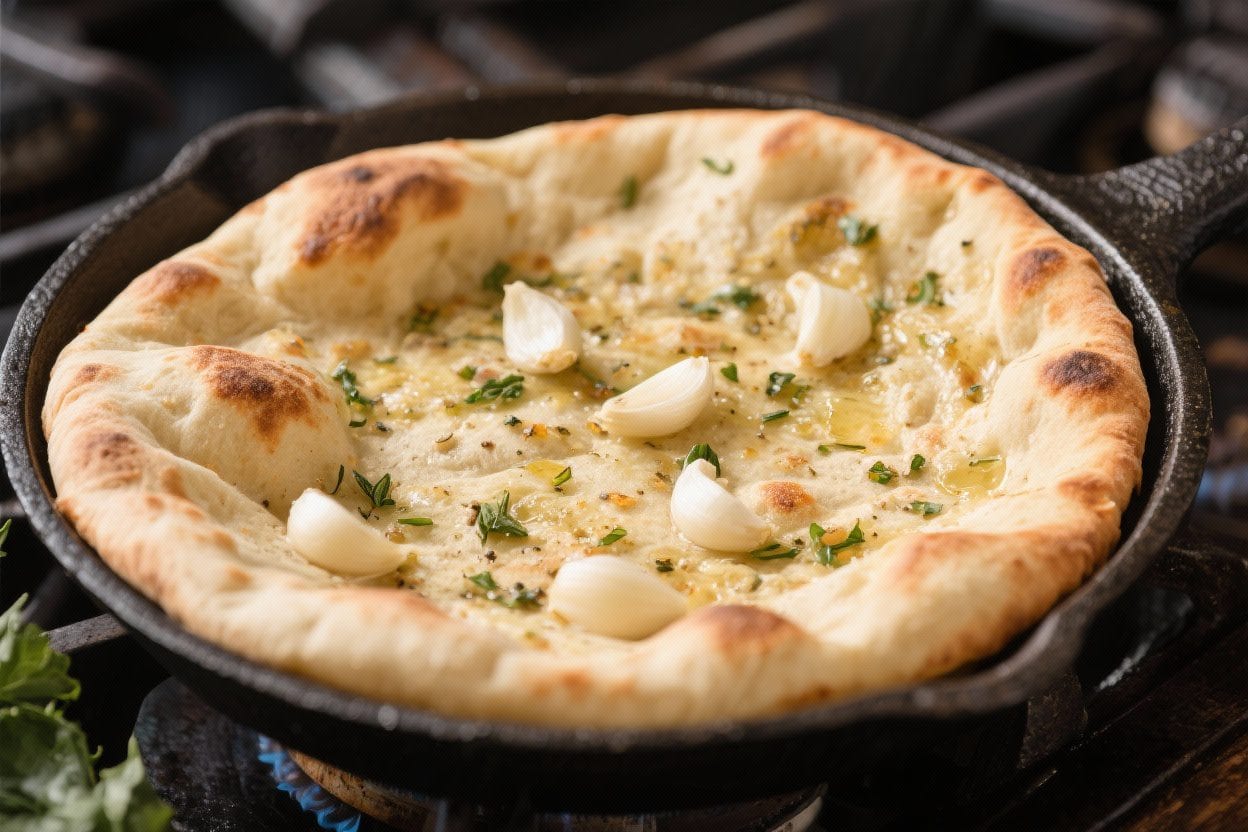
Warm, buttery garlic flatbread made right on the stovetop is one of those small kitchen wins that feels big. No oven, no fancy gear, just a bowl, a pan, and a few pantry staples. The result is soft, chewy rounds with golden spots, brushed in garlicky butter and a sprinkle of herbs.
It’s perfect for scooping up curries, wrapping around grilled veggies, or serving alongside soup. If you’ve never made flatbread before, this is a great place to start—simple, forgiving, and very delicious.
What Makes This Special
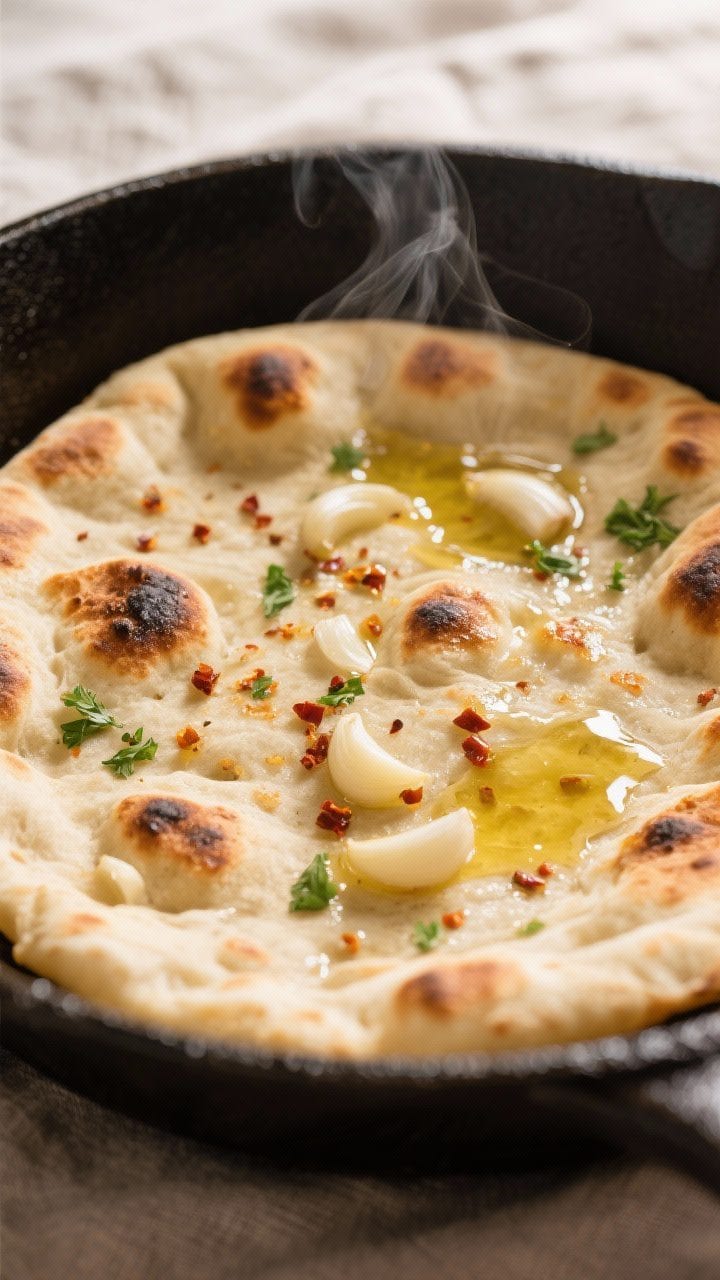
This recipe is quick from start to finish, and the dough is easy to handle—even for beginners. There’s no long rest or complicated rise, but you still get a soft, chewy texture with a crisp, bronzed surface.
Cooking on the stovetop gives you speed and control, and the garlic butter brushed on after cooking brings bold flavor without burning the garlic. It’s the kind of flatbread that makes a simple meal feel complete. Plus, it adapts well to different flours and add-ins, so you can make it your own.
Ingredients
- All-purpose flour (2 cups)
- Plain Greek yogurt or regular unsweetened yogurt (3/4 cup)
- Warm water (about 1/4 to 1/3 cup, as needed)
- Olive oil (2 tablespoons, plus more for the pan)
- Baking powder (1 1/2 teaspoons)
- Salt (1 teaspoon)
- Garlic (3–4 cloves, finely grated or minced)
- Unsalted butter (3 tablespoons)
- Fresh parsley or cilantro (a small handful, chopped)
- Optional: pinch of sugar, chili flakes, lemon zest, or sesame seeds
Instructions
- Mix the dry ingredients. In a large bowl, whisk together the flour, baking powder, and salt.If you like a hint of sweetness, add a small pinch of sugar. Keep it simple; the garlic butter will carry most of the flavor.
- Add the yogurt and oil. Stir in the yogurt and 2 tablespoons of olive oil. It will look shaggy at first.Add warm water, 1 tablespoon at a time, until the dough comes together into a soft ball that’s slightly tacky but not sticky.
- Knead briefly. Turn the dough out onto a lightly floured surface and knead for about 2–3 minutes, just until smooth. Don’t overwork it—this isn’t bread with a big rise. Cover the dough and let it rest for 10–15 minutes.Resting relaxes the gluten and makes rolling easier.
- Make the garlic butter.</-strong> In a small pan, melt the butter over low heat. Add the minced garlic and cook gently for 30–60 seconds—just until fragrant, not browned. Stir in chopped parsley and a pinch of salt.Remove from heat and set aside.
- Divide and shape. Cut the dough into 6–8 equal pieces, depending on how large you want the flatbreads. Roll each piece into a ball. Keep them covered with a towel so they don’t dry out.
- Roll the flatbreads.</-strong> On a lightly floured surface, roll each ball into a round or oval about 1/8 inch thick.Don’t worry about perfect circles—rustic is charming. Aim for even thickness for better cooking.
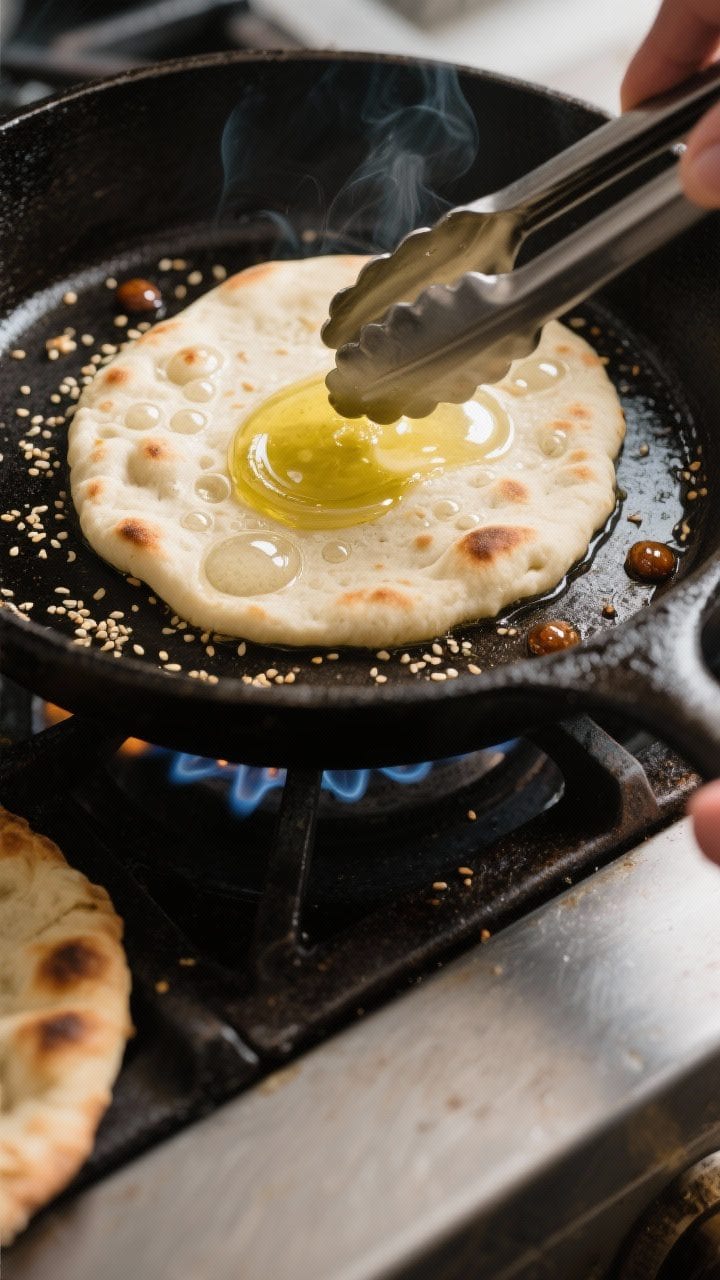
- Heat the pan. Place a heavy skillet or cast-iron pan over medium to medium-high heat. Add a thin sheen of olive oil and heat until it shimmers.You want it hot enough to sear quickly without smoking.
- Cook the first side. Lay a rolled dough round into the hot pan. Bubbles should appear within 30–45 seconds. Cook for 1–2 minutes, until the surface shows bubbles and the underside has golden-brown spots.
- Flip and finish. Flip and cook the second side for another 1–2 minutes.Press gently on any large bubbles to encourage even browning. Adjust heat as needed so it browns without burning.
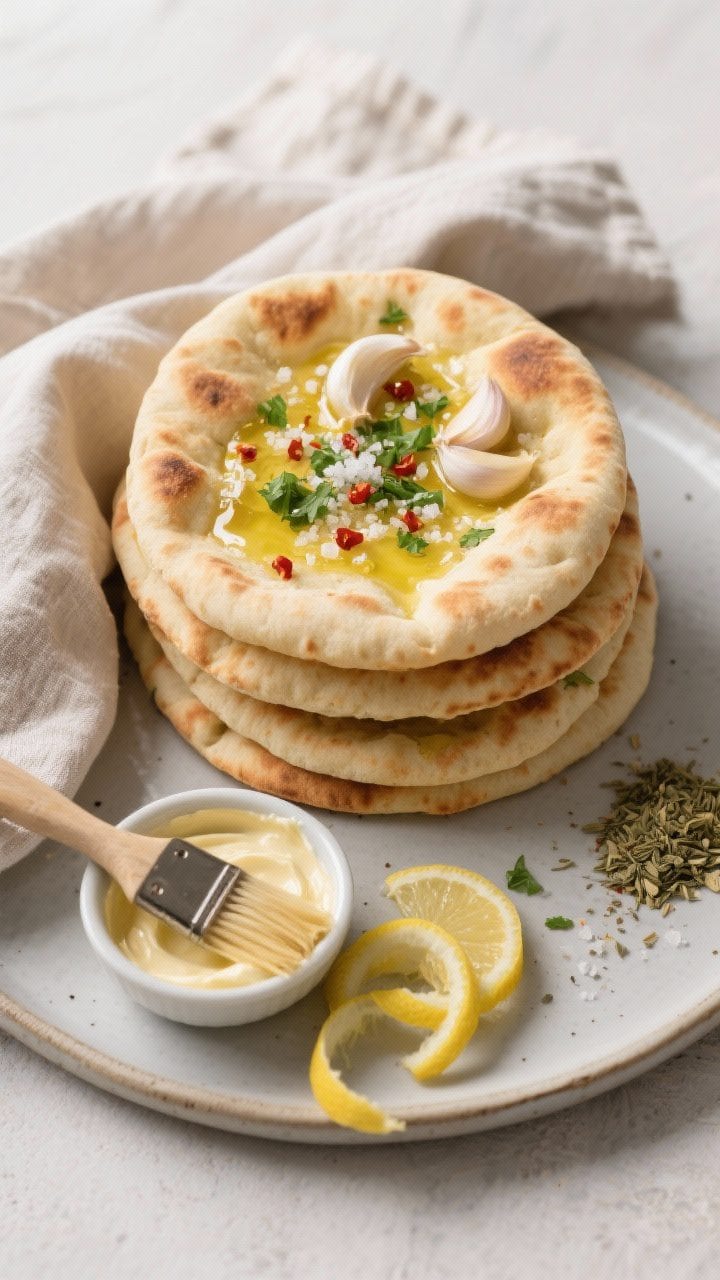
- Brush with garlic butter. Slide the cooked flatbread onto a plate and immediately brush with the warm garlic butter. Sprinkle with a pinch of salt, chili flakes, or sesame seeds if you like.Keep covered with a clean towel to stay warm and soft.
- Repeat. Continue with the remaining dough, adding a little oil to the pan as needed. Stack and cover each finished flatbread to keep them pliable.
Storage Instructions
- Room temperature: Keep leftovers wrapped in foil or a zip-top bag for up to 24 hours.
- Refrigerator: Store in an airtight container for 3–4 days. Reheat in a hot dry skillet for 30–60 seconds per side, then brush with a touch of leftover garlic butter or olive oil.
- Freezer: Wrap each flatbread in parchment and freeze in a bag for up to 2 months.Thaw at room temperature or microwave briefly, then re-crisp in a skillet.
Why This is Good for You
This flatbread uses simple, recognizable ingredients and skips additives you often find in store-bought options. Yogurt adds protein and helps keep the bread tender without lots of fat. Garlic brings flavor and also offers protective compounds like allicin.
Olive oil and a light hand with butter give you richness without going overboard. Paired with beans, grilled chicken, or roasted vegetables, it rounds out a balanced meal.
Pitfalls to Watch Out For
- Overflouring the dough: Too much flour makes the bread tough. Keep the dough just slightly tacky and dust lightly as you roll.
- Pan too cool or too hot: If it’s too cool, the bread dries out before browning.Too hot, and it scorches. Medium to medium-high is your friend.
- Burning the garlic: Garlic burns fast and turns bitter. Cook it gently in butter, then remove from heat.Brush it on the cooked bread, not the raw dough.
- Skipping the rest: Even 10 minutes of rest makes rolling easier and prevents spring-back.
- Rolling too thick: Thick pieces can stay doughy. Aim for about 1/8 inch for quick, even cooking.
Variations You Can Try
- Herb-studded dough: Knead in chopped parsley, dill, or cilantro for a fresh flavor throughout.
- Cheesy garlic flatbread: Sprinkle grated Parmesan or mozzarella on the hot side right after flipping. Cover the pan briefly to melt.
- Whole-wheat blend: Swap up to half the flour for whole-wheat.Add a tablespoon more water if needed to keep it soft.
- Za’atar or sesame crust: Press a light coating of sesame seeds or za’atar into the surface before cooking for nuttiness and crunch.
- Spicy kick: Stir chili flakes into the garlic butter or add a pinch of cayenne to the dough.
- Lemon-garlic finish: Add lemon zest to the butter and a squeeze of fresh lemon right before serving.
FAQ
Can I make the dough ahead of time?
Yes. Make the dough up to 24 hours ahead and keep it covered in the fridge. Let it sit at room temperature for 20–30 minutes before rolling so it’s easier to shape.
What if I don’t have yogurt?
Use buttermilk or milk with a squeeze of lemon instead.
Start with less liquid and add slowly until the dough comes together. The texture will still be soft and tender.
Do I need a cast-iron skillet?
Cast iron is great for even heat and charry spots, but any heavy skillet works. Nonstick pans are fine too; you may need slightly less oil and a bit more time for browning.
Can I bake these instead of cooking on the stovetop?
Yes.
Bake at 475°F (245°C) on a preheated sheet or pizza stone for 4–6 minutes, flipping once if needed. You won’t get the same stovetop char, but they’ll puff nicely.
How do I keep them soft after cooking?
Stack them and cover with a clean towel as you go. The steam helps maintain softness.
Brush with a little extra butter or oil before serving to revive them.
Is this recipe vegan-friendly?
It can be. Use a thick, unsweetened dairy-free yogurt and replace butter with olive oil or vegan butter. Adjust the liquid slightly if the dairy-free yogurt is thinner.
Why did my flatbread turn tough?
Common culprits are too much flour, over-kneading, or cooking too long on low heat.
Keep the dough tender, don’t overwork it, and use a hot pan for quick cooking.
Wrapping Up
Stovetop garlic flatbread is the kind of recipe you’ll keep coming back to—fast, flexible, and deeply satisfying. With a handful of pantry staples and a skillet, you can turn any meal into something worth lingering over. Keep a batch in the freezer, brush on that fragrant garlic butter, and serve it warm.
Simple food, big pay-off, every time.
Printable Recipe Card
Want just the essential recipe details without scrolling through the article? Get our printable recipe card with just the ingredients and instructions.