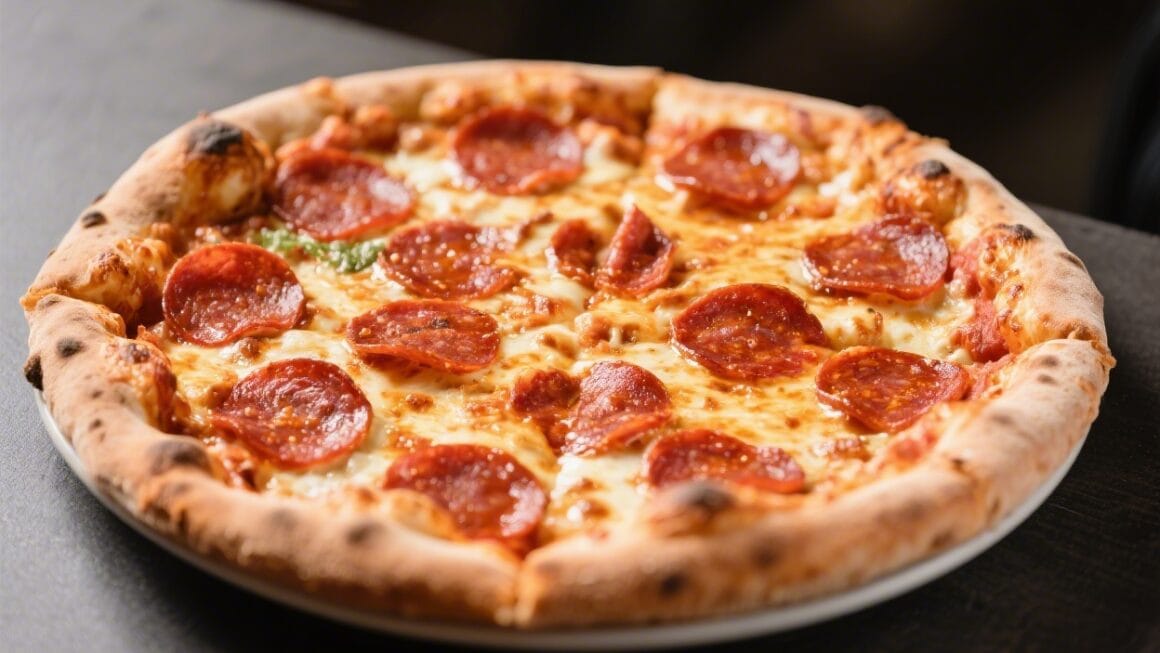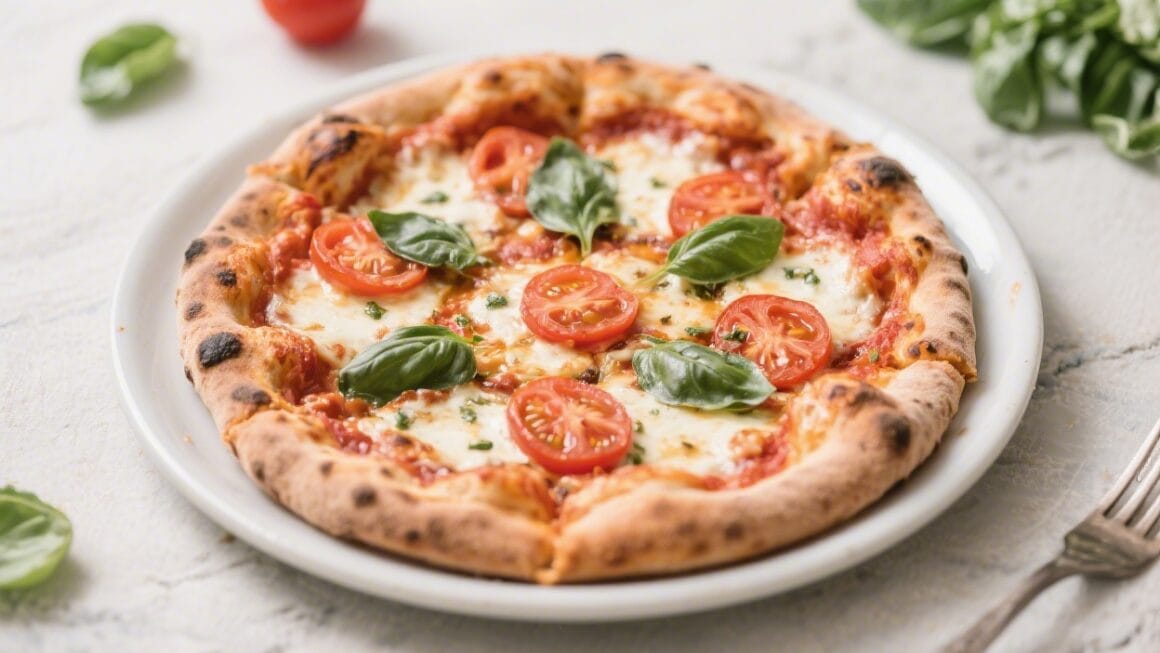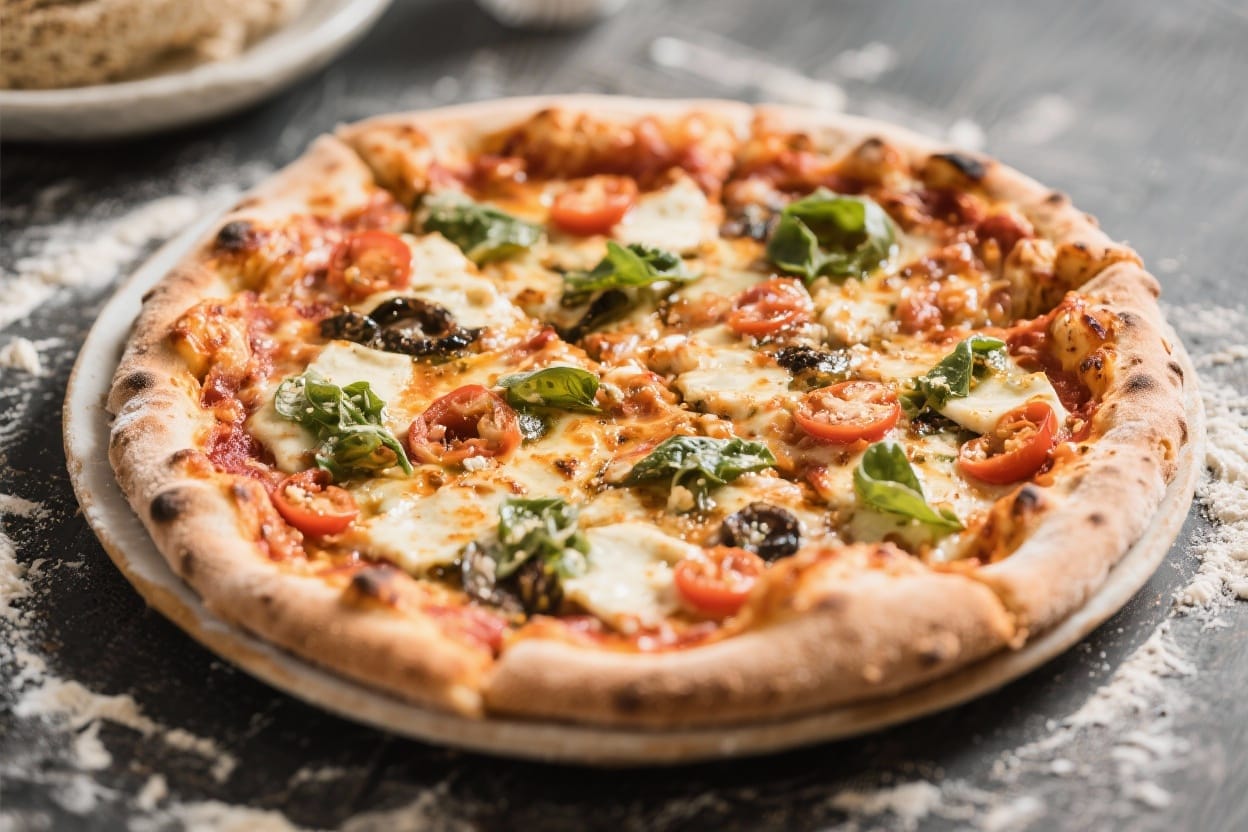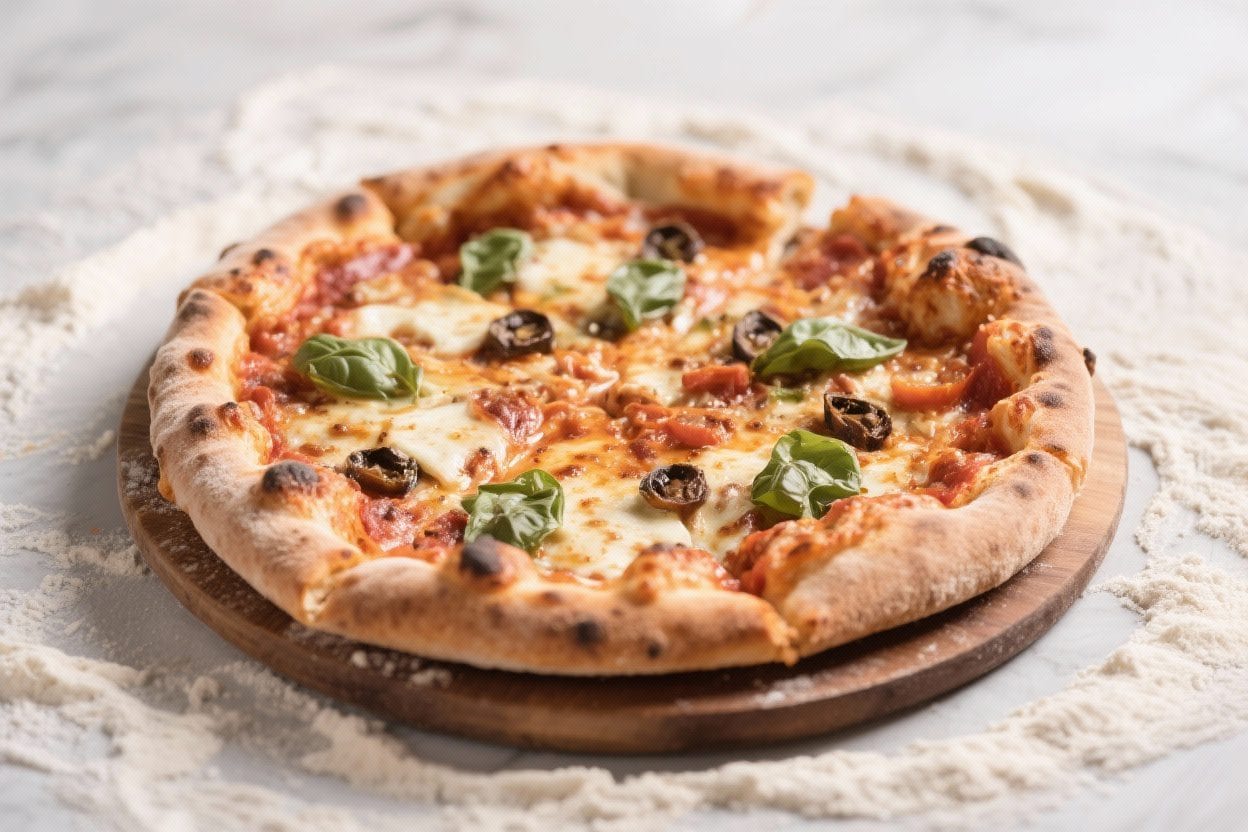
Straight from your oven, this homemade pizza brings a crisp, chewy crust and just the right amount of char. You don’t need special equipment or fancy ingredients—just a hot oven and a few smart steps. The dough is easy to handle, the sauce is quick, and the toppings are your call.
If you’ve struggled with soggy pizza before, this method fixes that. You’ll get a golden, crisp base every time.
What Makes This Recipe So Good
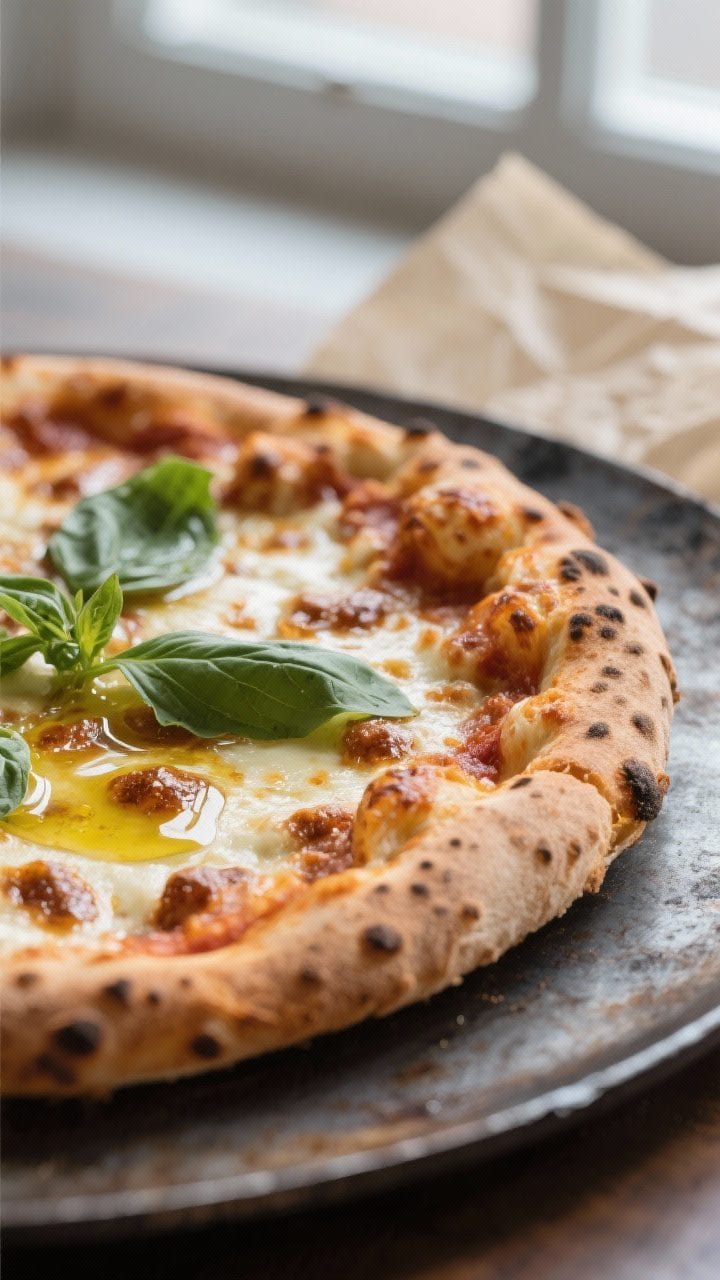
- A Crispy, Crackly Bottom: A preheated surface and a slightly higher-hydration dough create a crisp, airy crust.
- Simple Ingredients, Big Flavor: Flour, yeast, water, and salt—plus a quick, bright tomato sauce.
- Beginner-Friendly Dough: Minimal kneading and flexible fermentation times.
- Customizable Toppings: Classic margherita, pepperoni, or a veggie-packed pie—your choice.
- Works With What You Have: Pizza stone, steel, or a regular baking sheet flipped upside down.
Ingredients
- For the dough:
- 3 1/4 cups (400 g) bread flour or all-purpose flour
- 1 1/4 cups (300 ml) warm water (about 105–110°F / 40–43°C)
- 2 teaspoons sugar or honey
- 2 teaspoons fine sea salt
- 2 teaspoons instant yeast (or 2 1/4 teaspoons active dry yeast)
- 2 tablespoons olive oil, plus more for the bowl
- For the sauce:
- 1 can (14–15 oz) crushed tomatoes or tomato puree
- 1–2 tablespoons olive oil
- 1 clove garlic, finely grated or minced
- 1 teaspoon dried oregano
- 1/2 teaspoon salt, more to taste
- 1/2 teaspoon sugar (optional, to balance acidity)
- For the toppings:
- 8–12 oz low-moisture mozzarella, grated, or fresh mozzarella torn and patted dry
- Fresh basil leaves (optional)
- Pepperoni, sautéed mushrooms, onions, peppers, olives, or any favorites
- Grated Parmesan, crushed red pepper, olive oil for finishing
- Equipment:
- Pizza stone or steel (best), or an inverted baking sheet
- Pizza peel or a flat baking sheet/parchment for transferring
- Rolling pin (optional) and a mixing bowl
Instructions
- Mix the dough: In a large bowl, whisk warm water with sugar and yeast. Let sit 2–3 minutes (longer if using active dry yeast, until slightly foamy).Add flour, salt, and olive oil. Stir with a spoon until a rough dough forms.
- Knead briefly: Turn the dough onto a lightly floured surface and knead 3–5 minutes until smooth and slightly tacky. If it’s sticky, dust with a tiny bit of flour.If it’s stiff, wet your hands and continue kneading.
- First rise: Lightly oil a clean bowl, add the dough, and cover. Let it rise at room temperature until doubled, about 60–90 minutes. For more flavor, you can refrigerate the dough for 8–24 hours after a short rise.
- Preheat the oven hot: Place your stone or steel on the middle rack.Preheat to 500–550°F (260–290°C) for at least 30 minutes. A hotter oven equals a crisper crust.
- Make the sauce: Stir together crushed tomatoes, olive oil, garlic, oregano, salt, and sugar if using. Taste and adjust.No need to cook; you want a fresh, bright sauce.
- Divide and shape: Turn risen dough onto a floured surface. Divide into 2 balls for two 12-inch pizzas. Rest 10 minutes so the gluten relaxes.Gently press and stretch each ball into a circle, leaving a slightly thicker edge.
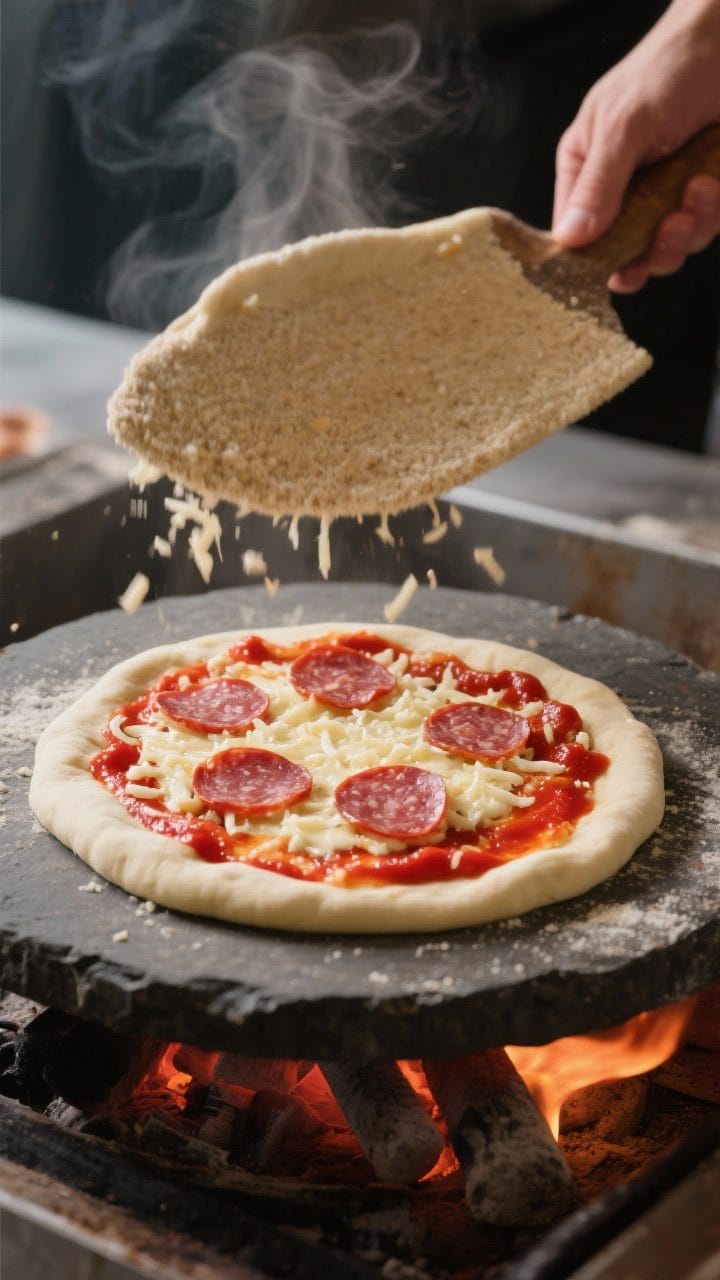
- Prepare your peel: Dust a pizza peel with semolina, cornmeal, or flour to prevent sticking. Alternatively, build the pizza on parchment for easy transfer.
- Top lightly: Spread a thin layer of sauce—about 1/3 cup per pizza. Add mozzarella and chosen toppings. Keep it light to avoid sogginess.A drizzle of olive oil helps browning.
- Bake until crisp: Slide the pizza onto the preheated stone or steel. Bake 7–10 minutes, until the crust is deeply golden and the cheese is bubbling with brown spots. Rotate once if needed for even color.
- Finish and serve: Top with fresh basil, a sprinkle of Parmesan, and a light drizzle of olive oil.Let cool 2 minutes, slice, and serve hot.
Storage Instructions
- Leftover slices: Cool completely, then refrigerate in an airtight container for up to 4 days.
- Reheating: Reheat in a hot skillet with a lid for 3–5 minutes, or in a 450°F (232°C) oven on a sheet for 5–8 minutes. Avoid the microwave if you want to keep the crust crisp.
- Freezing dough: After the first rise, oil the dough balls, wrap well, and freeze up to 3 months. Thaw in the fridge overnight, then let rest at room temp 45–60 minutes before shaping.
- Freezing baked pizza: Wrap slices tightly and freeze up to 2 months.Reheat directly from frozen in a 475°F (245°C) oven for 8–12 minutes.
Health Benefits
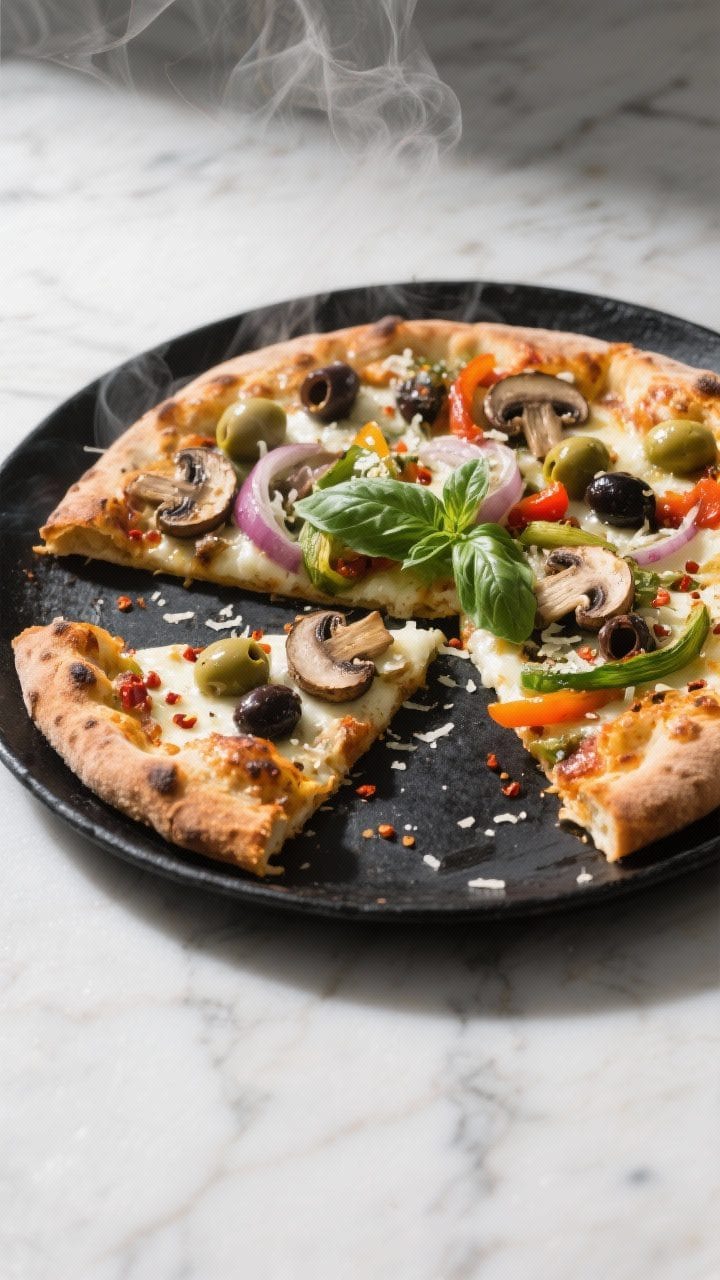
- Balanced meal potential: With a vegetable-heavy topping mix and moderate cheese, pizza can deliver carbs, protein, and fiber in one bite.
- Quality control: You choose the oil, the amount of salt, and the cheese type, helping reduce additives and excess saturated fat.
- Whole-grain option: Swapping part of the flour for whole wheat boosts fiber and minerals without sacrificing texture.
- Lycopene from tomatoes: Tomato-based sauces provide antioxidants that stay stable with cooking.
Pitfalls to Watch Out For
- Underheating the oven: A too-cool oven leads to pale crust and soggy centers. Preheat thoroughly.
- Overloading toppings: Too much sauce or cheese adds moisture and prevents browning. Keep it light.
- Sticky launch: If the pizza sticks to the peel, it won’t slide onto the stone.Use semolina or parchment.
- Wet ingredients: Pat fresh mozzarella and watery veggies dry. Sauté mushrooms and onions to remove moisture.
- Overworking the dough: If it keeps snapping back, let it rest 10 minutes and try again.
Alternatives
- Flour swap: Use 50% bread flour and 50% Tipo 00 for a tender, pizzeria-style chew. Or replace up to 30% with whole wheat.
- Yeast-free option: Make a quick baking powder “flatbread” crust in a pinch.It won’t be chewy, but it bakes fast and crisp.
- Gluten-free: Use a gluten-free pizza flour blend and follow package hydration tips. Par-bake the crust 5–7 minutes before topping.
- No stone or steel: Bake on an inverted, preheated baking sheet. It mimics the hot surface and still crisps the bottom.
- White pizza: Skip the tomato sauce and use olive oil, garlic, ricotta, and mozzarella with spinach or mushrooms.
FAQ
Can I make the dough the day before?
Yes.
After a short room-temperature rise, refrigerate the dough for 8–24 hours. This slow fermentation develops flavor and makes the dough easier to handle.
Do I need a pizza stone or steel?
They help a lot with crispness, but they’re not mandatory. A preheated, inverted baking sheet gets you close.
Just make sure the oven is very hot.
Why is my crust pale?
Usually it’s temperature or moisture. Preheat longer, use less sauce and cheese, and add a small drizzle of oil. A pinch of sugar in the dough can also encourage browning.
How do I stop the pizza from sticking?
Dust the peel with semolina or cornmeal, build quickly, and give the pizza a test shimmy before launching.
Parchment paper is a safe backup.
What cheese melts best?
Low-moisture mozzarella melts evenly and browns nicely. Fresh mozzarella is great too—just pat it dry and tear into smaller pieces.
Can I use sourdough starter?
Absolutely. Replace the yeast with 3/4 cup active starter and reduce the water and flour slightly.
Expect a longer rise and a tangier, more open crumb.
How do I get leopard spots on the crust?
High heat and a well-hydrated dough help. A pizza steel at 525–550°F and a brief broil at the end can create those dark, blistered spots.
In Conclusion
A crisp, golden crust isn’t out of reach at home. With a hot oven, a light hand on toppings, and a simple dough, you’ll turn out pizza that tastes like your favorite pizzeria’s.
Make it classic or make it your own—either way, this method delivers crunch, chew, and big flavor every time.
Printable Recipe Card
Want just the essential recipe details without scrolling through the article? Get our printable recipe card with just the ingredients and instructions.