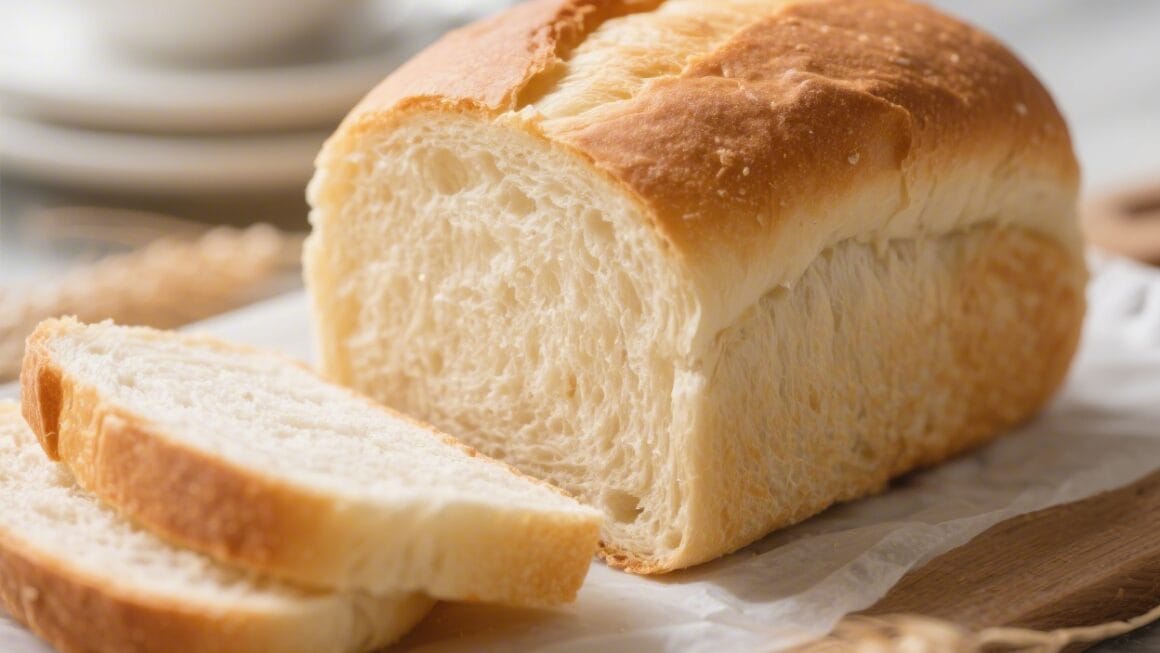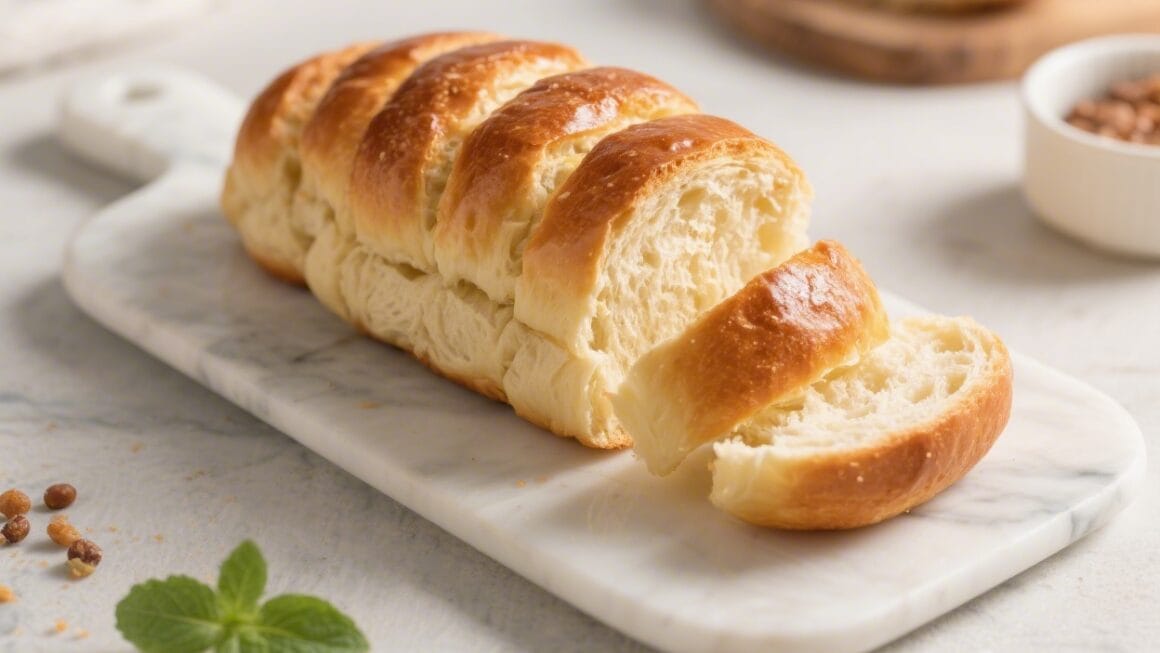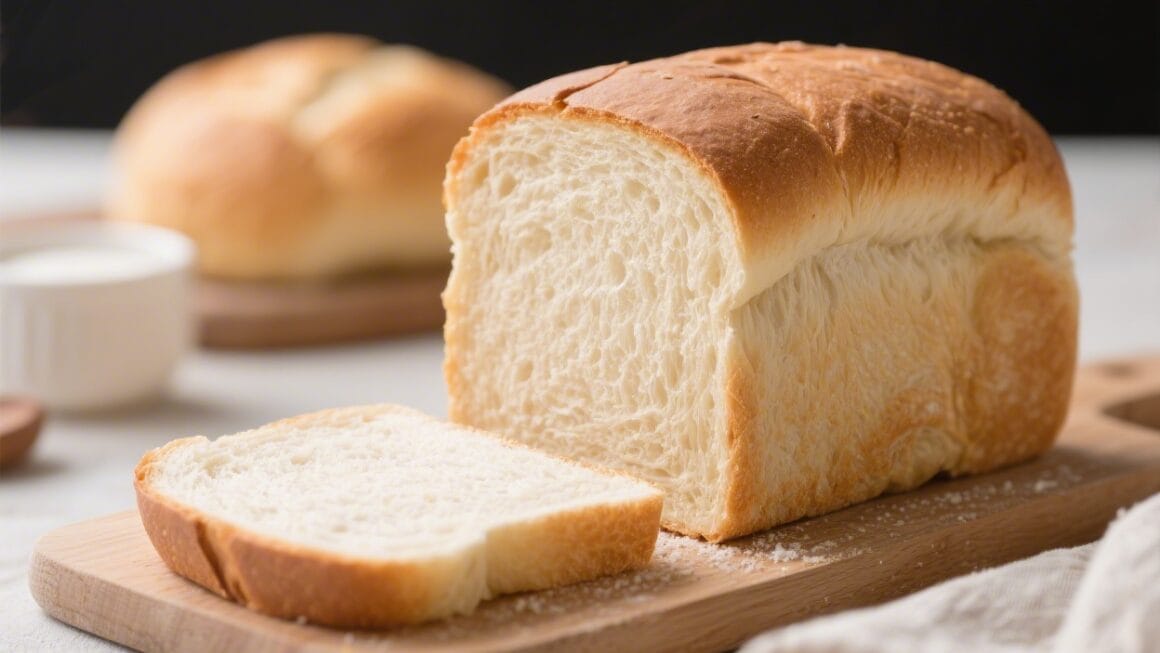
Bread dough can feel mysterious when you’re new to it, but it doesn’t have to be. With a few basic ingredients and the right steps, you can make a soft, fluffy dough that bakes into tender rolls or a pillowy loaf. This guide keeps things simple and beginner-friendly while still delivering great texture and flavor.
You’ll learn what to buy, what to do, and what to avoid. By the end, you’ll have a dough that’s easy to shape and a bread you’ll be proud to share.
What Makes This Special
This method uses milk, a touch of fat, and a little sugar to create a dough that’s soft and forgiving. It’s designed for beginners, so you don’t need special tools—just a bowl, a spoon, and your hands.
The steps focus on feel and simple cues, not complicated techniques. You’ll get a tender crumb, a light interior, and a golden, soft crust.
Shopping List
- Bread flour (or all-purpose flour) – 3 1/2 cups (about 420 g)
- Whole milk (or water) – 1 cup (240 ml), warmed
- Active dry yeast – 2 1/4 teaspoons (one packet)
- Granulated sugar – 2 tablespoons
- Salt – 1 1/2 teaspoons
- Unsalted butter – 3 tablespoons, softened (or vegetable oil)
- Egg – 1 large (optional, for richer dough)
- Neutral oil – a little, for greasing the bowl
- Extra butter – for brushing the top after baking (optional)
How to Make It
- Warm the liquid.Heat the milk until it’s warm, not hot—about the temperature of a warm bath (100–110°F / 38–43°C). If it feels hot to your finger, let it cool a minute.
- Proof the yeast.In a large bowl, stir the warm milk with sugar. Sprinkle the yeast over the top and let it sit 5–10 minutes.Look for a foamy, creamy layer.No foam?The yeast may be old or the milk too hot—try again.
- Add the fat and egg.Stir in the softened butter and egg (if using) until mostly smooth. A few small butter bits are fine.
- Mix the dry ingredients.In a separate bowl, whisk the flour and salt. Add half of it to the wet mixture and stir until it forms a thick batter.
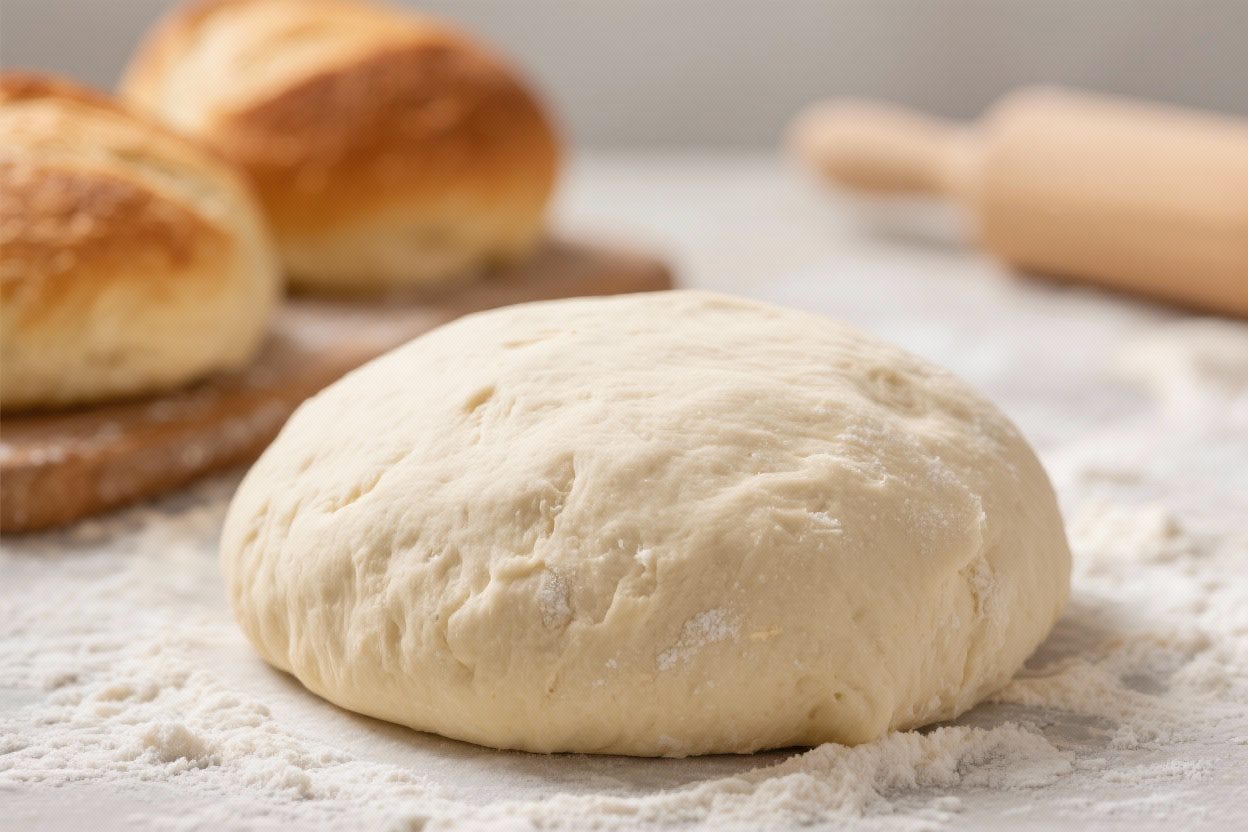
- Bring it together.Add the remaining flour gradually, stirring until a shaggy dough forms.It should be soft and slightly sticky, but not soupy. If very sticky, add 1–2 tablespoons of flour at a time.
- Knead until smooth.Turn the dough onto a lightly floured surface. Knead for 7–10 minutes.Push the dough away with the heel of your hand, fold it back, and turn it a quarter turn. Repeat.Done test:The dough should be smooth, elastic, and bounce back when poked.
- First rise.Lightly oil a clean bowl. Place the dough inside, turning once to coat.Cover with a clean towel or plastic wrap. Let it rise in a warm spot until doubled, about 60–90 minutes.
- Shape the dough.Gently punch down to release gas. For a loaf, roll it into a tight log and set it in a greased 9×5-inch pan.For rolls, divide into 10–12 equal pieces, shape into balls, and place in a greased baking dish.
- Second rise.Cover the shaped dough and let it rise again until puffy and almost doubled, about 30–45 minutes.Don’t rush this—this rise gives you light,simple milk bread for beginners.soft bread for toast.
- Preheat and bake.Preheat the oven to 350°F (175°C). Bake a loaf for 28–35 minutes, or rolls for 18–22 minutes, until golden. The bread should sound hollow when tapped, or read 190–195°F (88–90°C) inside.
- Finish and cool.Brush the top with melted butter for extra softness.Let cool at least 20–30 minutes before slicing to keep the crumb tender.
Keeping It Fresh
Let the bread cool completely before storing. Keep it at room temperature in a sealed bag or bread box for up to 3 days. Avoid the fridge—it dries bread out faster. For longer storage, slice and freeze in a zip-top bag for up to 2 months.
Reheat slices in a toaster or the whole loaf in a low oven wrapped in foil.
Health Benefits
- Simple ingredient list: You control what goes in—no preservatives or additives.
- Good source of energy: Carbs provide fuel for your day; pair with protein or healthy fats for balance.
- Customization: Swap in part whole-wheat flour for more fiber and nutrients.
- Lower sodium option: You can reduce salt slightly if needed while keeping flavor.
Pitfalls to Watch Out For
- Milk too hot: It can kill the yeast. Keep it warm, not hot.
- Too much flour: Over-flouring leads to dense bread. The dough should be soft and a bit tacky.
- Under-kneading: If the dough tears easily and doesn’t spring back, knead longer.
- Skipping the second rise: This shortchange leads to tight, heavy crumb.
- Cutting too soon: Slicing hot bread squashes the crumb.Let it rest so steam sets the structure.
Variations You Can Try
- Honey butter dough: Replace sugar with honey and use all butter for a richer, slightly sweet loaf.
- Garlic herb rolls: Add 1 teaspoon garlic powder and 2 teaspoons dried Italian herbs to the flour.
- Milk-and-water mix: Use half milk, half water for a lighter, still-soft crumb.
- Whole-wheat blend: Use 1 cup whole-wheat flour and 2 1/2 cups bread flour. Add 1 tablespoon extra milk if needed.
- Cheese-topped: Sprinkle shredded cheddar or Parmesan on top during the last 5 minutes of baking.
FAQ
Can I use instant yeast instead of active dry yeast?
Yes. Use the same amount and skip the proofing step.
Mix instant yeast directly with the flour and salt. Still use warm milk for best rise.
What if I don’t have bread flour?
All-purpose flour works fine. Your dough may be slightly less chewy but still very soft.
If using all-purpose, be careful not to add too much extra flour during kneading.
How do I know when I’ve kneaded enough?
The dough will feel smoother and spring back when poked. If you stretch a small piece gently, it should form a thin, slightly translucent window without tearing quickly—that’s a good sign of gluten development.
Why didn’t my dough rise?
Most often, the yeast was expired or the milk was too hot or too cold. Also check that the room isn’t too chilly; move the dough to a warm, draft-free spot.
Give it more time if needed.
Can I make the dough ahead?
Yes. After the first rise, punch down, cover tightly, and refrigerate up to 24 hours. Shape, let it come to room temperature and rise until puffy, then bake.
How can I get an extra soft crust?
Brush the hot bread with melted butter right after baking.
You can also tent the loaf with foil for the last 10 minutes to prevent over-browning.
Do I need a stand mixer?
No. Hand-kneading works well for this dough. A mixer with a dough hook is convenient, but not required.
Can I make this dairy-free?
Use warm water or a plant-based milk and swap butter for oil or dairy-free butter.
The texture stays soft, though the flavor will be slightly different.
Wrapping Up
Soft bread dough is all about gentle heat, patient rises, and just enough flour. With this method, you’ll get a tender crumb and a soft, golden top without fuss. Once you’ve nailed the basics, play with flavors and shapes to make it your own.
Fresh, warm bread from your kitchen is closer than you think—enjoy every slice.