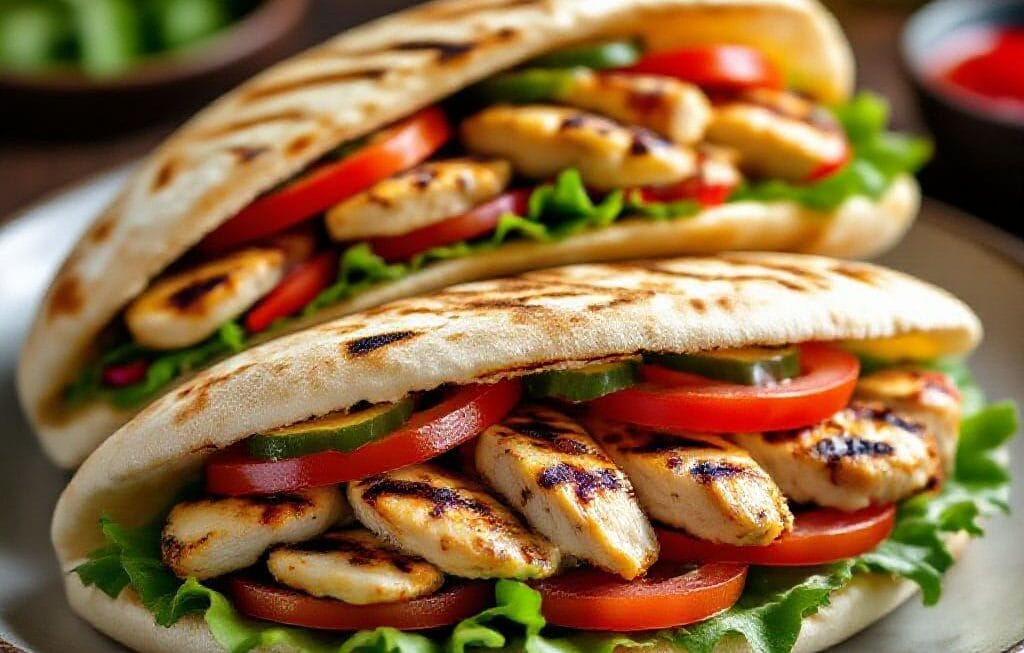
Flatbread Wraps Recipe – Soft, Foldable, and Easy
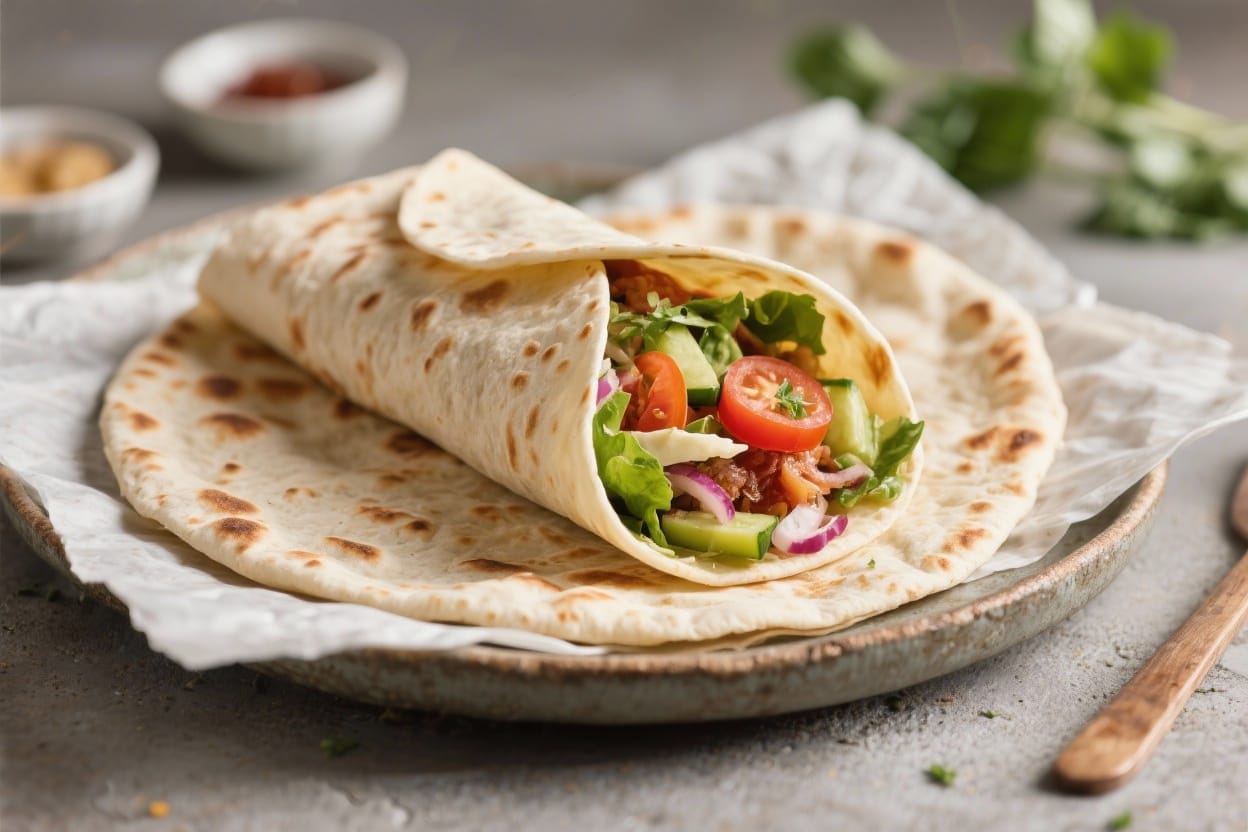
Flatbread wraps are the kind of recipe you make once and keep making forever. They’re soft, bendy, and perfect for anything from chicken and veggies to hummus and salad. The best part is you likely have everything you need in your pantry right now. There’s no yeast, no long rise, and no fancy equipment. Just a quick dough, a hot pan, and a stack of warm wraps ready to fill and eat.
What Makes This Recipe So Good
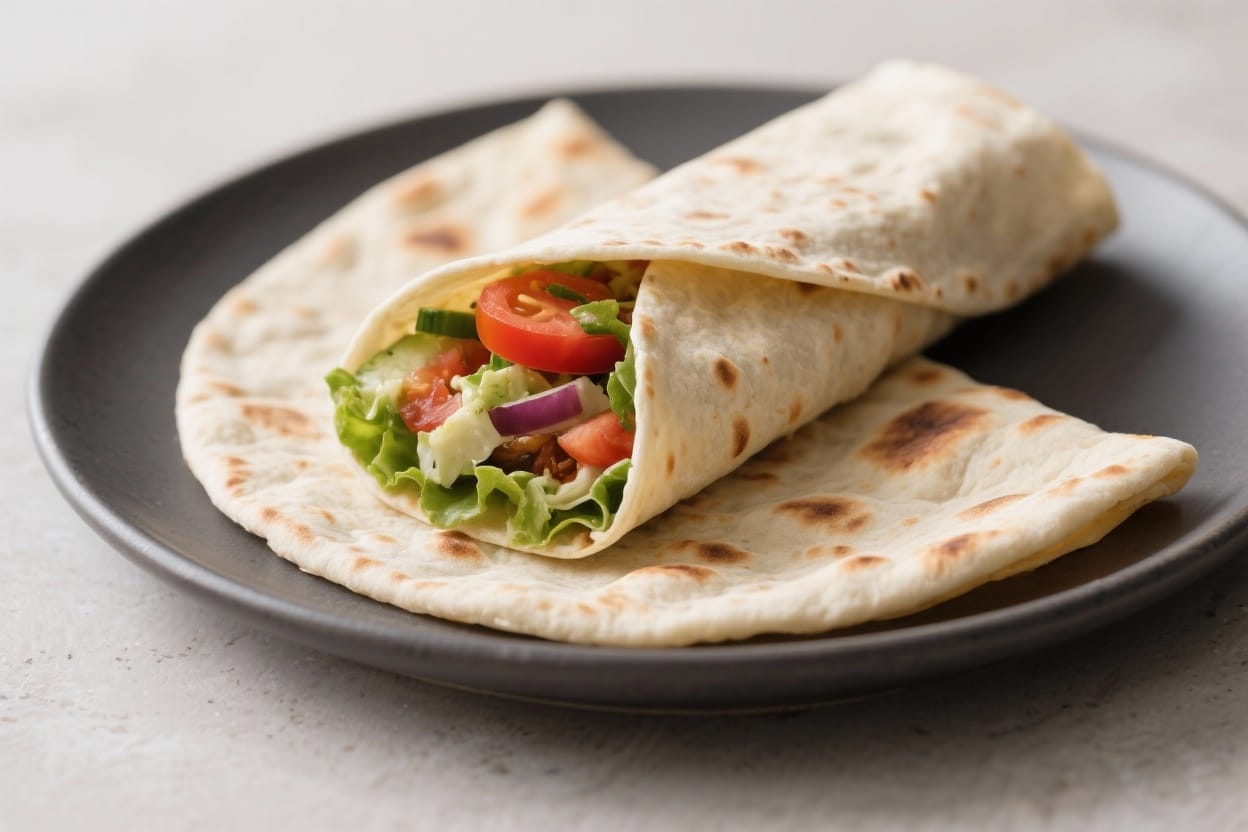
Flatbread wraps recipe – Flatbread Wraps Recipe – Soft, Foldable, and Easy Flatbread wraps are the kind of recipe you make on
- Quick and simple: The dough comes together in minutes, and each wrap cooks in under 2 minutes.
- Flexible and sturdy: These wraps fold without cracking but aren’t gummy or tough.
- No yeast needed: Baking powder gives a gentle lift for a soft, pillowy texture.
- Pantry-friendly: Just flour, yogurt (or milk), oil, and salt.
- Great for meal prep: Make a batch, store, and reheat for easy lunches or dinners.
Ingredients
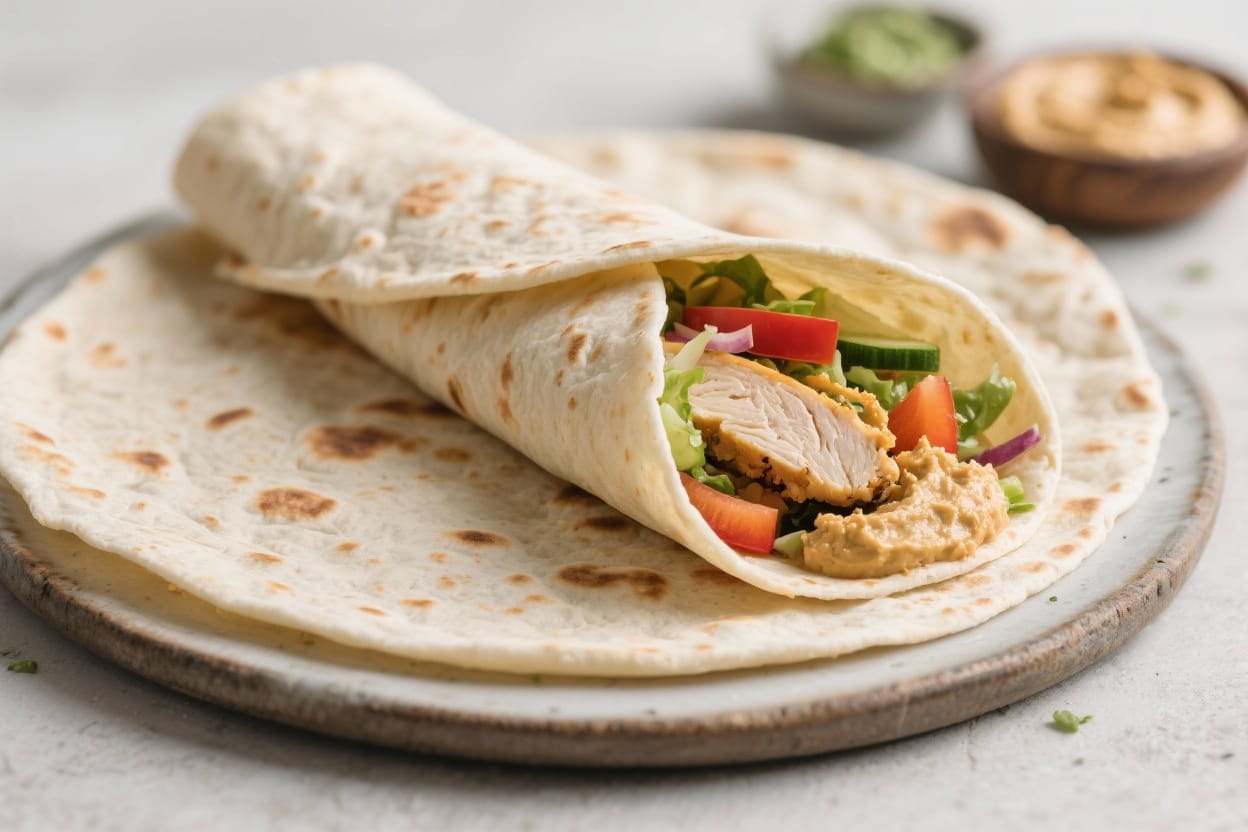
Flatbread wraps recipe – They’re soft, bendy, and perfect for anything from chicken and veggies to hummus and salad
- 2 1/2 cups all-purpose flour, plus extra for dusting
- 2 teaspoons baking powder
- 1 teaspoon fine salt
- 3 tablespoons olive oil (plus a little more for the bowl and cooking)
- 1 cup plain Greek yogurt (full-fat works best), or 1 cup plain yogurt strained until thick
- 1/3 to 1/2 cup warm water, as needed
- Optional: 1 teaspoon sugar or honey (for a hint of browning and softness)
- Optional flavor add-ins: 1 teaspoon garlic powder, 1 teaspoon dried oregano, or 2 tablespoons chopped fresh herbs for an easy flatbread no yeast variation
Instructions
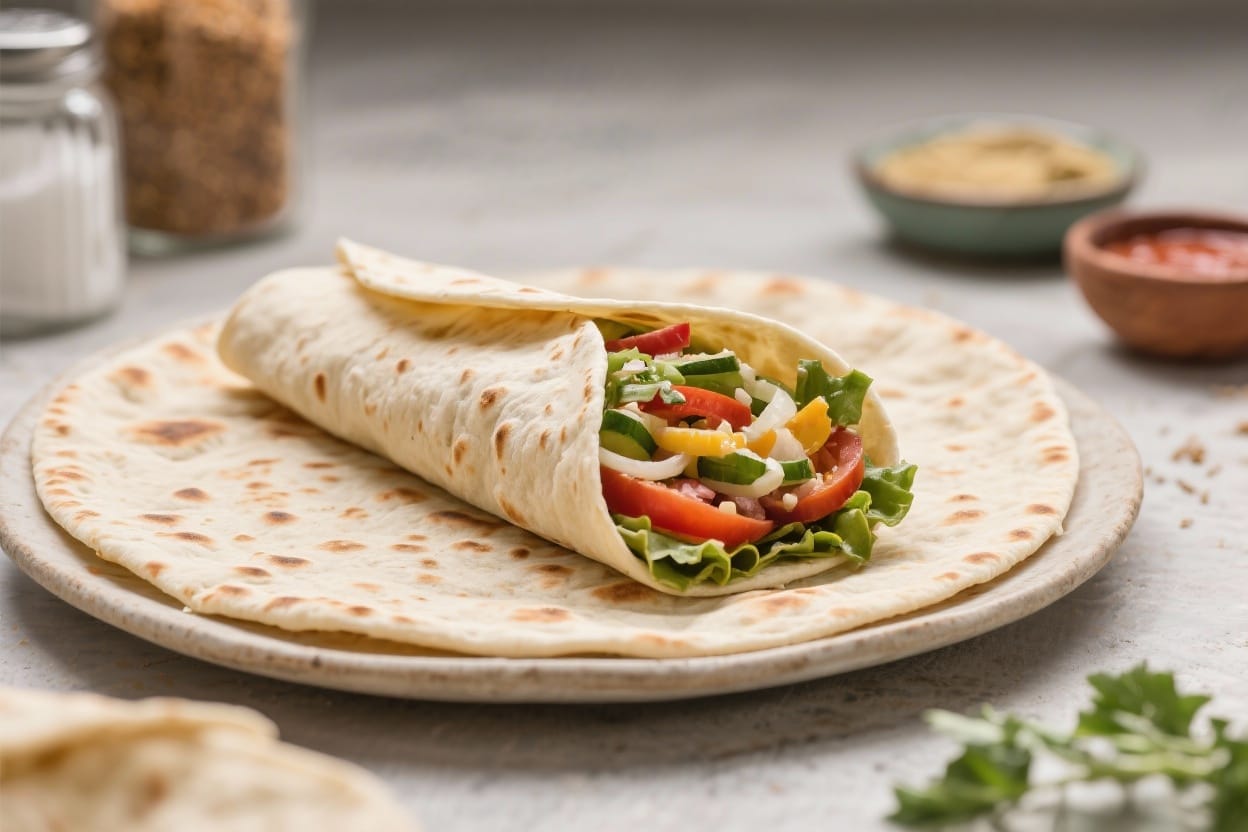
Flatbread wraps recipe – The best part is you likely have everything you need in your pantry right now
- Mix the dry ingredients: In a large bowl, whisk together the flour, baking powder, and salt. If using sugar and any dry seasonings, add those now.
- Add the wet ingredients: Stir in the olive oil and yogurt. Begin mixing with a spoon, then switch to your hands. Drizzle in warm water a little at a time until a shaggy dough forms. You want it soft and slightly tacky, not sticky.
- Knead briefly: Turn the dough onto a lightly floured surface. Knead for 2–3 minutes until smooth and elastic. If it’s sticking, dust with a touch more flour.
- Rest the dough: Lightly oil the bowl, return the dough, cover, and let rest for 15–20 minutes. This relaxes the gluten so the wraps roll out easily.
- Divide and shape: Cut the dough into 8 equal pieces for medium wraps or 6 for larger wraps. Roll each piece into a smooth ball. Keep covered with a towel so they don’t dry out.
- Preheat your pan: Place a large cast-iron or nonstick skillet over medium-high heat. Let it get hot; a drop of water should sizzle instantly. Lightly brush the surface with oil.
- Roll out the wraps: On a floured surface, roll one dough ball into a thin circle or oval, about 7–8 inches wide. Rotate and dust as needed to prevent sticking. Thin dough makes a softer, more flexible wrap.
- Cook the first side: Lay the dough in the hot pan. Cook for 45–60 seconds, until bubbles form and the underside gets light golden spots.
- Flip and finish: Flip and cook another 30–45 seconds. Press any big bubbles down with a spatula. The wrap should be soft with light char spots.
- Keep warm: Stack cooked wraps on a plate and cover with a clean towel to trap steam. This keeps them pliable. Repeat with remaining dough, lightly oiling the pan as needed.
- Fill and serve: Use immediately for wraps, tacos, gyros, or as flatbread alongside dips and salads.
Storage Instructions
- Room temperature: Wrap in foil or place in a zip-top bag once fully cool. Keep on the counter for up to 24 hours.
- Refrigerator: Store for 4–5 days in an airtight container. Separate wraps with parchment if stacking.
- Freezer: Freeze for up to 2 months. Place parchment between each wrap, then freeze in a sealed bag.
- Reheating: Warm in a dry skillet over medium heat for 20–30 seconds per side, or microwave with a damp paper towel for 15–20 seconds. Don’t overheat or they’ll dry out.
Why This is Good for You
- Balanced and customizable: Pair these wraps with lean protein, veggies, and healthy fats for a complete meal.
- Less processed: You control the ingredients—no preservatives or unnecessary sweeteners.
- Yogurt benefits: Using Greek yogurt adds protein and a mild tang while helping with softness.
- Better portion control: Homemade wraps tend to be thinner and lighter than store-bought versions.
What Not to Do
- Don’t skip the rest: Rolling will be harder and the wraps may shrink and turn tough.
- Don’t over-flour: Too much flour makes the dough dry. Keep it soft and only dust the surface lightly.
- Don’t cook on low heat: You need a hot pan for those characteristic bubbles and soft texture.
- Don’t overcook: If they get too dark or stiff, they’ll crack when folded. Light golden spots are perfect.
- Don’t stack without covering: Keep them under a towel so steam keeps them pliable.
Recipe Variations
- Whole wheat: Swap up to half the all-purpose flour for whole wheat. Add a splash more water as whole wheat absorbs more.
- Dairy-free: Replace yogurt with 3/4 cup plant-based yogurt or 3/4 cup warm water plus 1 teaspoon lemon juice. Adjust water to get a soft dough.
- Garlic herb: Mix 1 teaspoon garlic powder and 1–2 teaspoons dried herbs (oregano, thyme, or Italian seasoning) into the flour.
- Sesame or nigella: Brush rolled dough lightly with water and sprinkle with sesame or nigella seeds. Roll gently to press seeds in before cooking.
- High-protein: Use 1 3/4 cups all-purpose flour + 3/4 cup white whole wheat flour and stick with Greek yogurt. Add 1 tablespoon extra water if needed.
- Gluten-free: Use a 1:1 gluten-free flour blend with xanthan gum. Add water slowly and roll gently between parchment sheets. Cook a bit shorter to avoid cracking.
FAQ
Can I make the dough ahead of time?
Yes. Wrap the dough tightly and refrigerate for up to 24 hours. Let it come to room temperature for 20–30 minutes before rolling so it’s easier to handle.
Why are my wraps tough or rubbery?
This usually means the heat was too low or they were overcooked. Use a hot pan and cook just until you see light golden spots. Also, avoid adding too much flour during kneading.
My dough keeps shrinking when I roll it. What can I do?
Let the dough rest longer. A 15–20 minute rest relaxes the gluten. If it still shrinks, give it another 10 minutes under a towel and try again.
Can I bake these instead of cooking on the stove?
You can, but the texture will be different. If you try it, bake at 475°F (245°C) on a preheated baking sheet for 2–3 minutes per side. A skillet gives better bubbles and softness.
How do I keep them soft for sandwiches?
Stack and cover the wraps with a clean towel right after cooking. The steam helps them stay flexible. If they cool down, reheat briefly with a damp paper towel.
What fillings work best?
Great options include grilled chicken, roasted veggies, falafel, hummus, mixed greens, tzatziki, sliced avocado, or scrambled eggs and salsa for breakfast wraps.
Can I use self-rising flour?
Yes. If using self-rising flour, omit the baking powder and reduce the salt slightly. Add water gradually to reach a soft dough.
Is regular yogurt okay instead of Greek?
Yes, but strain it through a fine sieve or cheesecloth for 15–20 minutes to thicken. Otherwise, the dough may be too wet.
Final Thoughts
These flatbread wraps strike a perfect balance: simple to make, soft enough to fold, and sturdy enough to hold your favorite fillings. Once you master the feel of the dough and the heat of your pan, they’ll become a go-to for quick meals all week. Make a batch, stash some in the freezer, and you’ll always have the base for a fresh, satisfying wrap on hand. Keep it simple or add herbs and spices—either way, you’re set for easy, homemade wraps that taste better than store-bought.
Printable Recipe Card
Want just the essential recipe details without scrolling through the article? Get our printable recipe card with just the ingredients and instructions.