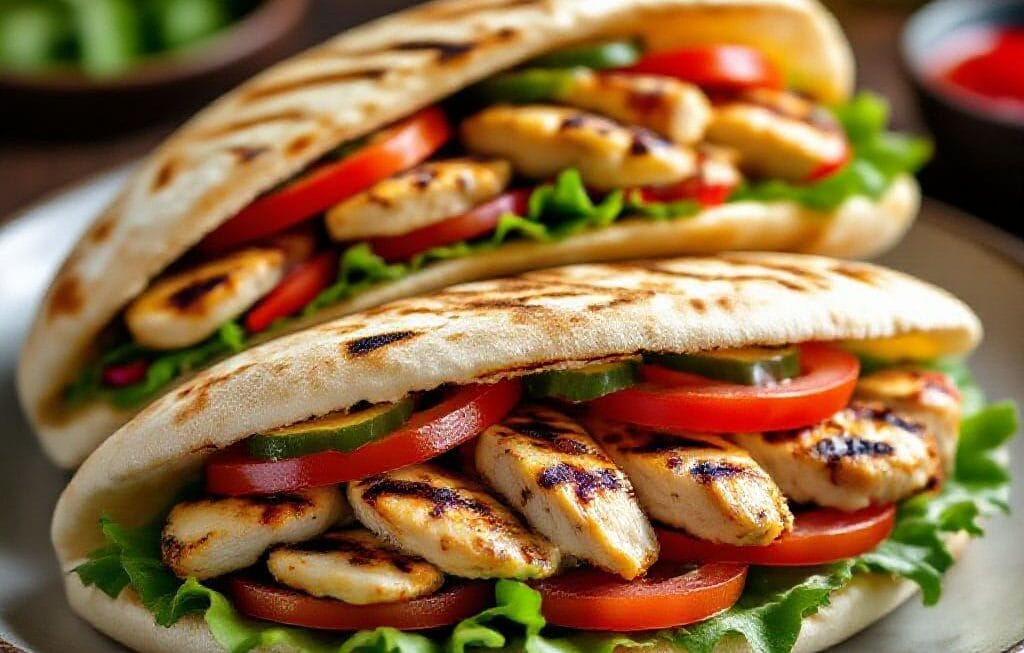
Stovetop Garlic Flatbread – Quick, Soft, and Packed With Flavor
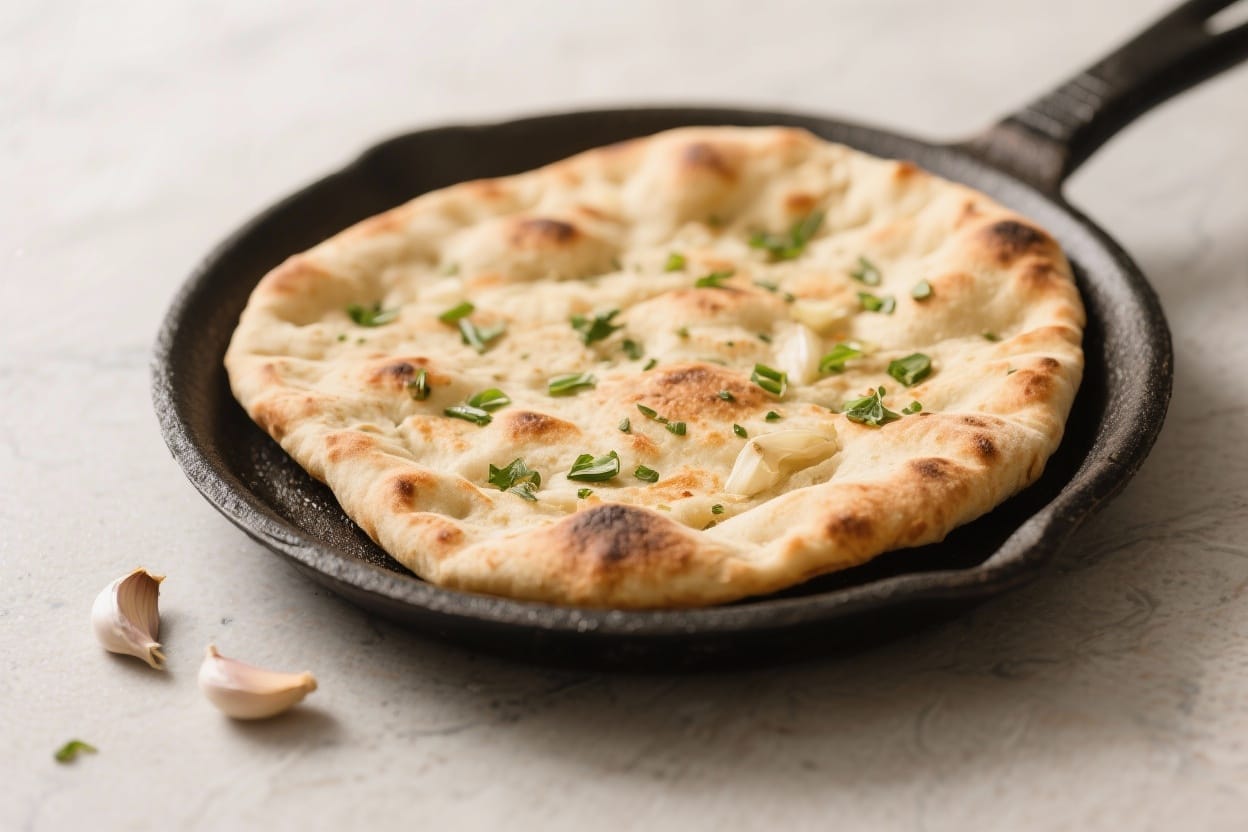
Skip the oven and make soft, garlicky flatbreads right on your stovetop. This recipe is fast, simple, and delivers big flavor with pantry staples. The dough comes together in minutes, and the buttery garlic finish makes each piece irresistible. Serve it with soups, curries, salads, or use it as a base for quick pizzas. If you’ve never made bread before, this is a great place to start—no special tools or long waits required.
What Makes This Special
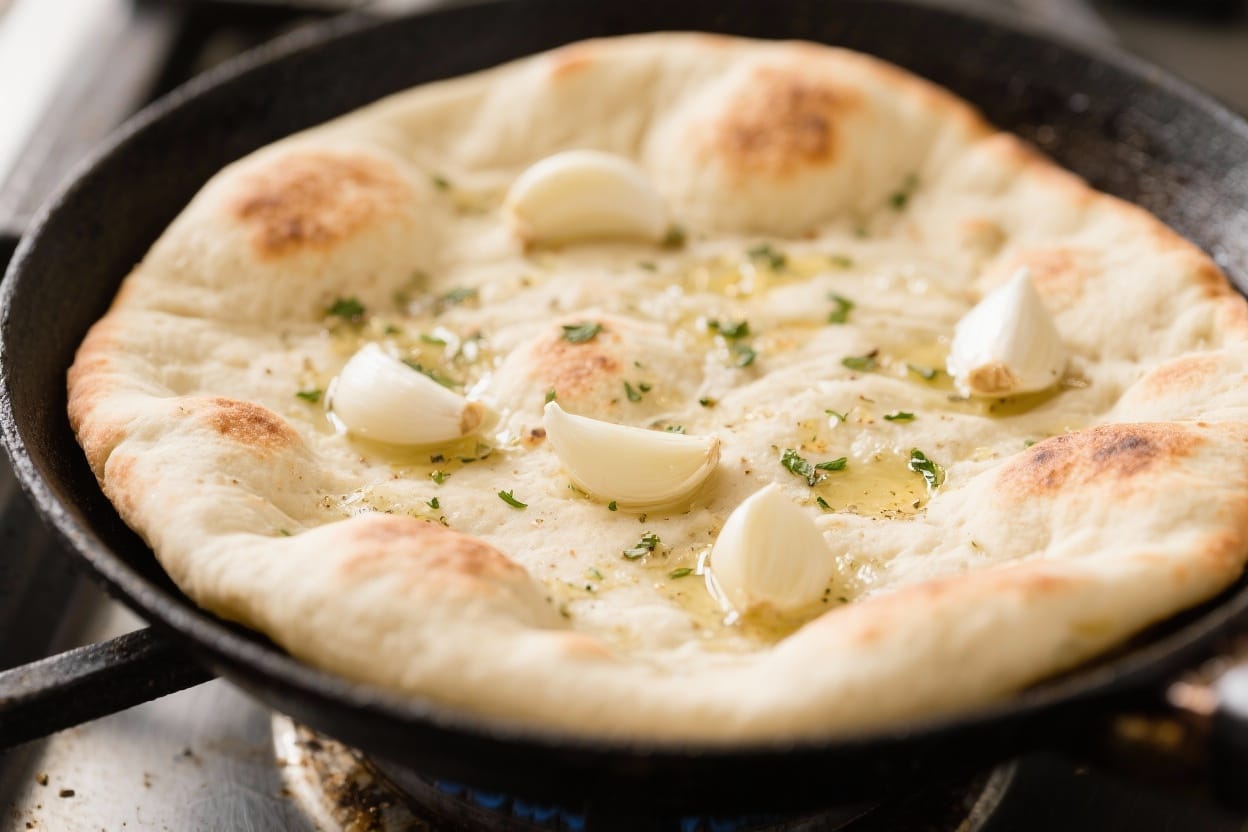
Stovetop garlic flatbread – Stovetop Garlic Flatbread – Quick, Soft, and Packed With Flavor Skip the oven and make soft, garlick
This stovetop garlic flatbread is all about ease and flexibility. There’s no yeast, no rising time, and no oven—just a quick dough and a hot pan. The texture lands somewhere between naan and a tortilla: soft, chewy, and just enough crisp around the edges when cooked right. The garlic butter brushed over warm bread steals the show, and you can customize it with herbs, chili flakes, or cheese. It’s the kind of recipe you’ll make on weeknights and for last-minute guests.
Ingredients
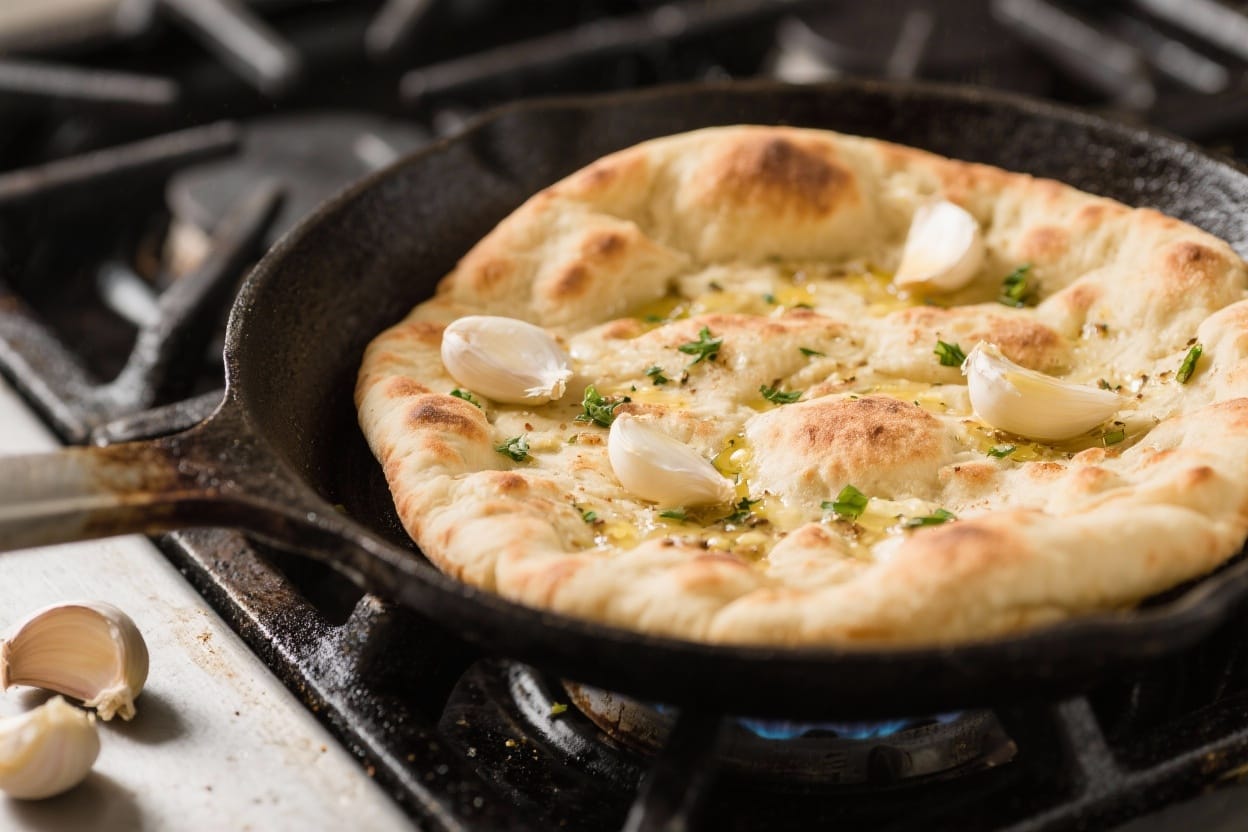
Stovetop garlic flatbread – This recipe is fast, simple, and delivers big flavor with pantry staples
- 2 cups (250 g) all-purpose flour, plus extra for dusting
- 2 teaspoons baking powder
- 1 teaspoon fine salt
- 1 cup (240 ml) plain yogurt (Greek or regular), room temperature
- 2 tablespoons olive oil (plus more for the pan)
- 2–3 tablespoons milk or water, as needed to adjust dough
- 3 tablespoons unsalted butter
- 3–4 cloves garlic, finely minced or grated
- 1–2 tablespoons fresh parsley or cilantro, finely chopped (optional)
- Flaky salt or extra fine salt for finishing (optional)
Instructions
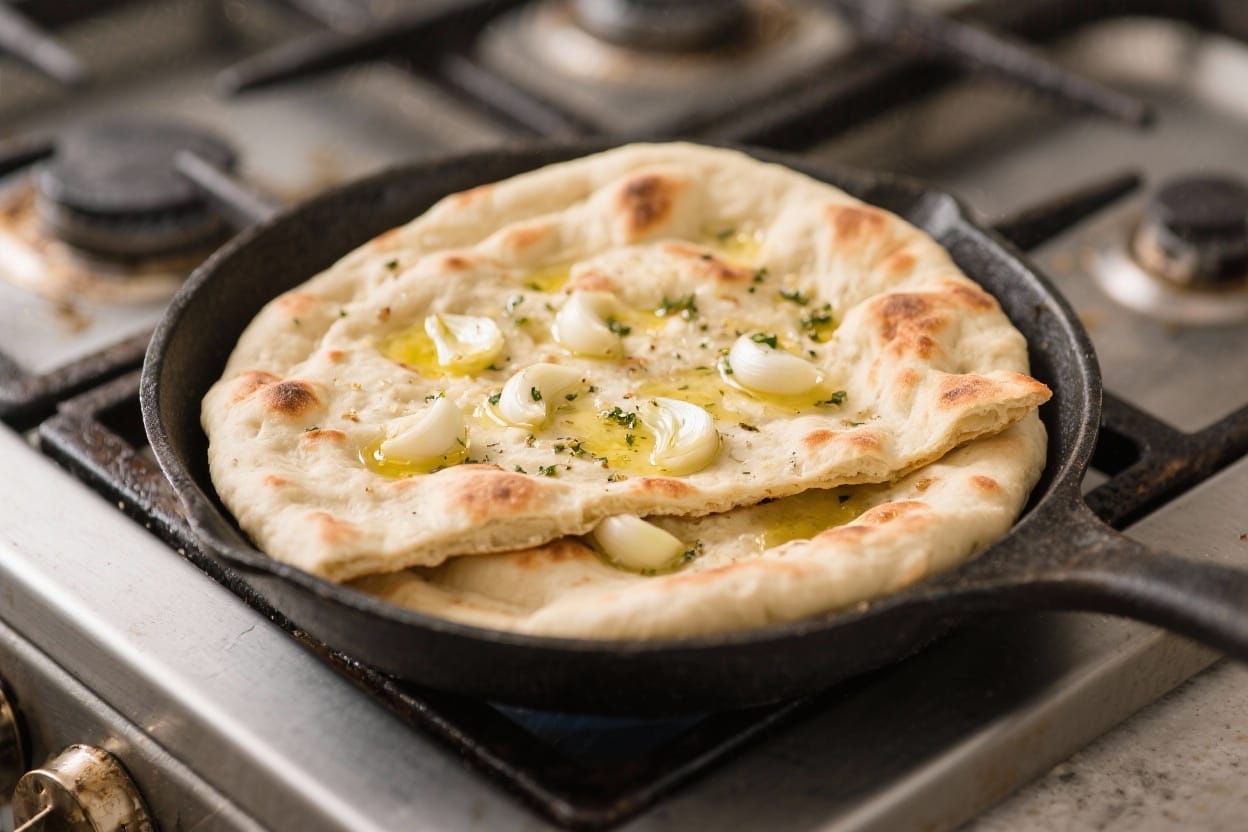
Stovetop garlic flatbread – The dough comes together in minutes, and the buttery garlic finish makes each piece irresistible
- Make the dough: In a mixing bowl, whisk together the flour, baking powder, and salt. Add the yogurt and olive oil. Stir with a spoon until shaggy, then switch to your hands and bring it together. If it’s dry, add milk or water 1 tablespoon at a time. You want a soft, slightly tacky dough that doesn’t stick heavily.
- Brief knead: Turn the dough onto a lightly floured surface. Knead for about 2 minutes until smooth. Don’t overwork it. Shape into a ball, cover with a towel, and let it rest for 10 minutes to relax the gluten.
- Prepare garlic butter: Melt the butter in a small pan over low heat. Add the minced garlic and warm gently for 30–60 seconds until fragrant, not browned. Stir in chopped herbs if using. Set aside and keep warm.
- Divide and shape: Cut the dough into 6–8 equal pieces, depending on your preferred size. Roll each piece into a ball. Keep them covered so they don’t dry out.
- Roll the flatbreads: On a lightly floured surface, roll each ball into an oval or circle about 6–7 inches wide and 1/8 inch thick. Dust lightly as needed to prevent sticking.
- Heat the pan: Preheat a large skillet or griddle over medium to medium-high heat. Add a light film of olive oil and heat until just shimmering.
- Cook the first side: Lay one rolled dough into the hot pan. Cook until bubbles rise and the underside has golden brown spots, about 1–2 minutes. Adjust heat if it browns too quickly.
- Flip and finish: Flip and cook the second side for another 1–2 minutes. Press gently with a spatula to promote even contact and puffing. Transfer to a plate.
- Brush with garlic butter: While still warm, brush generously with the garlic butter. Sprinkle with a pinch of flaky salt if you like. Repeat with remaining dough, adding a touch more oil to the pan as needed.
- Serve: Stack the flatbreads and cover with a clean towel to keep them soft until serving. Enjoy warm.
Storage Instructions
- Room temperature: Keep leftovers wrapped in foil or an airtight bag for up to 24 hours.
- Refrigerator: Store for up to 3 days. Reheat in a dry skillet over medium heat or in a warm oven for a few minutes. Brush with a little extra butter if they seem dry.
- Freezer: Freeze cooked flatbreads (without the garlic butter if you prefer) with parchment between layers, then seal in a freezer bag for up to 2 months. Reheat from frozen in a skillet or toaster oven.
- Make-ahead dough: The dough can rest in the fridge for up to 24 hours. Bring to room temperature for 20–30 minutes before rolling.
Benefits of This Recipe
- Fast and forgiving: No yeast or long rest means you can have warm bread in about 30 minutes.
- Pantry-friendly: Uses basic ingredients you likely have on hand.
- Versatile: Works as a side, wrap, or base for quick garlic flatbread pizzas.
- Beginner-friendly: The dough is simple and flexible. Minor variations in thickness still cook well.
- Customizable: Add herbs, cheese, spices, or different fats to change the flavor profile.
Common Mistakes to Avoid
- Over-flouring the dough: Too much flour creates a dry, tough flatbread. Keep the dough soft and slightly tacky.
- Over-kneading: This tightens the dough and reduces puff. Two minutes is enough.
- Pan too hot or too cool: Too hot and it burns before cooking through; too cool and it dries out. Aim for a steady medium to medium-high heat.
- Rolling too thick: Thick dough can remain doughy. About 1/8 inch gives a nice balance of chew and puff.
- Burning the garlic: Garlic turns bitter when browned. Warm it gently in butter just until fragrant.
Recipe Variations
- Cheesy garlic flatbread: Sprinkle grated mozzarella or a mix of mozzarella and Parmesan over one side after flipping. Cover the pan briefly to melt.
- Whole wheat version: Use half whole wheat flour and half all-purpose. Add 1–2 extra tablespoons of water or milk as whole wheat absorbs more.
- Herb blend: Mix dried oregano, thyme, and basil into the dough (about 1 teaspoon total) for an herby aroma.
- Spicy kick: Add red pepper flakes to the garlic butter, or brush with chili oil instead of butter.
- Dairy-free: Use a thick non-dairy yogurt and swap butter for olive oil or vegan butter. Adjust liquid to get the same soft dough texture.
- Garlic-scallion twist: Fold thinly sliced scallions into the dough before rolling for a mild onion note.
- Lemon garlic: Add a little lemon zest to the garlic butter for brightness, and finish with a squeeze of lemon just before serving.
FAQ
Can I use self-rising flour?
Yes. If you use self-rising flour, omit the baking powder and reduce the salt slightly. Start with the same amount of flour and adjust liquid as needed to keep the dough soft.
Is Greek yogurt required?
No. Regular plain yogurt works well. If it’s very thin, you may need slightly less liquid. For Greek yogurt, you might add a tablespoon or two of milk or water to loosen the dough.
Can I make the dough ahead of time?
Yes. Refrigerate the dough for up to 24 hours. Bring it closer to room temperature before rolling so it stretches without springing back.
What pan works best?
A heavy skillet or griddle gives the best browning. Cast iron is ideal, but any nonstick or well-seasoned pan will do. Avoid overcrowding the pan or the bread will steam instead of char.
How do I keep flatbread soft?
Stack cooked flatbreads and cover them with a clean towel to trap steam. Brush with garlic butter while warm. If reheating, use a skillet and cover briefly to soften.
Can I bake these instead?
Yes. Bake at 475°F (245°C) on a preheated baking sheet for 3–5 minutes, flipping once. They won’t get the same stovetop char but will still be tender and tasty.
What can I serve this with?
It pairs great with curries, stews, grilled meats, hummus, tzatziki, salads, and eggs. It also makes a quick wrap or base for mini pizzas.
Why is my flatbread tough?
It’s usually from too much flour, over-kneading, or cooking over low heat for too long. Keep the dough soft, knead briefly, and cook quickly over medium to medium-high heat.
Can I add garlic to the dough itself?
Absolutely. Add 1 teaspoon of garlic powder to the dry ingredients for a subtle, even garlic flavor. Fresh garlic is best saved for the butter to avoid burning during cooking.
Final Thoughts
This stovetop garlic flatbread is the kind of recipe you’ll keep on repeat. It’s quick, flexible, and consistently satisfying. Once you get used to the feel of a soft dough and a hot pan, you can turn out a stack in no time. Keep the ingredients on hand, and you’ve always got a warm, garlicky side ready for dinner—or a snack you’ll be tempted to make again tomorrow.
Printable Recipe Card
Want just the essential recipe details without scrolling through the article? Get our printable recipe card with just the ingredients and instructions.