Simple Skillet Rolls – Easy, Warm, and Perfect for Any Meal
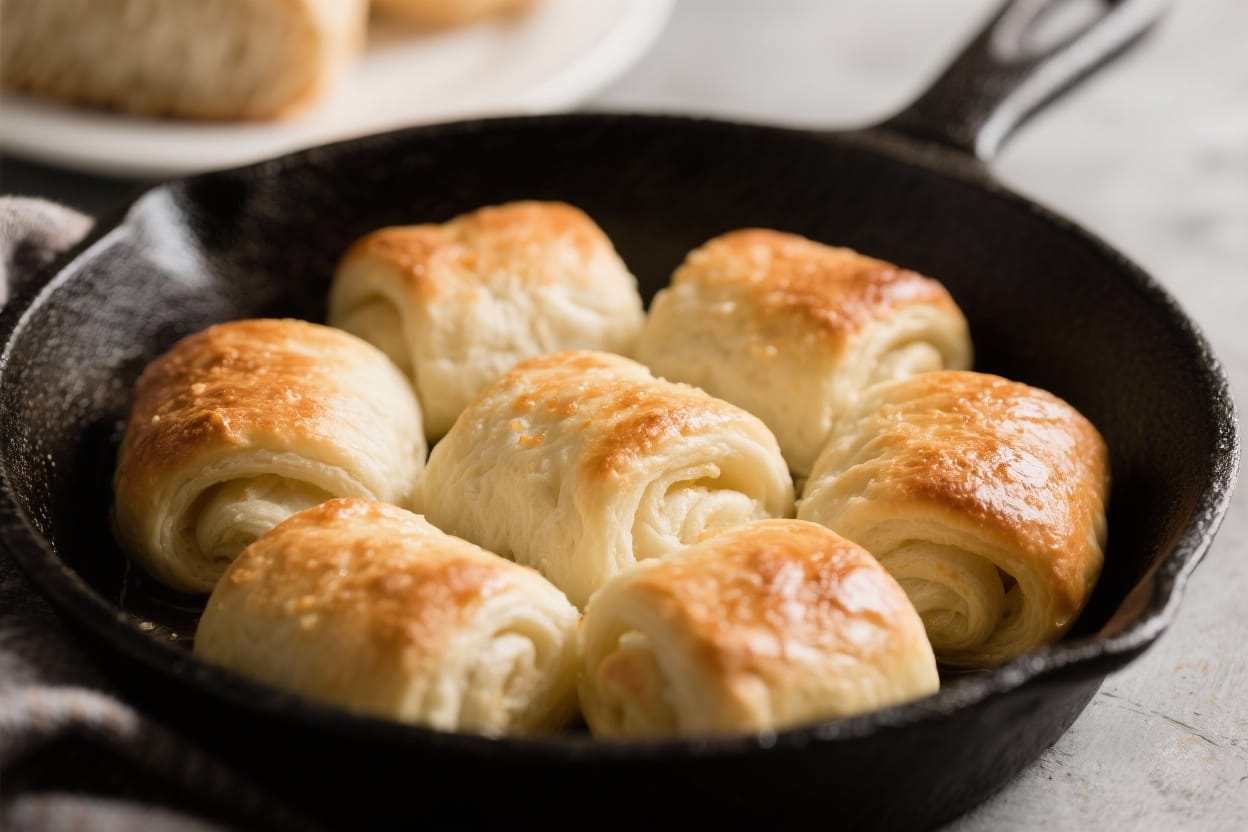
These simple skillet rolls come together fast, bake beautifully, and bring that cozy, bakery-style warmth straight to your table. They’re soft, lightly golden, and made with basic pantry ingredients. No special equipment, no fuss—just a sturdy skillet and a little patience. Whether you’re pairing them with soup, serving them with dinner, or just craving something warm with butter, these rolls deliver every time.
What Makes This Special
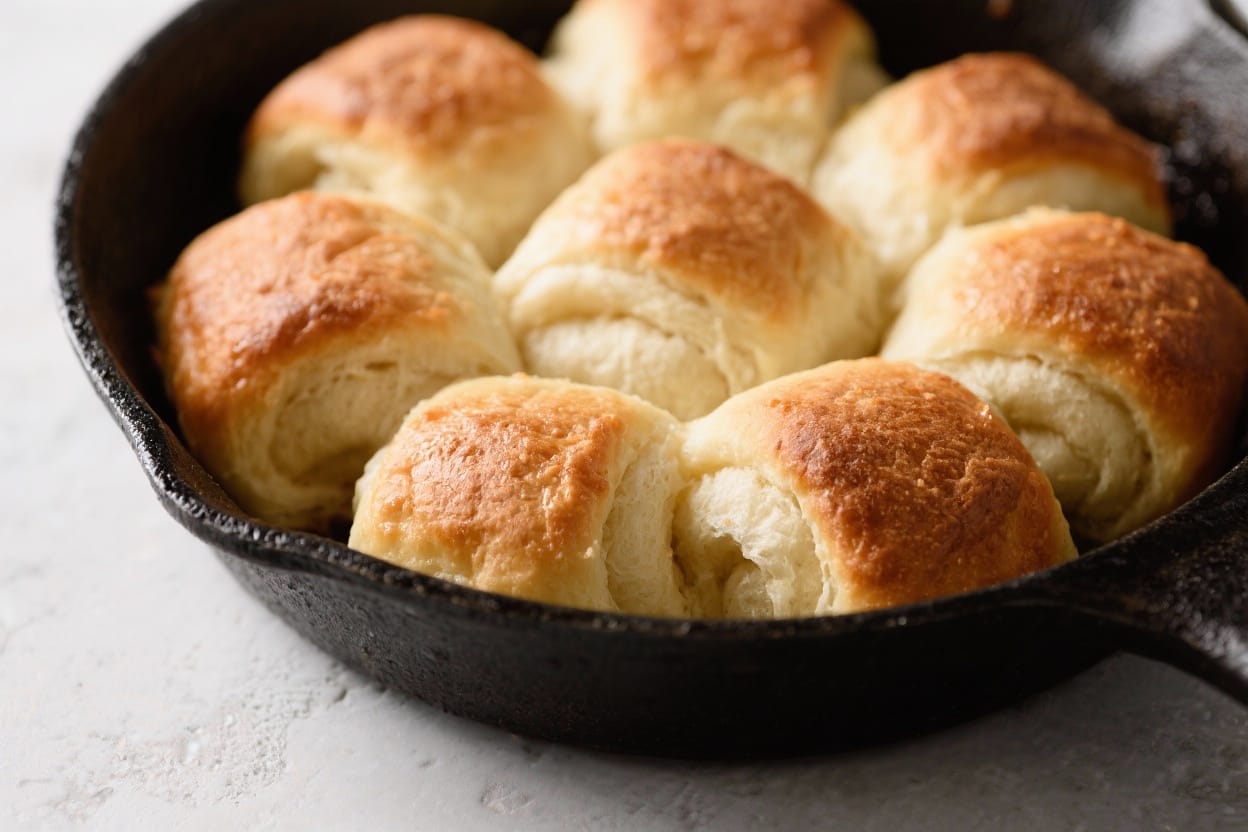
Simple skillet rolls – Simple Skillet Rolls – Easy, Warm, and Perfect for Any Meal These simple skillet rolls come together
There’s something satisfying about using a skillet instead of a baking sheet. The heat distributes evenly, giving the rolls a tender interior and a lovely, crisp edge. These rolls rise in the pan and bake snugly together, which helps keep them soft. The recipe is forgiving, so it works for beginners and busy cooks. Plus, it’s flexible enough to customize for sweet or savory flavors.
Ingredients
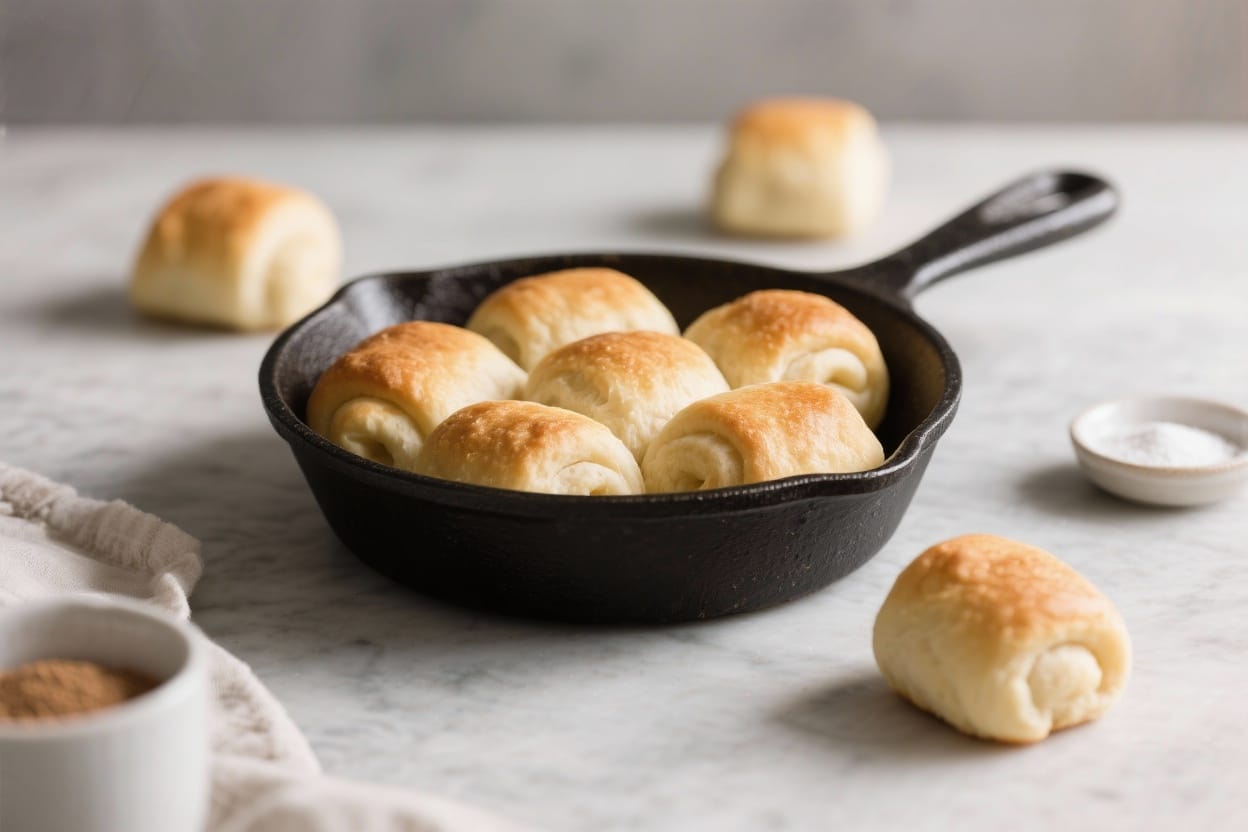
Simple skillet rolls – They’re soft, lightly golden, and made with basic pantry ingredients
- 3 cups (360 g) all-purpose flour, plus extra for dusting
- 2 1/4 teaspoons (1 packet) instant yeastor rapid-rise yeast
- 1 tablespoon sugar
- 1 teaspoon fine sea salt
- 1 cup (240 ml) warm milk(about 110°F/43°C)
- 3 tablespoons unsalted butter, melted and slightly cooled, plus more for brushing
- 1 large egg, room temperature
- 1 tablespoon neutral oil(for greasing the bowl and skillet)
- Optional:flaky salt, garlic powder, fresh herbs, or grated cheese for topping
Instructions
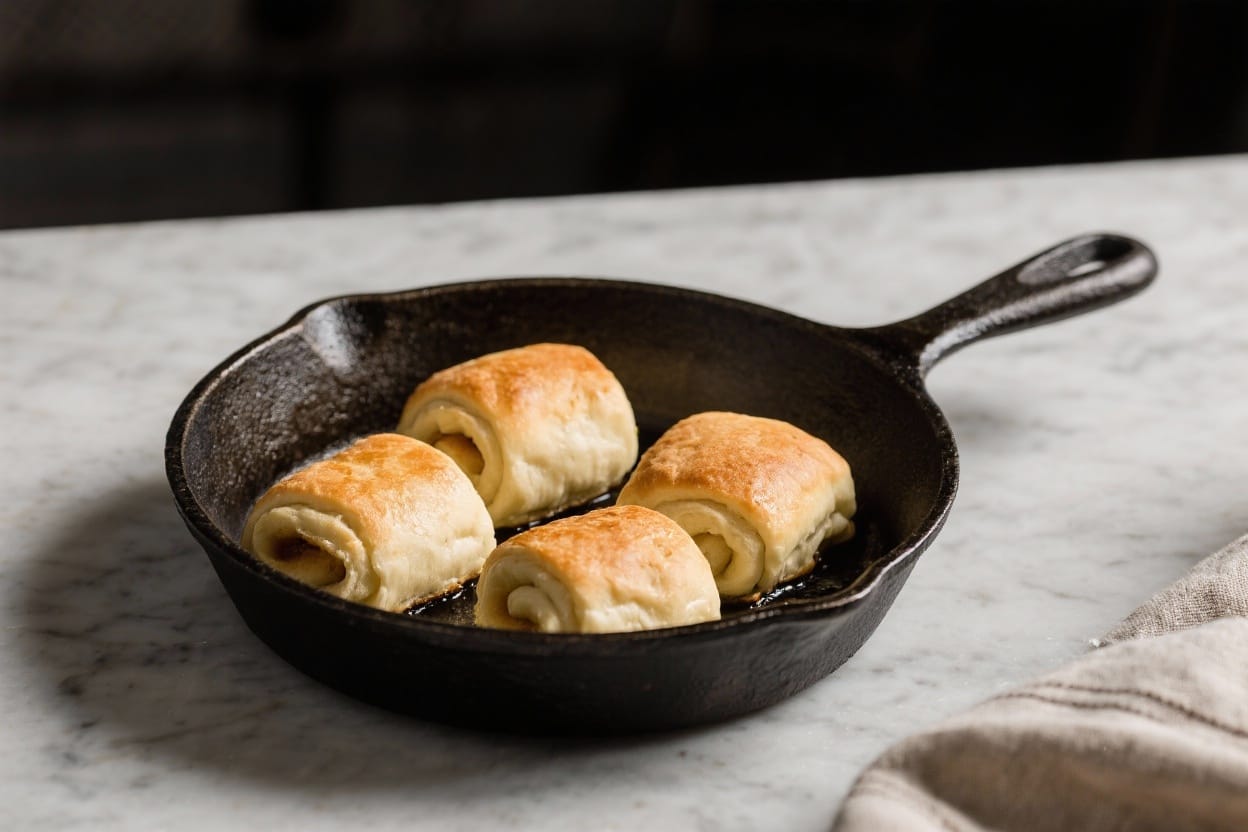
Simple skillet rolls – No special equipment, no fuss—just a sturdy skillet and a little patience
- Warm the milk. Heat the milk until it’s warm to the touch, not hot. If it’s too hot, let it cool a bit. Warm liquid helps the yeast activate quickly.
- Mix the dry ingredients. In a large bowl, whisk the flour, instant yeast, sugar, and salt until combined.
- Add wet ingredients. Pour in the warm milk, melted butter, and egg. Stir with a wooden spoon until a shaggy dough forms and most flour is incorporated.
- Knead the dough. Turn the dough onto a lightly floured surface and knead for 6–8 minutes until smooth and slightly springy. If the dough is very sticky, add flour 1 tablespoon at a time. It should be soft but manageable.
- First rise. Lightly oil a clean bowl, place the dough inside, and turn to coat. Cover with a towel or plastic wrap and let rise in a warm spot until doubled, about 45–60 minutes.
- Prep the skillet. Grease a 10–12 inch oven-safe skillet (cast iron is ideal) with oil or butter. This helps with browning and easy release.
- Shape the rolls. Punch down the dough gently. Divide it into 12 equal pieces (about golf-ball size). Shape each piece into a tight ball by tucking the edges under and rolling on the counter with a cupped hand.
- Second rise in the skillet. Arrange the dough balls in the skillet, leaving a little space between each. Cover and let them rise until puffy and nearly touching, about 25–35 minutes.
- Preheat the oven. While the rolls rise, heat your oven to 375°F (190°C).
- Brush and bake. Brush the tops with melted butter. Add a sprinkle of flaky salt or a dusting of garlic powder if you like. Bake for 18–22 minutes, until golden brown and set in the center.
- Finish and serve. Brush again with butter while warm for extra sheen and flavor. Let them rest for 5 minutes, then serve right from the skillet.
Keeping It Fresh
These rolls are best the day they’re baked, but they keep well. Store at room temperature in an airtight bag or container for up to 2 days. For longer storage, freeze them for up to 2 months. Reheat in a 325°F (165°C) oven for 8–10 minutes, or until warmed through. A quick brush of butter after reheating brings back softness and aroma.
Health Benefits
- Portion control built in: Individual rolls make it easy to manage servings without overdoing it.
- Simple ingredients: No preservatives or hard-to-pronounce additives. You control the salt and sugar.
- Protein and calcium: The milk and egg add a small boost of protein and calcium compared to water-only doughs.
- Room to add fiber: Swap up to 1 cup of the flour for whole wheat flour to add fiber and nutrients without losing too much tenderness.
Pitfalls to Watch Out For
- Milk too hot: If the milk is steaming hot, it can kill the yeast. Aim for warm, not scalding.
- Adding too much flour: Sticky dough is normal at first. Add flour gradually to avoid dense rolls.
- Skipping the second rise: This step ensures light, fluffy texture. Don’t rush it.
- Underbaking: Pale rolls can taste doughy. Look for even golden color and a slightly firm top.
- Dry skillet: A lightly greased skillet prevents sticking and helps with a crisp, flavorful bottom.
Recipe Variations
- Garlic Herb: Mix 1 teaspoon garlic powder and 2 teaspoons chopped fresh rosemary or parsley into the dough. Top with butter and a pinch of flaky salt before baking.
- Cheddar and Chive: Fold in 3/4 cup shredded cheddar and 2 tablespoons chopped chives. Sprinkle a little extra cheese on top for a bubbly crust.
- Honey Butter Rolls: Add 1 extra tablespoon sugar to the dough. Brush baked rolls with honey-butter (2 tablespoons butter mixed with 1 tablespoon honey).
- Whole Wheat: Replace 1 cup all-purpose flour with whole wheat flour. Add 1–2 teaspoons extra milk if the dough feels dry.
- Everything Seasoning: Brush the rolls with egg wash and sprinkle with everything bagel seasoning before baking.
- Dairy-Free: Use warm water or unsweetened plant milk and swap the butter for olive oil or dairy-free butter. Flavor changes slightly but still delicious.
FAQ
Can I use active dry yeast instead of instant yeast?
Yes. Proof 2 1/4 teaspoons active dry yeast in the warm milk with the sugar for 5–10 minutes until foamy, then proceed. If it doesn’t foam, your yeast may be expired or the milk too hot or too cold.
What if I don’t have a cast iron skillet?
Use any oven-safe skillet or a 9-inch cake pan. The rolls might brown slightly differently, but the texture will still be soft and fluffy.
How do I make the rolls ahead?
After shaping, cover and refrigerate overnight. Let them sit at room temperature for 45–60 minutes the next day, until puffy, then bake as directed.
Why are my rolls dense?
Common reasons include too much flour, dough not kneaded long enough, yeast past its prime, or a short rise. Make sure the dough feels soft and elastic, and give it enough time to double.
Can I make them without egg?
Yes. Replace the egg with 3 tablespoons milk or water. The rolls will be slightly less rich but still tender.
How do I know they’re fully baked?
The tops should be golden brown, and the center roll should feel set, not squishy. If you have a thermometer, the internal temperature should reach about 190–195°F (88–90°C).
Can I add butter to the skillet?
You can, but butter alone may brown too quickly and cause sticking. Use a light coat of oil for the base, then brush butter on the rolls before and after baking.
Final Thoughts
Simple skillet rolls are the kind of bread you can make on a weeknight and still feel proud to serve. They’re warm, soft, and flexible enough to match any meal. Once you learn the rhythm—mix, knead, rise, shape, rise, bake—you’ll have a reliable go-to for family dinners and casual gatherings. Keep a packet of yeast in the pantry, and you’re never far from fresh, homemade rolls.
Printable Recipe Card
Want just the essential recipe details without scrolling through the article? Get our printable recipe card with just the ingredients and instructions.