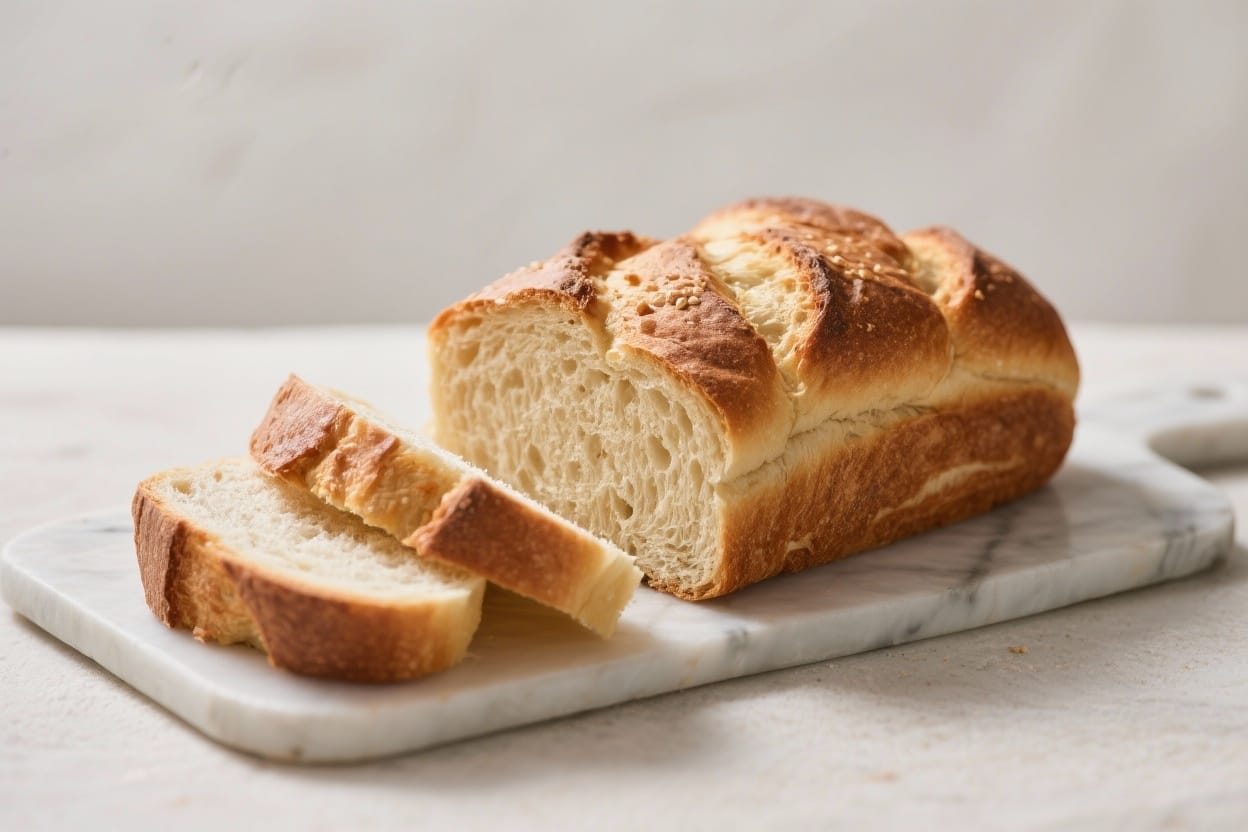
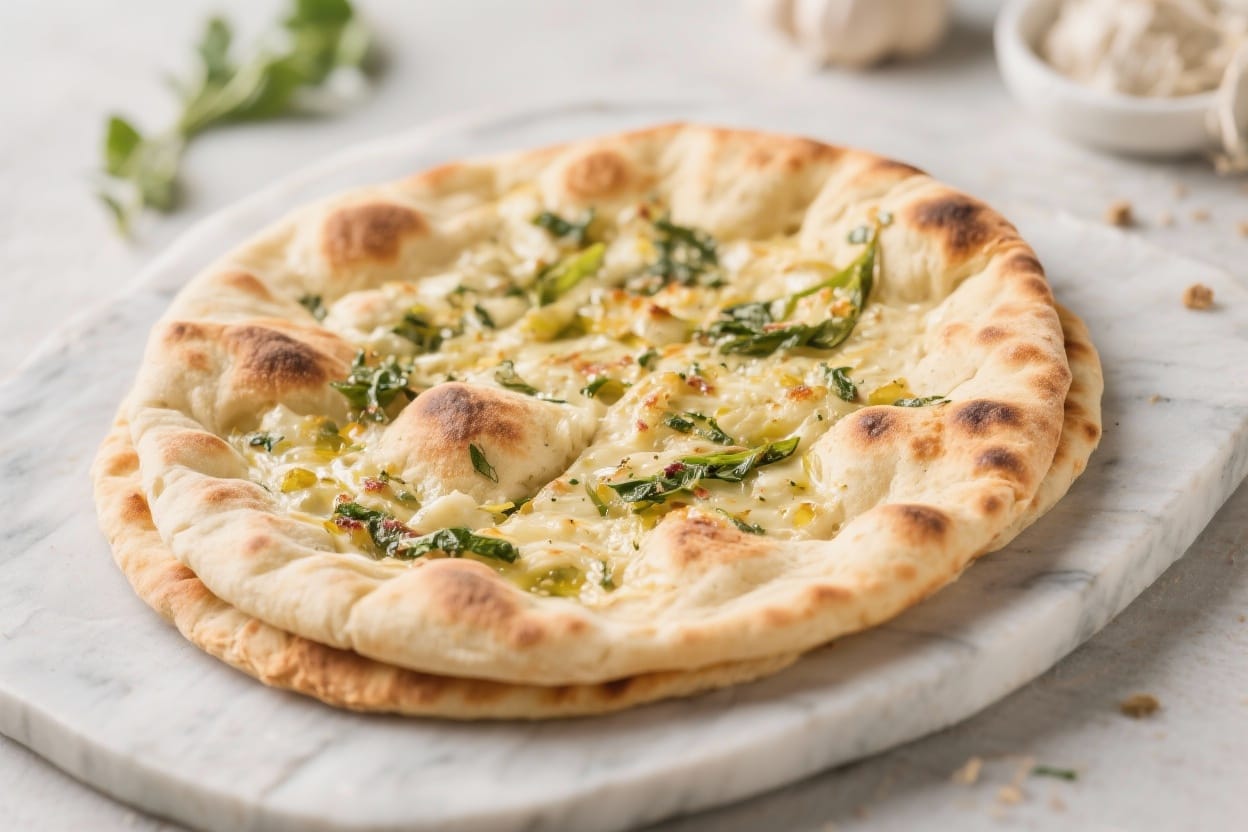
No Yeast Garlic Bread – Quick, Flavorful, and Comforting
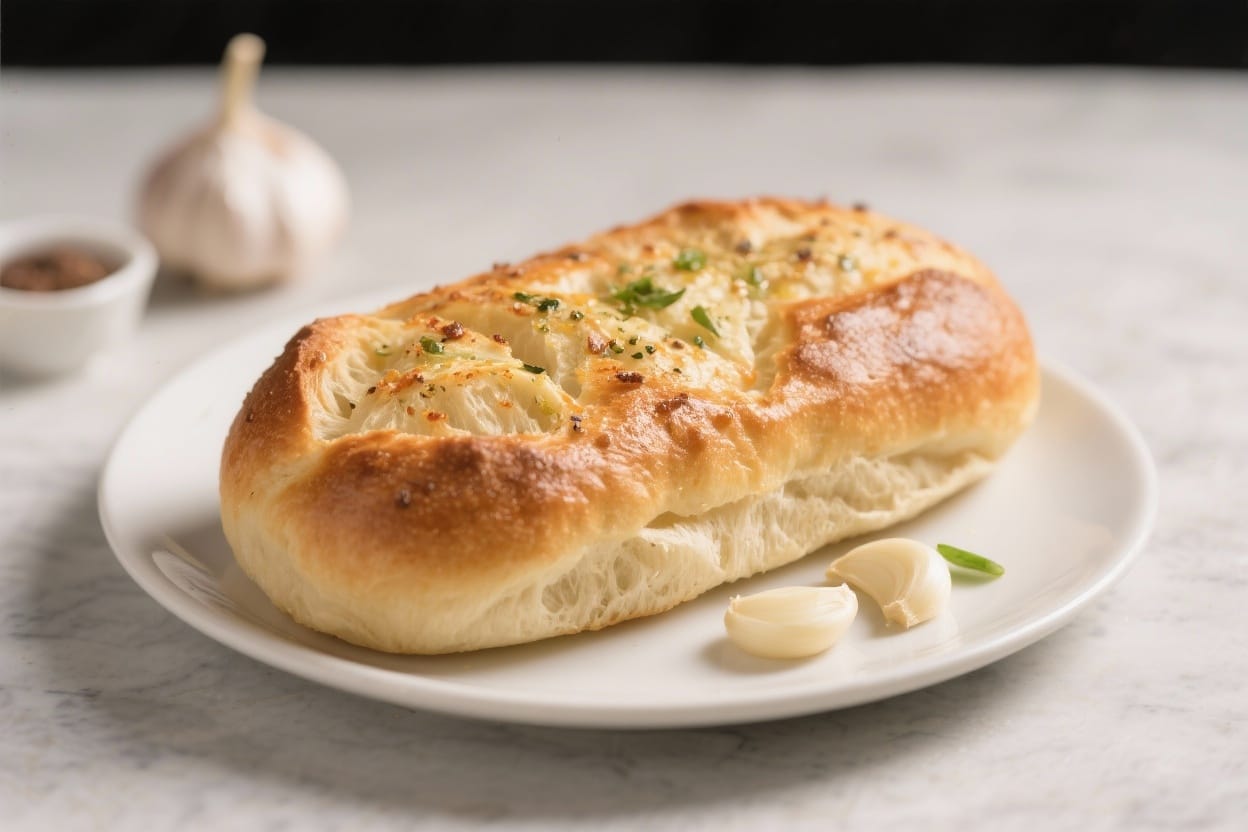
Skip the dough drama and make garlic bread that’s fast, fluffy, and full of flavor. This no yeast garlic bread relies on simple pantry ingredients and comes together in one bowl. No proofing, no kneading, and no waiting around. It’s perfect for busy weeknights, pasta nights, or whenever a craving hits. You’ll get warm, golden slices with a tender crumb, buttery garlic flavor, and a hint of herbs—ready in under 30 minutes.
What Makes This Special
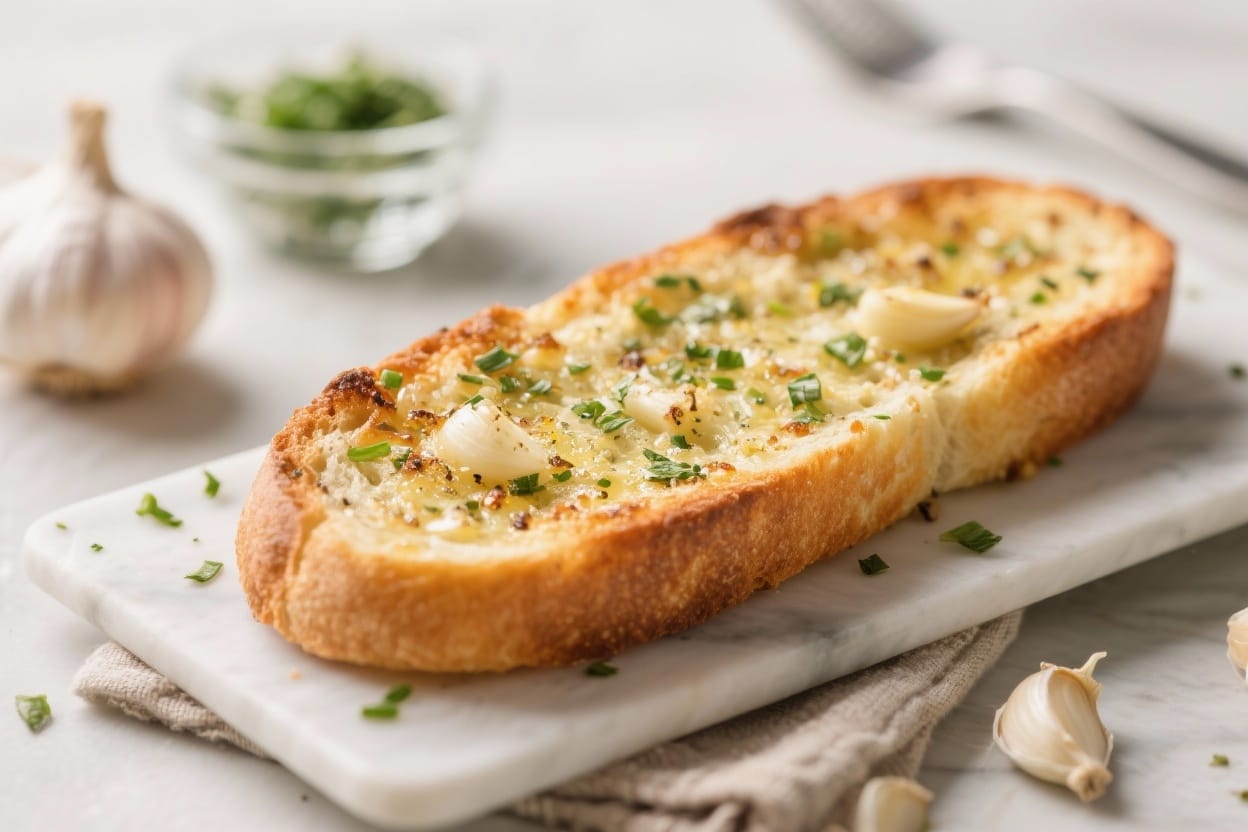
No yeast garlic bread – No Yeast Garlic Bread – Quick, Flavorful, and Comforting Skip the dough drama and make garlic bread
This recipe uses baking powder instead of yeast, so the bread rises quickly without resting time. The dough mixes by hand and rolls out easily, even if you’ve never baked bread before. You can bake it in the oven or cook it in a skillet if you don’t want to turn on the oven. It’s flexible, forgiving, and easy to customize with cheese, herbs, or a touch of heat. Most of all, it tastes like comfort with minimal effort.
Ingredients
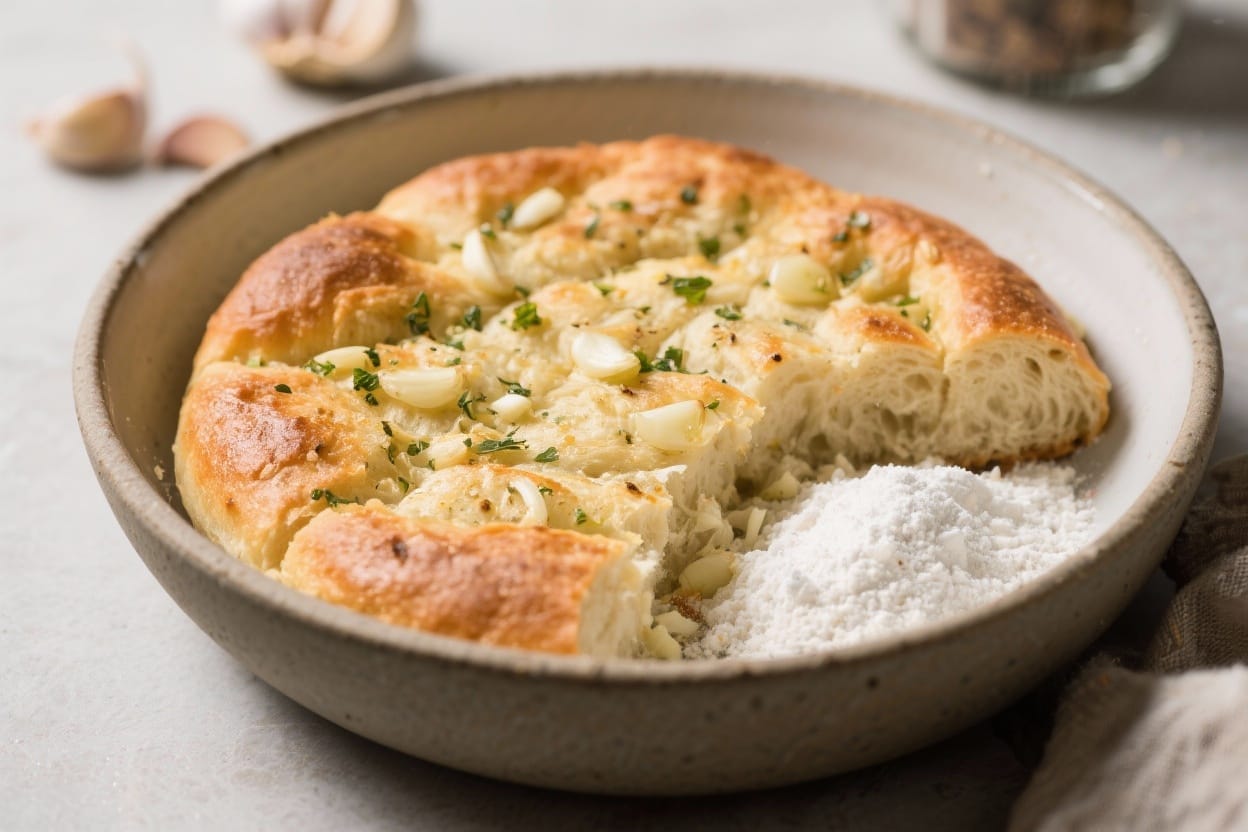
No yeast garlic bread – This no yeast garlic bread relies on simple pantry ingredients and comes together in one bowl
- 2 cups all-purpose flour (plus extra for dusting)
- 1 tablespoon baking powder
- 1 teaspoon granulated sugar
- 1 teaspoon fine sea salt
- 1/2 teaspoon garlic powder (optional, for the dough)
- 3/4 cup whole milk (or plant milk), plus 1–2 tablespoons as needed
- 3 tablespoons plain yogurt or sour cream (adds tenderness)
- 2 tablespoons olive oil (for the dough)
- 4 tablespoons unsalted butter, melted (or use olive oil for dairy-free)
- 3–4 cloves fresh garlic, finely minced or grated
- 2 tablespoons fresh parsley, finely chopped (or 1 teaspoon dried parsley)
- 1/4 teaspoon red pepper flakes (optional)
- 2–3 tablespoons grated Parmesan or Pecorino (optional, for topping)
Instructions
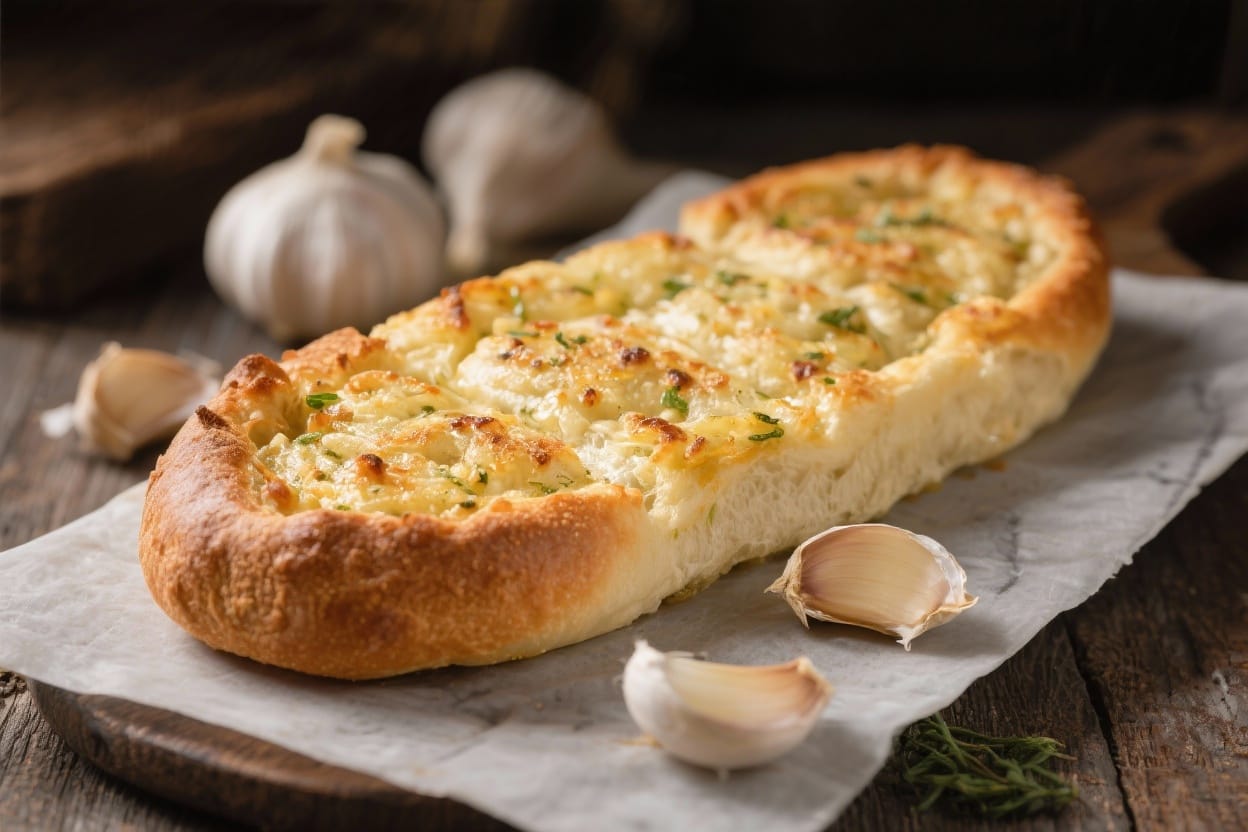
No yeast garlic bread – No proofing, no kneading, and no waiting around
- Preheat and prep:Heat the oven to 425°F (220°C). Line a baking sheet with parchment paper or lightly oil it. If using a skillet method, place a large cast-iron or nonstick skillet over medium heat.
- Mix dry ingredients:In a large bowl, whisk together the flour, baking powder, sugar, salt, and garlic powder (if using). This ensures even leavening and seasoning.
- Add wet ingredients:Stir in the milk, yogurt, and olive oil. Use a spatula to gently bring the dough together. If it looks dry, add milk 1 tablespoon at a time until it forms a soft, slightly tacky dough.
- Quick knead:Turn the dough onto a lightly floured surface. Knead gently for 30–45 seconds—just until smooth.Do not overworkor the bread can turn tough.
- Shape:Divide the dough into two equal pieces for easier handling. Roll each piece into an oval or circle about 1/4 inch thick. Thicker dough makes softer bread; thinner yields crisper edges.
- Make garlic butter:In a small bowl, combine melted butter, minced garlic, parsley, and red pepper flakes. Set aside.
- Bake method:Transfer rolled dough to the prepared baking sheet. Brush generously with the garlic butter. Bake for 10–12 minutes, until puffed and lightly golden on the edges. For extra color, switch to broil for 30–60 seconds at the end. Sprinkle Parmesan while hot.
- Skillet method (no oven):Heat a thin film of oil in the skillet. Place one rolled dough in the pan, cover with a lid, and cook for 2–3 minutes until bubbly on top and golden underneath. Flip, brush the cooked side with garlic butter, cover, and cook 2–3 more minutes. Flip again, brush the second side, and cook 30 seconds to set. Repeat with the second piece. Sprinkle cheese while hot.
- Serve:Slice into wedges or strips. Serve warm with marinara, soup, salad, or your favorite pasta. For a quick and flavorful option, try this No-Yeast Garlic Bread recipe.
Storage Instructions
- Room temperature: Keep leftovers in an airtight container for up to 1 day. Reheat in a hot skillet or 350°F (175°C) oven for 5–7 minutes to refresh.
- Refrigerator: Store up to 3 days. Reheat as above. Add a light brush of olive oil if it seems dry.
- Freezer: Wrap tightly in foil or a freezer bag for up to 2 months. Reheat from frozen at 375°F (190°C) for 10–12 minutes, or thaw first for quicker results.
Health Benefits
- Controlled ingredients: Making it at home lets you manage sodium, fat, and portion size, which can be friendlier than store-bought options.
- Garlic goodness: Garlic contains compounds like allicin that may support heart health and have antimicrobial properties. Fresh garlic also adds bold flavor without excessive salt.
- Olive oil option: Swapping butter for extra-virgin olive oil adds heart-healthy fats and keeps the recipe dairy-free.
- Protein boost: Using yogurt adds a bit of protein and helps keep the crumb tender without extra butter.
- Herbs for flavor: Parsley provides freshness and some micronutrients with virtually no calories.
What Not to Do
- Don’t over-knead: This dough doesn’t need development like yeast dough. Overworking makes it tough.
- Don’t skip salt: Salt balances the garlic and brings the dough to life. Without it, the bread tastes flat.
- Don’t overload with wet toppings before cooking: Too much butter or cheese on raw dough can prevent good browning. Brush lightly first, then add more after cooking if you like.
- Don’t roll too thick without adjusting time: If your dough is thicker than 1/4 inch, add a few minutes so the center cooks through.
- Don’t cook on low heat: Moderate-high heat helps the bread puff and get color. Too low, and it dries out before it browns.
Variations You Can Try
- Cheesy Pull-Apart: Sprinkle shredded mozzarella and Parmesan on the brushed dough before baking. Bake until bubbly, then finish with more parsley.
- Herb and Lemon: Add 1 teaspoon dried Italian herbs to the dough and finish with a squeeze of lemon over the hot bread for brightness.
- Chili-Garlic: Add 1/2 teaspoon chili flakes to the dough and a pinch of smoked paprika to the garlic butter for a gentle kick.
- Dairy-Free: Use olive oil instead of butter and plant-based milk and yogurt. Add a sprinkle of nutritional yeast for a cheesy note.
- Whole Wheat Twist: Swap 1/2 cup of the all-purpose flour with whole wheat flour. Add 1–2 extra tablespoons milk if needed to keep the dough soft.
- Stuffed Garlic Bread: Roll two thin rounds, spread one with garlic butter and a thin layer of cheese, top with the second round, crimp edges, and cook as directed.
FAQ
Can I make the dough ahead?
Yes. Mix the dough up to 8 hours ahead and refrigerate in a covered bowl. Bring it to room temperature for 15–20 minutes before rolling so it’s easier to handle.
What if I don’t have yogurt or sour cream?
Replace with the same amount of milk plus 1 teaspoon of oil, or use buttermilk. The texture may be slightly less tender but still delicious.
Can I use self-rising flour?
Yes. If using self-rising flour, omit the baking powder and reduce the salt to 1/2 teaspoon. Adjust milk if the dough seems dry.
How do I keep the garlic from burning?
Use medium to medium-high heat and brush garlic butter on in layers. If pan-cooking, add most of the garlic after flipping so it spends less time in direct contact with the heat.
Why is my bread dense?
Likely causes include over-kneading, too little liquid, or old baking powder. The dough should be soft, and the baking powder should be fresh for the best rise.
Can I air fry it?
Yes. Preheat to 375°F (190°C), brush the dough with garlic butter, and cook for 6–8 minutes, checking at the 5-minute mark. Add cheese during the last minute.
Is gluten-free flour okay?
A good 1:1 gluten-free baking blend can work. Add an extra tablespoon of yogurt if the dough seems crumbly, and handle gently when rolling.
Can I make it without fresh garlic?
Use 1/2–1 teaspoon garlic powder in the butter mixture. It won’t be as punchy as fresh garlic, but it still gives a solid garlic flavor.
What should I serve it with?
Pair with tomato soup, Caesar salad, roasted vegetables, creamy pastas, or a simple marinara for dipping. It also makes a great base for quick flatbread pizzas.
Wrapping Up
No yeast garlic bread is the shortcut recipe you’ll actually use. It’s quick, reliable, and easy to adapt to whatever you have on hand. With a crisp edge, soft middle, and fragrant garlic butter, it’s a crowd-pleaser from the first slice. Keep this as your go-to for weeknights, last-minute guests, or whenever you want warm, fresh bread without the wait.
Printable Recipe Card
Want just the essential recipe details without scrolling through the article? Get our printable recipe card with just the ingredients and instructions.