Easy Skillet Bread Recipe – Warm, Crusty, and Ready in No Time
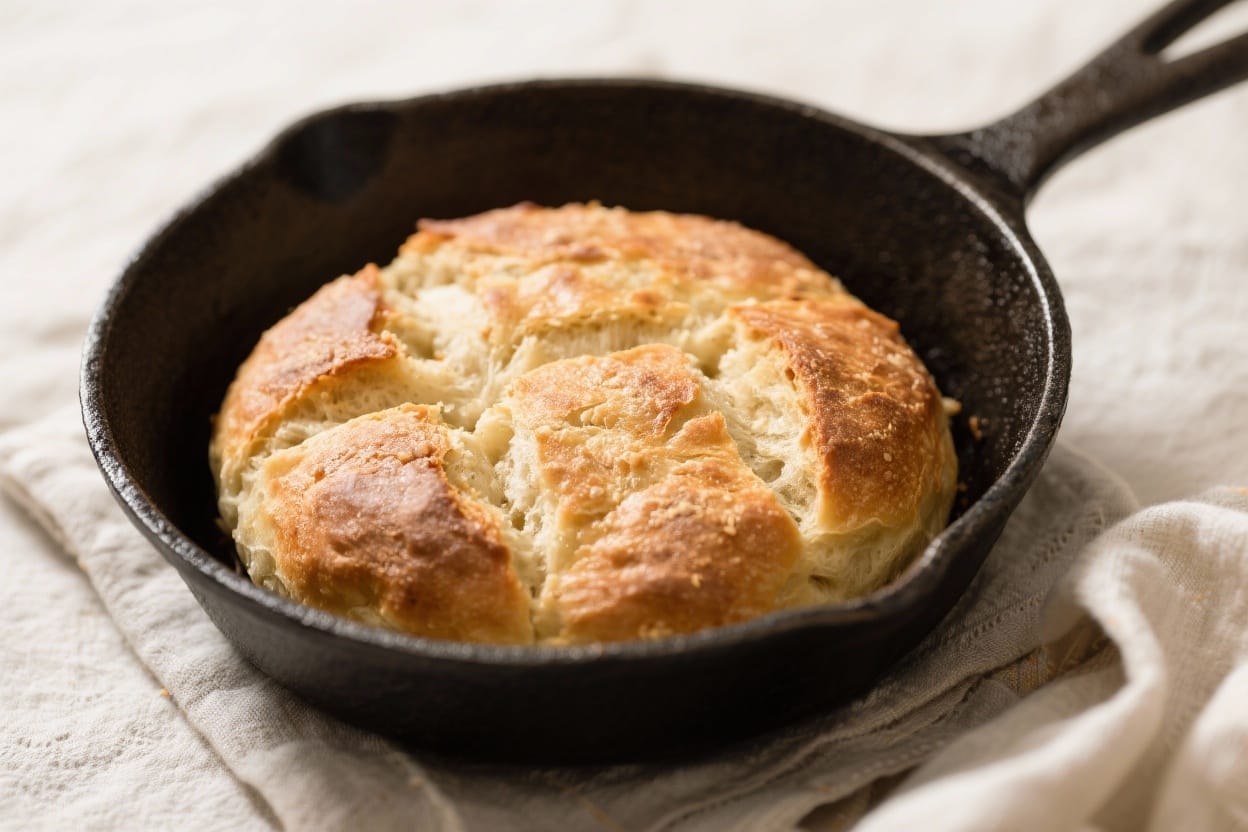
This easy skillet bread recipe delivers a warm, crusty loaf with a tender interior—no special equipment required. If you’ve ever wanted fresh bread without the fuss, this is the place to start. You’ll mix a simple dough, let it rise, and cook it right in a skillet on the stovetop and in the oven. The result is a rustic, golden bread that pairs well with soups, salads, or butter and honey. It’s quick, reliable, and perfect for beginners or busy weeknights.
What Makes This Recipe So Good
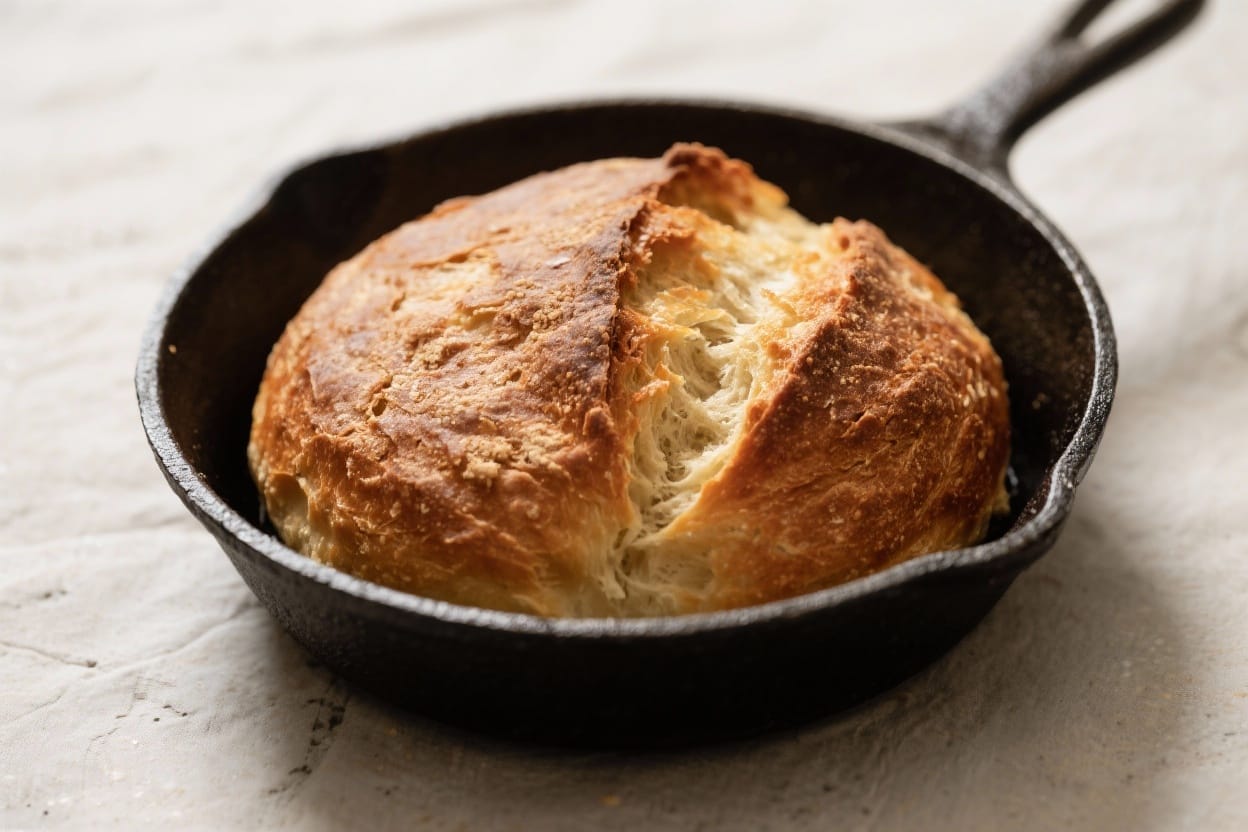
Easy skillet bread recipe – Easy Skillet Bread Recipe – Warm, Crusty, and Ready in No Time This easy skillet bread recipe delive
- Minimal ingredients: Flour, yeast, water, salt, and a touch of sugar and oil. That’s it.
- No stand mixer needed: The dough comes together by hand, and you’ll only knead for a minute or two.
- Golden crust, soft center: Cooking in a preheated skillet creates a crisp exterior and a fluffy crumb.
- Flexible and forgiving: Works with all-purpose or bread flour, and you can add herbs, cheese, or garlic.
- Fast for homemade bread: About an hour and a half total, with most of that hands-off time.
Ingredients
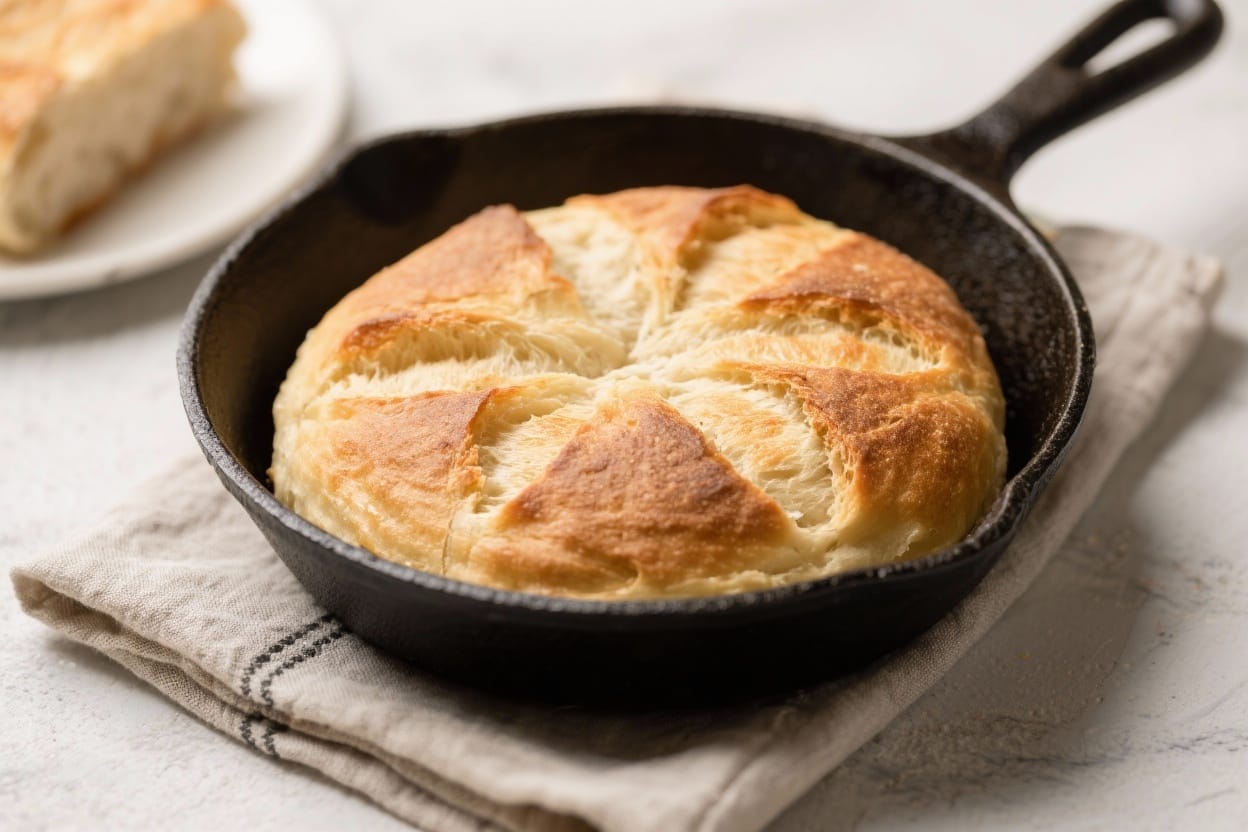
Easy skillet bread recipe – If you’ve ever wanted fresh bread without the fuss, this is the place to start
- 3 cups all-purpose flour (or bread flour), plus extra for dusting
- 1 packet (2 1/4 teaspoons) instant or rapid-rise yeast
- 1 1/4 cups warm water (about 105–115°F / 40–46°C)
- 1 tablespoon sugar or honey
- 1 teaspoon fine sea salt
- 2 tablespoons olive oil, divided (plus a little more for brushing)
- Optional: 1 teaspoon garlic powder or dried herbs (rosemary, thyme, or Italian seasoning) – for a fragrant twist, try this Herb Bread Loaf Recipe or make it a warm bite you’ll want
- Optional topping: flakey sea salt or grated Parmesan
Instructions
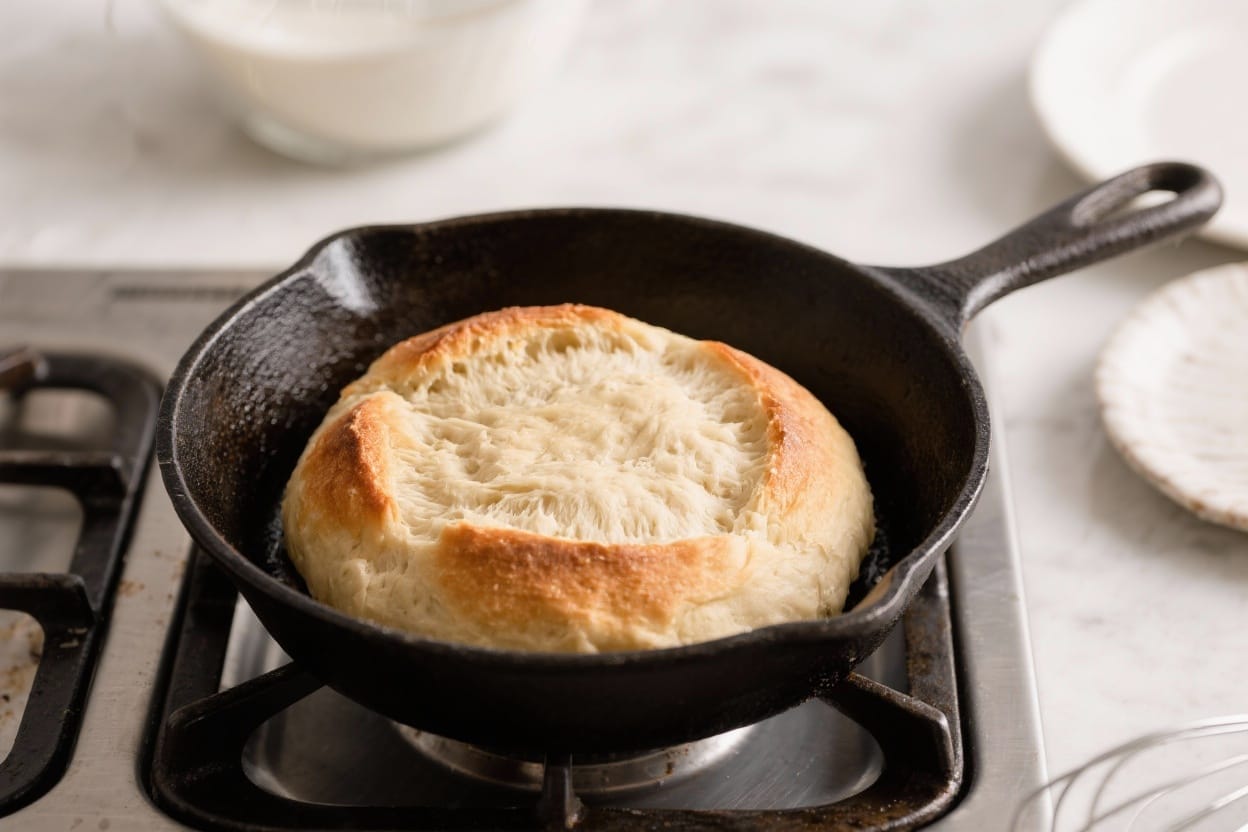
Easy skillet bread recipe – You’ll mix a simple dough, let it rise, and cook it right in a skillet on the stovetop and in the ov
- Activate the yeast: In a large bowl, combine warm water and sugar or honey. Sprinkle the yeast over the top and let it sit for 5–8 minutes until foamy. If using instant yeast, foaming may be minimal, but the mixture should look creamy.
- Mix the dough: Add 2 tablespoons olive oil, salt, and about 2 3/4 cups of the flour. Stir with a wooden spoon until a shaggy dough forms. If the dough is very sticky, add the remaining flour 1 tablespoon at a time.
- Knead briefly: Dust a clean surface with flour. Turn out the dough and knead for 1–2 minutes until smooth and slightly tacky but not sticky. Avoid adding too much flour—just enough to keep it from sticking.
- First rise: Lightly oil the mixing bowl. Place the dough back in, turning once to coat. Cover with a clean towel or plastic wrap and let rise in a warm spot for 30–45 minutes, or until doubled in size.
- Preheat the skillet and oven: Place a 10–12 inch oven-safe skillet (cast iron is ideal) in the oven and preheat to 400°F (200°C). Heating the pan helps create a crisp crust.
- Shape the dough: Punch down the risen dough and shape it into a round. If using herbs or garlic powder, knead them in gently now. Let the dough rest for 5 minutes so it relaxes and is easier to handle.
- Skillet setup: Carefully remove the hot skillet from the oven. Add 1 teaspoon of oil and swirl to coat. Place the dough round into the skillet. Brush the top with a little olive oil and sprinkle with flakey salt or Parmesan if you like. Score the top with a shallow X using a sharp knife.
- Bake: Return the skillet to the oven and bake for 22–28 minutes, until the top is golden and the internal temperature reaches about 200–205°F (93–96°C). If the bread is browning too fast, tent loosely with foil for the last 5 minutes.
- Finish on the stovetop (optional): For an extra-crisp bottom, transfer the skillet to the stovetop over medium heat for 2–3 minutes after baking. Watch closely to avoid scorching.
- Cool briefly and serve: Transfer the bread to a cooling rack and let it rest for at least 10 minutes before slicing. This helps set the crumb and keeps it from turning gummy.
How to Store
- Room temperature: Wrap the cooled bread in a clean kitchen towel or store in a paper bag for up to 2 days. This keeps the crust from getting soft.
- Longer storage: For 3–4 days, place in an airtight container or zip-top bag. The crust may soften, but a few minutes in a 350°F (175°C) oven will refresh it.
- Freezer: Slice, then freeze in a freezer-safe bag for up to 2 months. Toast or reheat from frozen at 350°F (175°C) for 8–10 minutes.
Health Benefits
- Simple ingredients: This bread skips preservatives and additives, giving you control over the ingredients.
- Healthy fats: Olive oil adds a touch of heart-friendly monounsaturated fat and flavor.
- Energy and fiber: Using some whole wheat flour (see variations) boosts fiber, which supports digestion and steady energy.
- Customization: You can adjust salt, add seeds, or incorporate herbs for added nutrients and antioxidants.
Common Mistakes to Avoid
- Water too hot or too cold: Hot water can kill yeast; cold water will slow rising. Aim for warm bath water temperature.
- Too much flour: Over-flouring makes dense bread. Keep the dough slightly tacky for a better crumb.
- Skipping the preheat: A hot skillet is key for a crisp crust and good oven spring.
- Cutting too soon: Slicing right away releases steam and leads to a gummy interior. Give it at least 10 minutes.
- Under-seasoning: Salt matters. It boosts flavor and strengthens the dough’s structure; don’t skimp.
Recipe Variations
- Herb and Garlic: Add 1 teaspoon garlic powder and 1–2 teaspoons dried herbs to the dough. Brush with garlic butter after baking for extra flavor.
- Cheesy Skillet Bread: Fold in 1/2 cup shredded cheddar, mozzarella, or Parmesan before shaping. Sprinkle extra cheese on top for a bubbly crust.
- Whole Wheat Blend: Use 1 cup whole wheat flour and 2 cups all-purpose flour. Add 1–2 extra tablespoons water if the dough feels dry.
- Olive and Rosemary: Gently knead in 1/3 cup chopped pitted olives and 1 teaspoon minced fresh rosemary. Reduce added salt slightly if olives are salty.
- Seeded Crust: Press sesame, poppy, or sunflower seeds onto the top after brushing with oil. Toasty and crunchy.
- No-Oven Stovetop Method: Cook covered over low heat for 12–15 minutes per side in a well-oiled skillet. The crust will be softer but still tasty.
FAQ
Can I use active dry yeast instead of instant yeast?
Yes. Bloom active dry yeast in the warm water with the sugar for 8–10 minutes until foamy, then proceed as written. Rising times may be slightly longer.
What size skillet works best?
A 10–12 inch cast-iron skillet is ideal. A heavy, oven-safe stainless steel skillet also works. Smaller pans will make a taller loaf and may need a few extra minutes.
How do I know when the bread is done?
Look for a deep golden top and a hollow sound when you tap the bottom. If you have a thermometer, the center should read about 200–205°F (93–96°C).
Can I make the dough ahead?
Yes. After kneading, cover and refrigerate for up to 24 hours. Let it sit at room temperature for 30–45 minutes before shaping and baking.
Why did my bread turn out dense?
Usually it’s from too much flour or not enough rising time. Keep the dough slightly tacky and let it fully double during the first rise for a lighter texture.
Can I make it gluten-free?
Use a quality 1:1 gluten-free flour blend that includes xanthan gum. The texture will be different, but preheating the skillet still helps create a nice crust.
What can I serve with skillet bread?
It’s great with soups, stews, and salads, or simply dipped in olive oil and balsamic. It also makes excellent grilled cheese or breakfast toast.
Do I need to score the top?
Scoring helps control how the bread expands in the oven and creates a rustic look. If you skip it, the bread may crack randomly, which is fine but less predictable.
Can I add butter instead of olive oil?
Yes. Melted butter adds a richer flavor and a softer crumb. You can also brush the top with butter after baking for extra sheen and taste.
In Conclusion
This easy skillet bread recipe is a low-stress way to enjoy fresh, homemade bread any day of the week. With a short ingredient list and simple steps, you’ll get a crisp crust and soft interior without special tools. Keep the dough slightly tacky, preheat your skillet, and let the bread rest before slicing. Once you master the basics, try the variations and make it your own. Warm bread on the table is closer than you think.
Printable Recipe Card
Want just the essential recipe details without scrolling through the article? Get our printable recipe card with just the ingredients and instructions.