Salt dough is one of those classic, no-fuss projects that never goes out of style. With just a few pantry staples, you can make ornaments, keepsakes, gift tags, and play shapes that last for years. It’s budget-friendly, kid-approved, and perfect for rainy afternoons or holiday crafting.
You don’t need special equipment or advanced skills—just a bowl, your hands, and a little creativity. Let’s make a smooth, sturdy dough that’s easy to shape and fun to decorate.
What Makes This Special
Salt dough is simple, but it’s incredibly versatile. You can keep it plain, paint it, or coat it with a glossy finish.
It air-dries or bakes, depending on your timeline, and it holds impressions beautifully—think handprints, paw prints, or textured designs. Best of all, it’s made from safe, common ingredients you probably already have at home.
Ingredients
- All-purpose flour: The base that gives the dough structure.
- Fine table salt: Helps preserve the dough and adds texture for durability.
- Water: Binds everything together.
- Optional: Cream of tartar (for a smoother dough), white glue (for extra strength), food coloring, acrylic paints, clear varnish or Mod Podge, and essential oil (a drop or two for scent).
Step-by-Step Instructions
- Measure your base. In a large bowl, combine 2 cups all-purpose flour and 1 cup fine salt. If you want a silkier dough, add 1 teaspoon cream of tartar.
- Add water gradually. Pour in about 3/4 to 1 cup warm water, starting with 3/4 cup.Mix with a spoon, then switch to your hands. If it’s crumbly, add water a tablespoon at a time.
- Knead until smooth. Turn the dough onto a clean surface and knead for 5–7 minutes. You’re aiming for a soft, pliable texture that doesn’t crack or stick.
- Adjust the texture. Too sticky?Add a tablespoon of flour at a time. Too dry or cracking? Add a few drops of water and knead again.
- Optional strength boost. For ornaments that last, knead in 1–2 tablespoons of white glue.It helps prevent crumbling after drying.
- Color it (optional). For colored dough, add a few drops of gel food coloring to the water before mixing, or knead color into separate sections of dough.
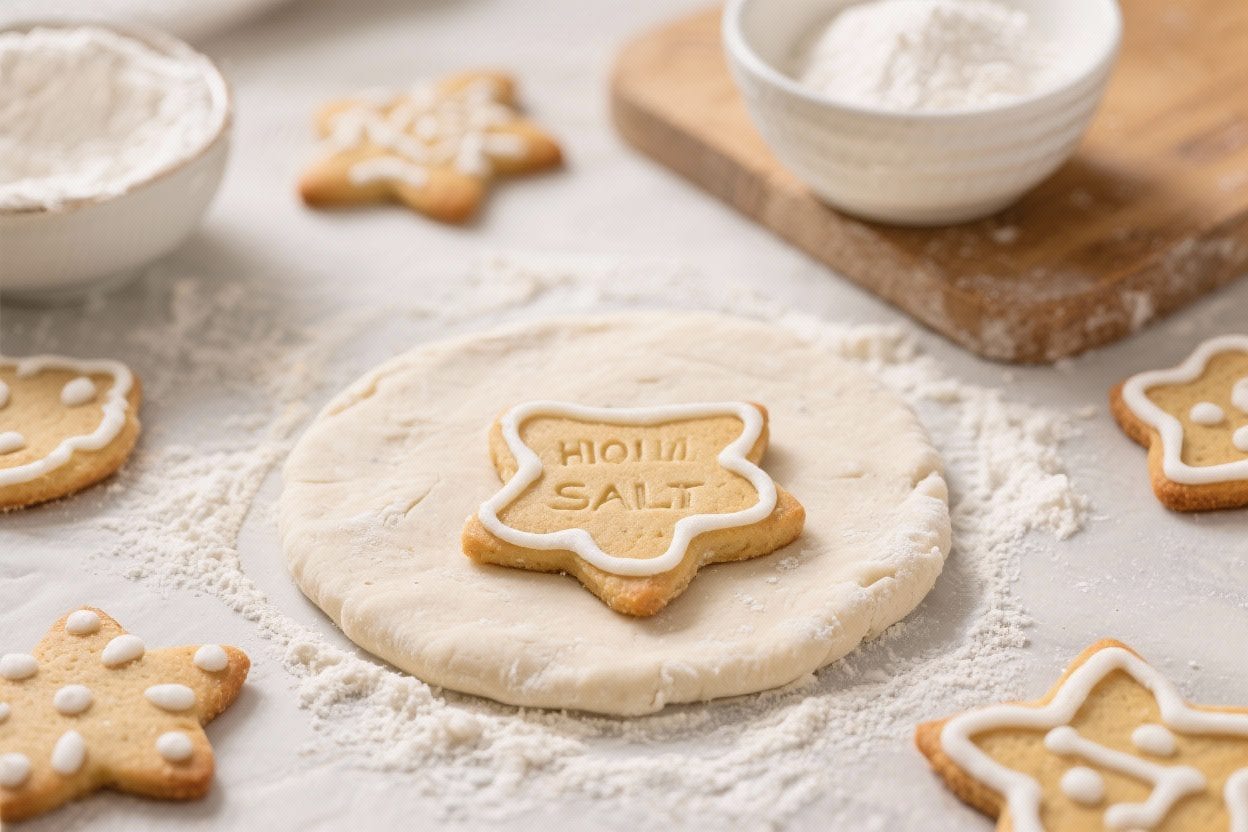
- Roll it out. Dust your surface with flour and roll the dough to 1/4 inch (6 mm) for ornaments or tags. Thicker dough takes much longer to dry.
- Shape and design. Use cookie cutters for clean shapes or sculpt by hand. Add texture with stamps, lace, leaves, or a fork.For ornaments, poke holes with a straw before drying.
- Choose your drying method.
- Oven: Place pieces on a parchment-lined tray. Bake at 200–225°F (93–107°C) for 2–4 hours, flipping halfway. Small, thin pieces dry faster.
- Air-dry: Lay pieces on a rack in a warm, low-humidity spot for 24–72 hours, turning daily.
- Cool completely. Let baked pieces cool fully before painting or sealing.Warm pieces can trap moisture under the finish.
- Decorate. Paint with acrylics. For sparkle, brush on glue and sprinkle glitter. Let everything dry thoroughly.
- Seal for durability. Apply clear varnish, polyurethane, or Mod Podge to all sides to protect from moisture.Sealing is key if you live in a humid area.
- String and display. Add ribbon or twine through pre-made holes, and your creations are ready to hang, gift, or keep.
Keeping It Fresh
- Storing unused dough: Wrap tightly in plastic wrap, then place in an airtight container. Keep in the fridge for up to 3–5 days. Knead briefly before using.
- Preventing cracks: Keep dough covered while you work.Don’t roll too thin, and dry slowly at low heat.
- Finished pieces: Store in a dry place away from direct sunlight. Reapply sealant once a year if needed.
- Moisture check: If pieces feel damp or soft over time, re-bake at low heat for 30–60 minutes, cool, then reseal.
Health Benefits
While salt dough isn’t food, making it offers real benefits. Rolling, kneading, and shaping can help develop fine motor skills in kids and provide a calming, sensory-friendly activity.
Crafting together encourages creativity, focus, and screen-free time. Using non-toxic, simple ingredients also makes it a safer choice for family projects compared to some synthetic clays.
Common Mistakes to Avoid
- Using coarse salt: It can make the dough gritty and weak. Stick to fine table salt for a smoother finish.
- Over-wetting the dough: Too much water leads to sticky dough that spreads and cracks.Add water slowly.
- Rolling too thick: Thick pieces can puff, warp, or stay damp inside. Aim for 1/4 inch unless you’re sculpting.
- High oven heat: Baking hot and fast can cause bubbles, browning, or cracks. Low and slow is best.
- Skipping the flip: Turn pieces halfway through baking or drying to prevent curling.
- Not sealing: Unsealed pieces can absorb moisture and crumble over time, especially in humid climates.
Alternatives
- Cornstarch clay: Mix cornstarch with baking soda and water on the stove for a smooth, porcelain-like finish.Great for delicate ornaments.
- Air-dry clay: Store-bought options are lightweight and durable with less cracking, but more expensive.
- Baking soda dough (white dough): A brighter white finish than traditional salt dough, ideal for modern, minimal designs.
- No-bake option: Air-dry salt dough works—just allow extra time and keep pieces thin for even drying.
- Gluten-free version: Use a gluten-free all-purpose blend and add a teaspoon of oil for pliability; texture will be slightly different.
FAQ
Is salt dough safe for kids?
Yes, the ingredients are simple and non-toxic, but the dough is very salty and not meant to be eaten. Supervise young children and keep pets away from finished pieces.
Why is my salt dough puffing up in the oven?
Heat that’s too high can trap steam and cause puffing. Bake at a low temperature and consider pricking thicker pieces lightly with a toothpick to let air escape.
How do I keep ornaments from cracking?
Keep the dough well-kneaded, roll to an even thickness, dry slowly at low heat, and flip during drying.
Sealing finished pieces also helps lock out moisture.
Can I make handprint keepsakes?
Absolutely. Roll to about 1/2 inch for handprints so they hold shape, press firmly, and dry extra slowly. Bake low and long, then seal both sides.
What kind of paint should I use?
Acrylic paint works best.
It dries fast, covers well, and pairs nicely with spray varnish or brush-on sealants for a durable finish.
How long do finished salt dough pieces last?
Properly dried and sealed pieces can last for years. Keep them dry, reseal if needed, and store them carefully to avoid chipping.
Can I add glitter to the dough?
Yes. Knead fine glitter into the dough for a subtle sparkle or add it on top with glue after baking for a bolder look.
What if my dough keeps sticking to the counter?
Dust the surface and rolling pin lightly with flour.
If it’s still sticky, knead in a teaspoon of flour at a time until it’s smooth and workable.
Can I microwave salt dough?
It’s not recommended. Microwaves can heat unevenly and cause burning or puffing. Stick to oven baking or air drying.
How do I make the edges smooth?
Use a damp fingertip to gently smooth edges before drying.
After baking, you can lightly sand rough spots with fine-grit sandpaper.
In Conclusion
Salt dough is a simple craft with big payoff—easy to mix, fun to shape, and satisfying to decorate. With a few pantry ingredients and a low oven, you can create thoughtful keepsakes and handmade gifts that last. Keep your pieces thin, dry them slowly, and don’t forget to seal.
Once you make your first batch, you’ll find new reasons to use it all year long.
Printable Recipe Card
Want just the essential recipe details without scrolling through the article? Get our printable recipe card with just the ingredients and instructions.